 Prosthetics
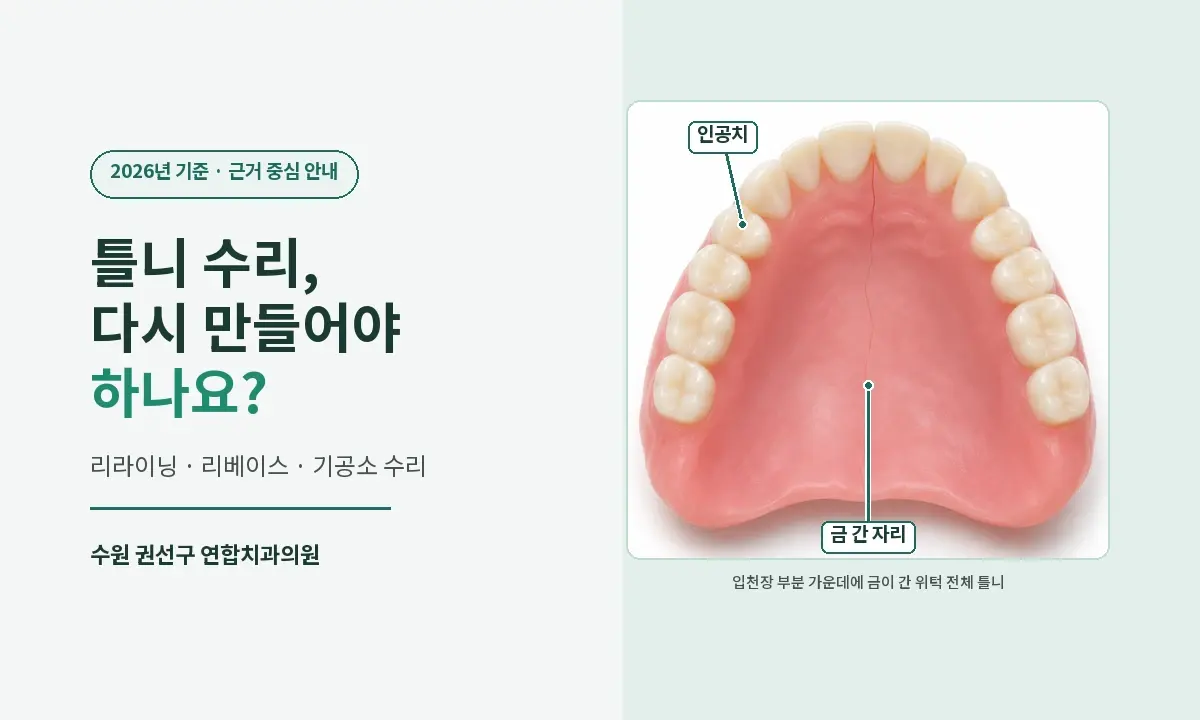
Denture Repair in Suwon: Reline, Rebase or a New Denture
Loose or broken dentures can often be relined, rebased or repaired. Yeonhap Dental Clinic in Suwon explains when a new denture is the better choice.
Dr. Sungjin Ahn2026.11.11

YEONHAP STORY
Clinic notes and oral health guides written directly by our specialists.
ProstheticsLoose or broken dentures can often be relined, rebased or repaired. Yeonhap Dental Clinic in Suwon explains when a new denture is the better choice.
 Implant
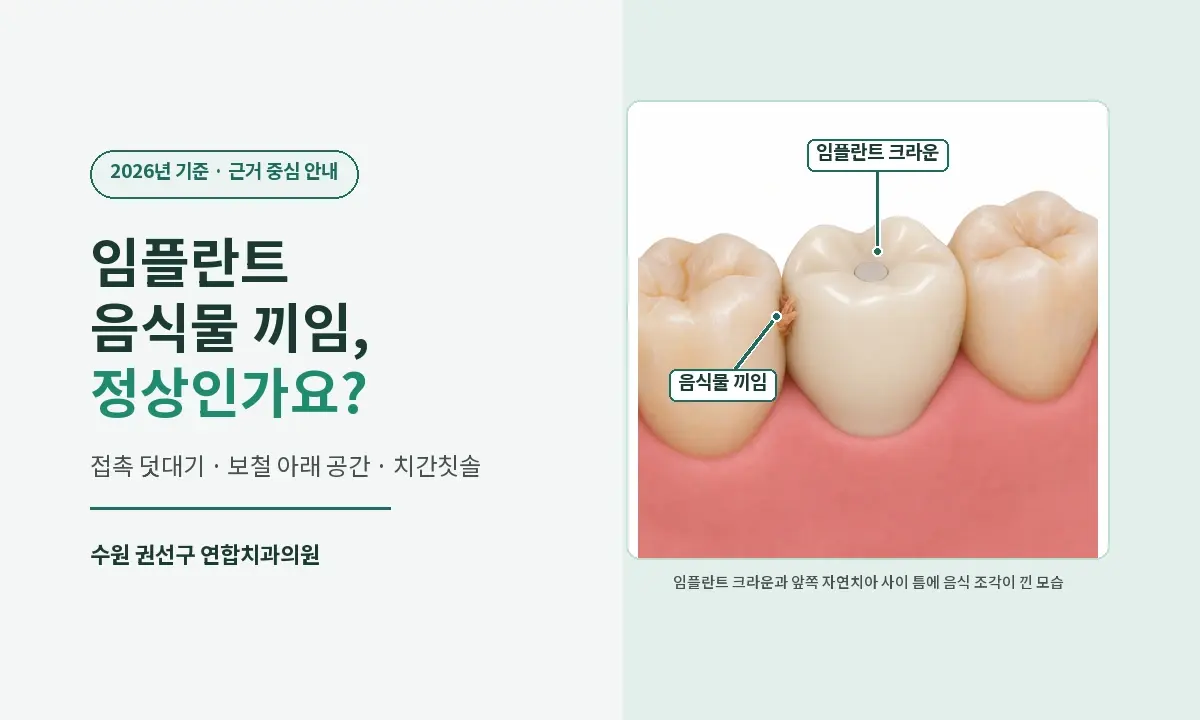
Food trapping around implants needs a cause-based check. Yeonhap Dental Clinic in Suwon explains when cleaning, adjustment or a new crown helps.
 Implant
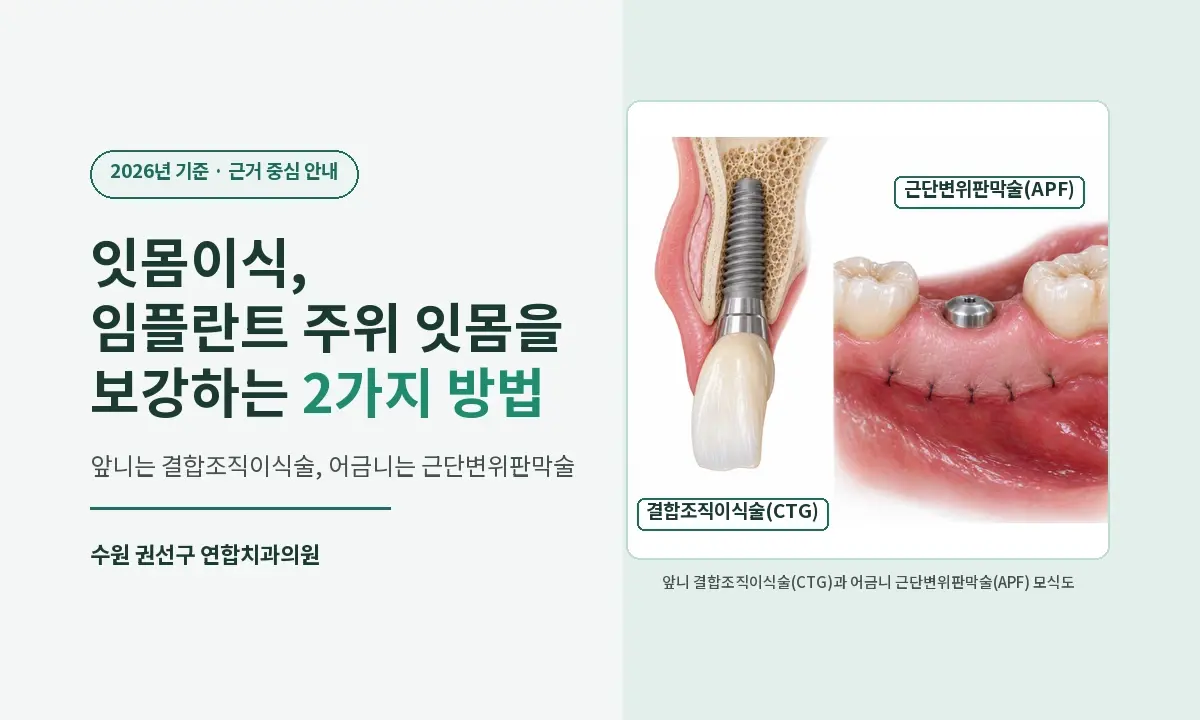
Around implants, the gumline of front teeth is reinforced with a connective tissue graft (CTG) and a procedure that moves the gum toward the crown, and the width of firm gum around back teeth is reinforced with an apically positioned flap (APF). This article outlines Yeonhap Dental Clinic's criteria, timing, recovery period, and fees.
 Specialist Column
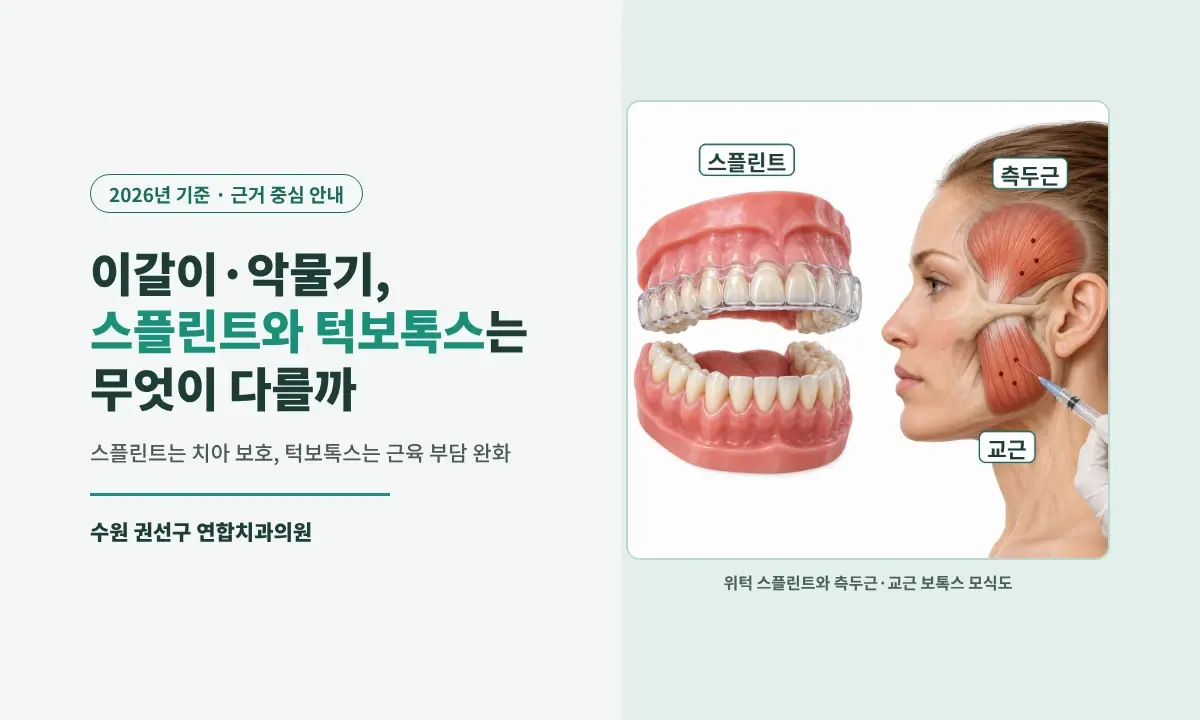
A splint (bruxism mouthguard) protects teeth and prostheses, while jaw Botox reduces the load on the chewing muscles. Here is how Yeonhap Dental Clinic chooses between soft and hard splints, our criteria for temporalis and masseter injections, the order we use, and the limits of each.
 Aesthetic
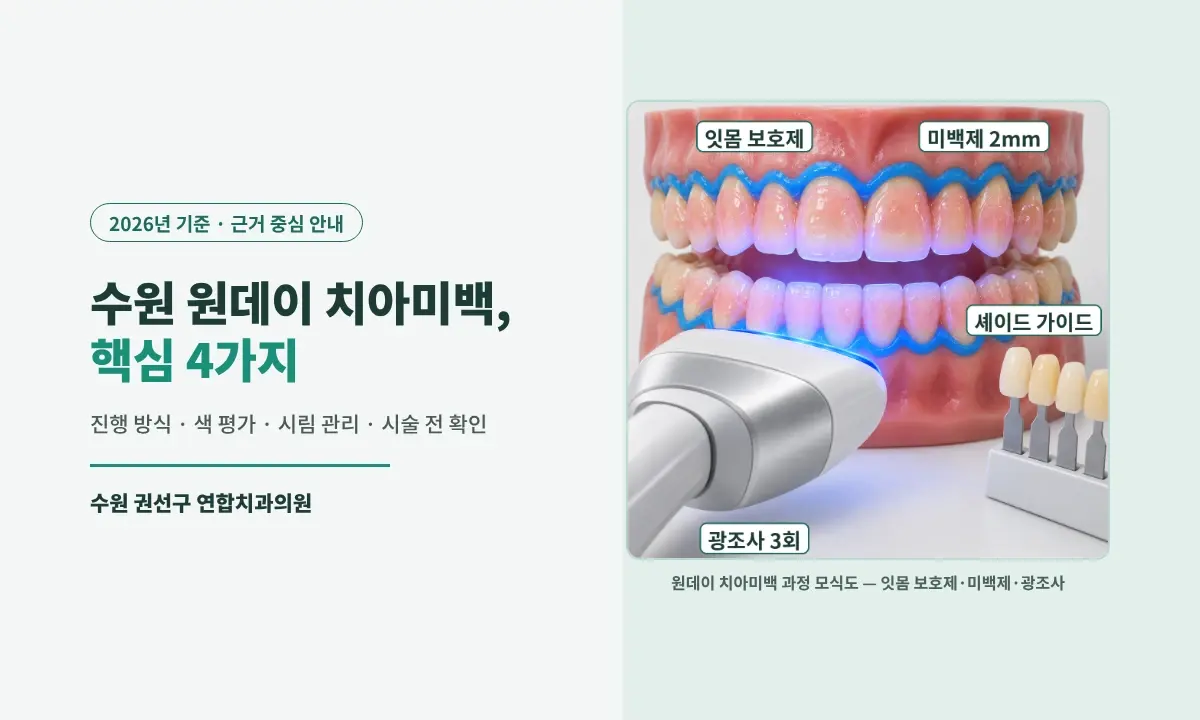
At Yeonhap Dental Clinic, whitening gel is applied and activated with light three times in a single visit using Osstem Beautis15, and we look at the shade again 1–2 weeks later to decide whether to add more. This article covers how the procedure is done, how shade is assessed and maintained, sensitivity and aftercare, and what to check before treatment.
 Prosthetics
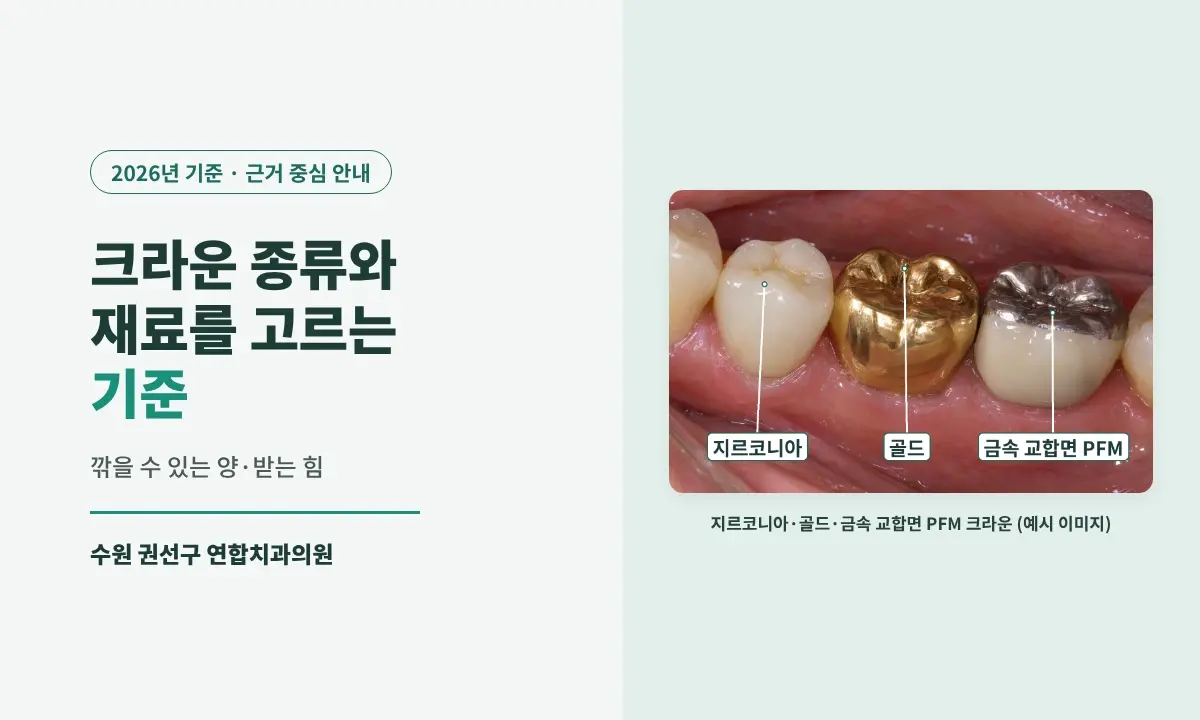
The crown material is chosen according to how much tooth can be removed and the forces it will bear. Yeonhap Dental Clinic uses zirconia for most crowns and turns to other materials only when conditions do not fit.
 Prosthetics
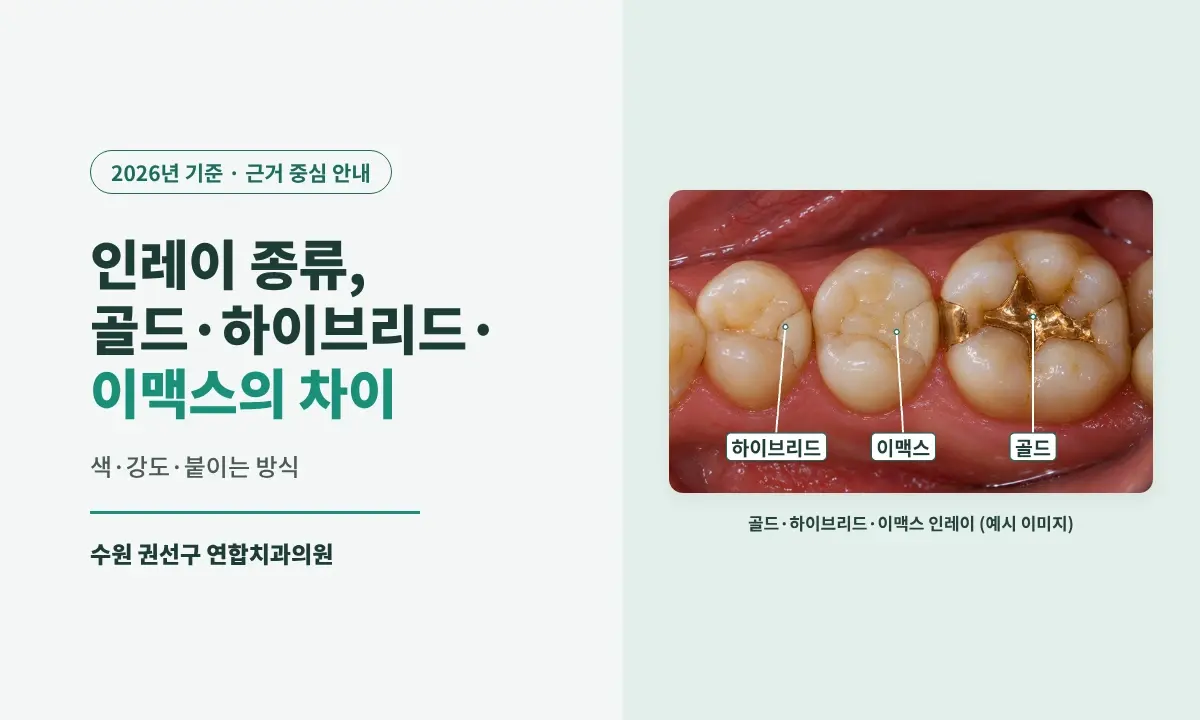
Gold, hybrid, and e.max inlays differ in color, strength, and how they attach to the tooth. Yeonhap Dental Clinic mainly uses e.max, and also uses hybrid inlays for premolars.
 Specialist Column
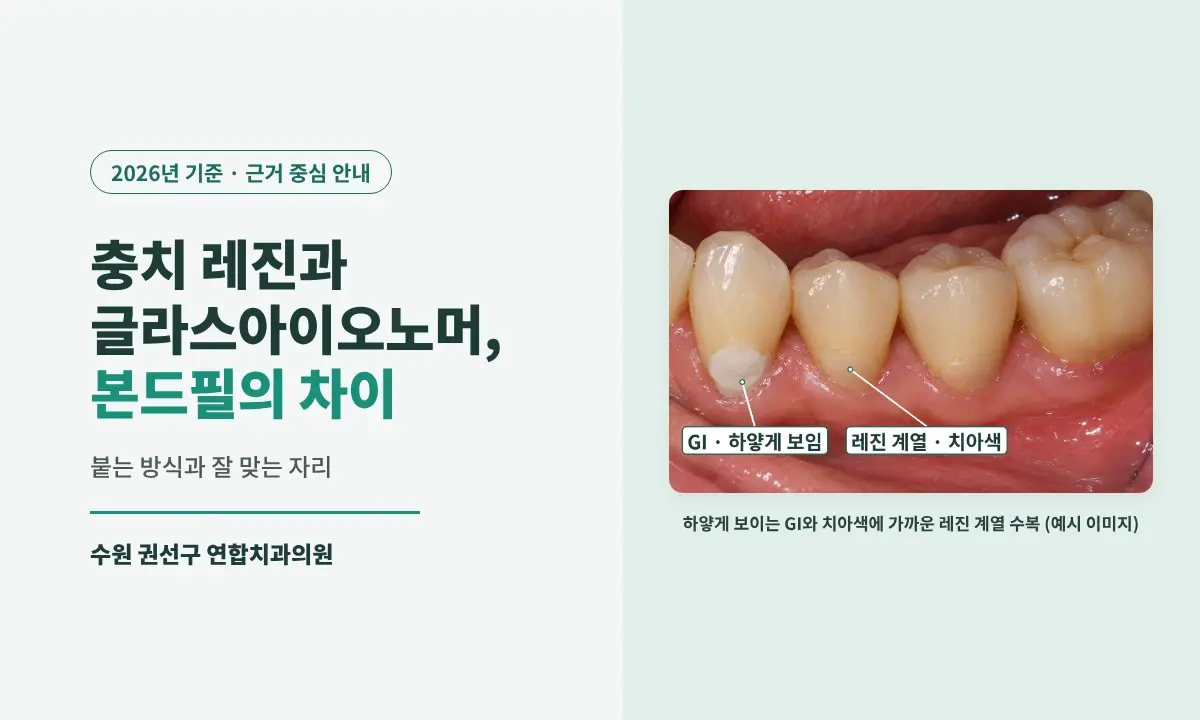
Composite resin, GI, and Bondfill bond in different ways and suit different sites. When restoring cavities and worn teeth, Yeonhap Dental Clinic chooses the material by looking at location, moisture control, and chewing force.
 Specialist Column
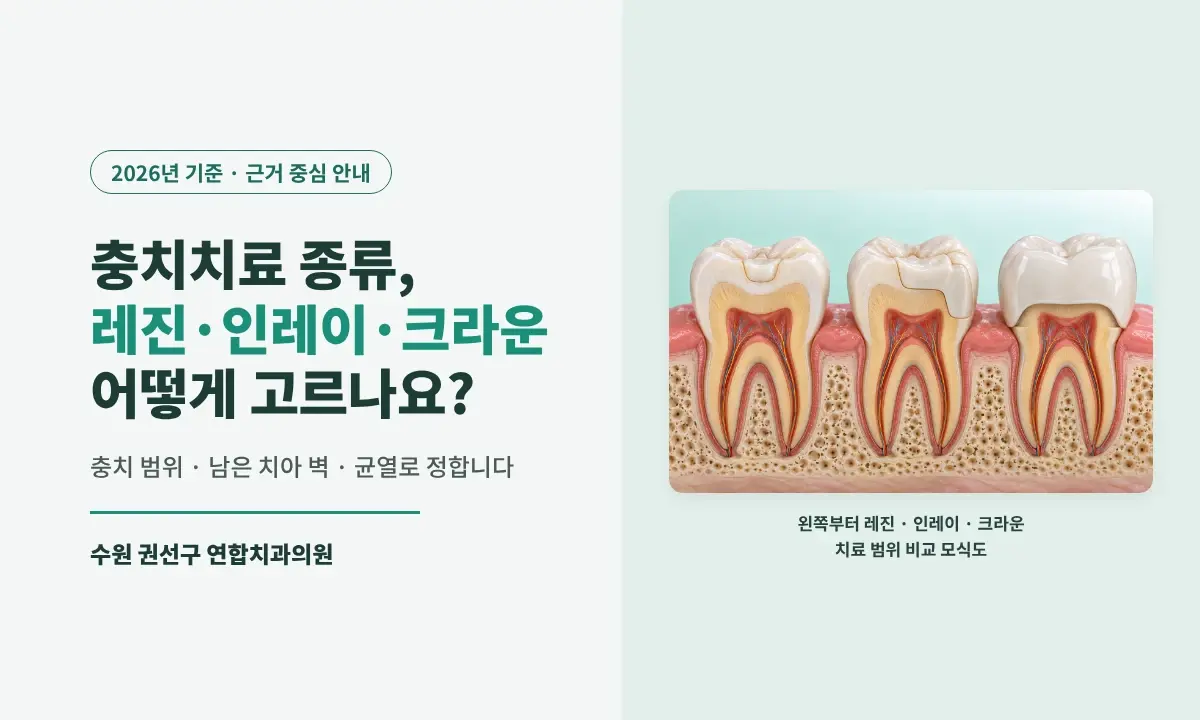
The type of cavity treatment is not decided by depth alone. Yeonhap Dental Clinic chooses among resin, inlay, and crown by looking at the extent of the decay, the remaining tooth walls, and cracks.
 Implant
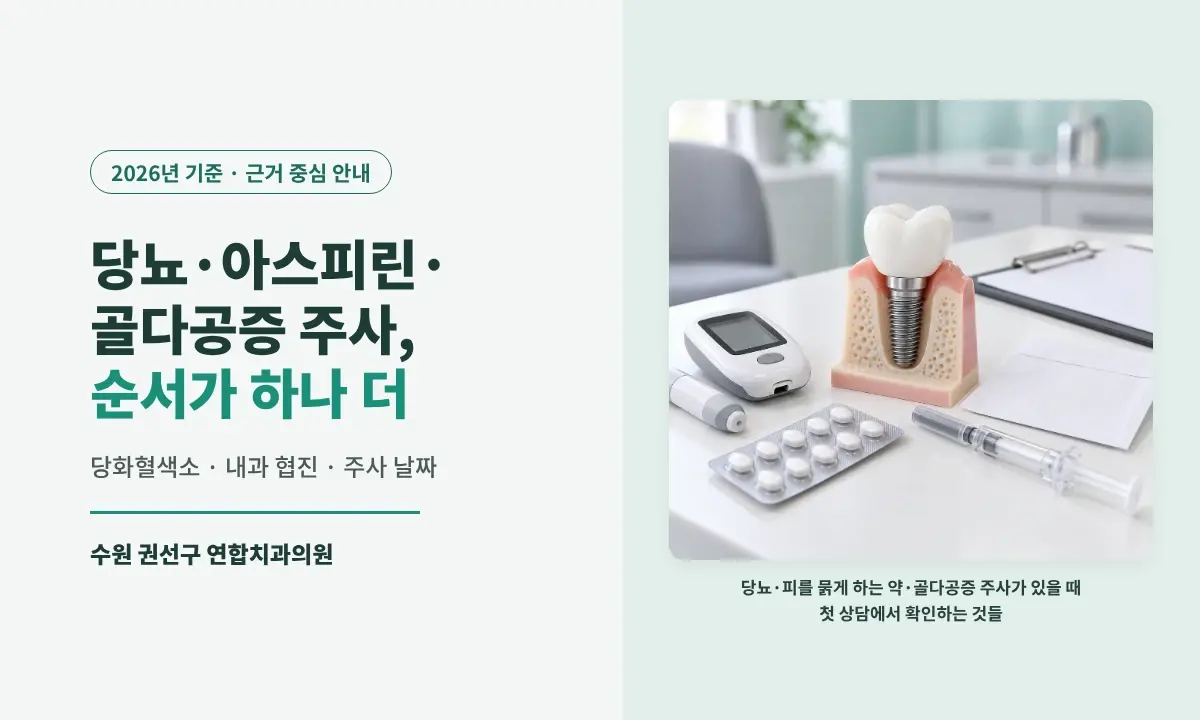
s are possible in most cases even with diabetes, aspirin, or osteoporosis injections. Yeonhap Dental Clinic in Gwonseon-gu, Suwon decides the timing of surgery based on HbA1c and consultation with your physician.
 Aesthetic
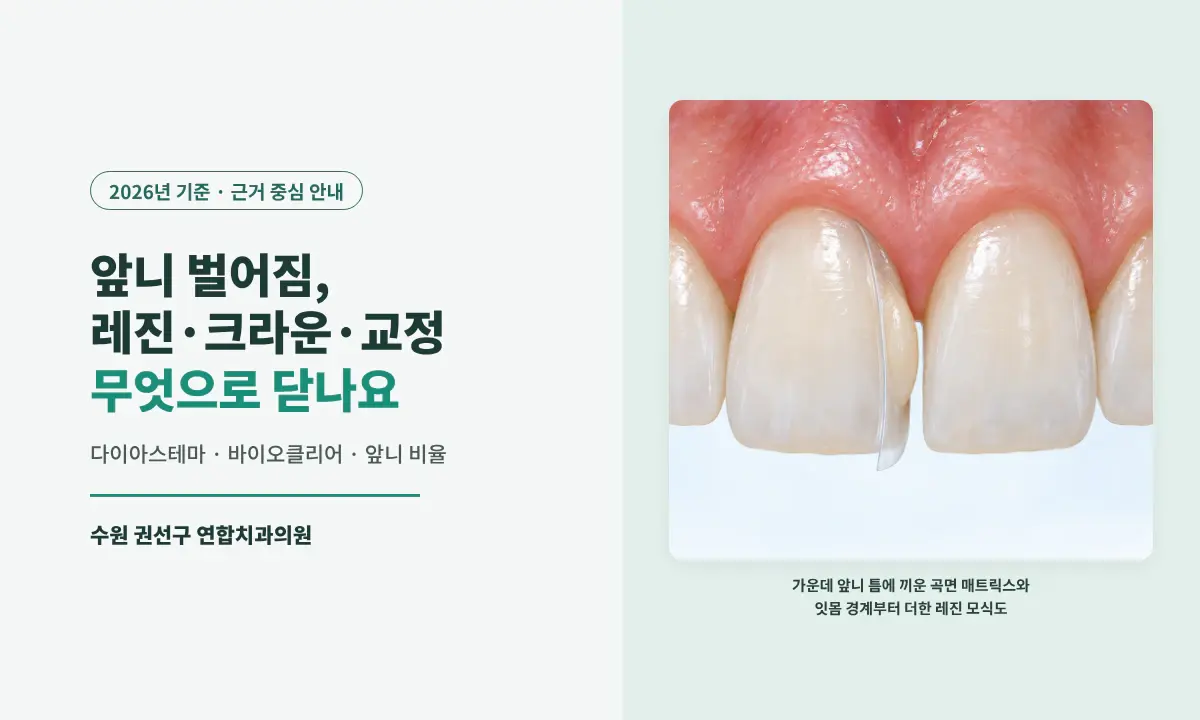
A gap between the front teeth (diastema) is handled with resin, a crown, or orthodontics depending on the proportion of the front teeth once the gap is closed, the depth of the bite, and the condition of the tooth surface to be bonded. At Yeonhap Dental Clinic in Gwonseon-gu, Suwon, if all three conditions fit, we bond resin using a BioClear matrix; if the length also has to be extended, we consider a crown; and if the teeth need to be moved, we refer you to an orthodontist.
 Implant
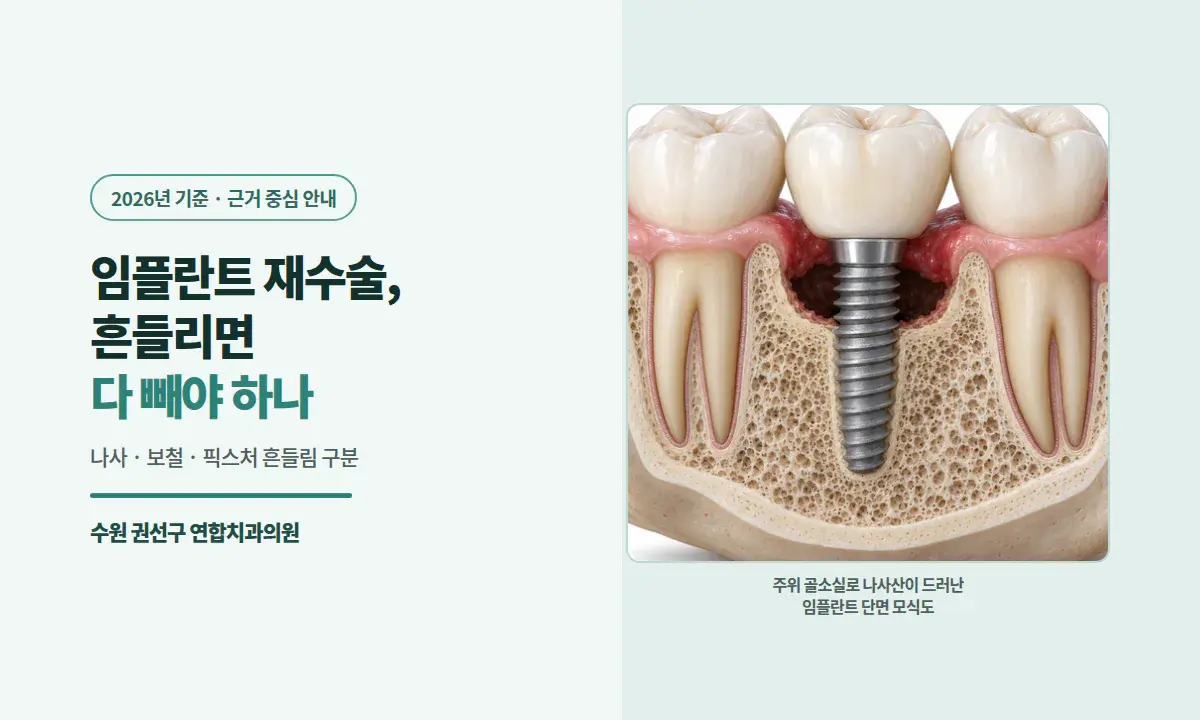
Not every loose implant is removed. The response is completely different depending on whether a screw has loosened, the prosthesis has come off, or the implant body itself is moving. Yeonhap Dental Clinic in Gwonseon-gu, Suwon first checks what is loose, and when peri-implantitis is present, decides on removal by looking together at the degree of bone loss, changes in ISQ (a value showing how firmly the implant is held in the bone), and the response to inflammation treatment.
 Implant
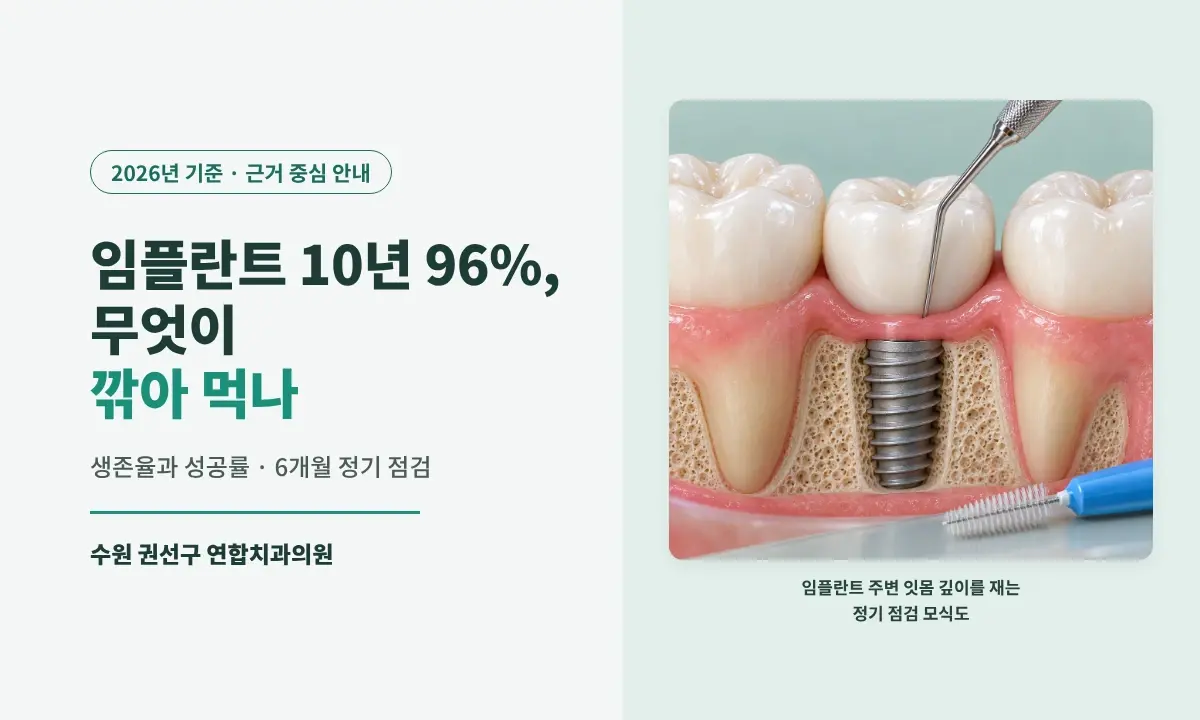
A 96% 10-year implant survival rate is only the share still remaining; it does not mean they are healthy. Yeonhap Dental Clinic checks the gums, bone, and prosthesis at 6-month check-ups.
 Aesthetic
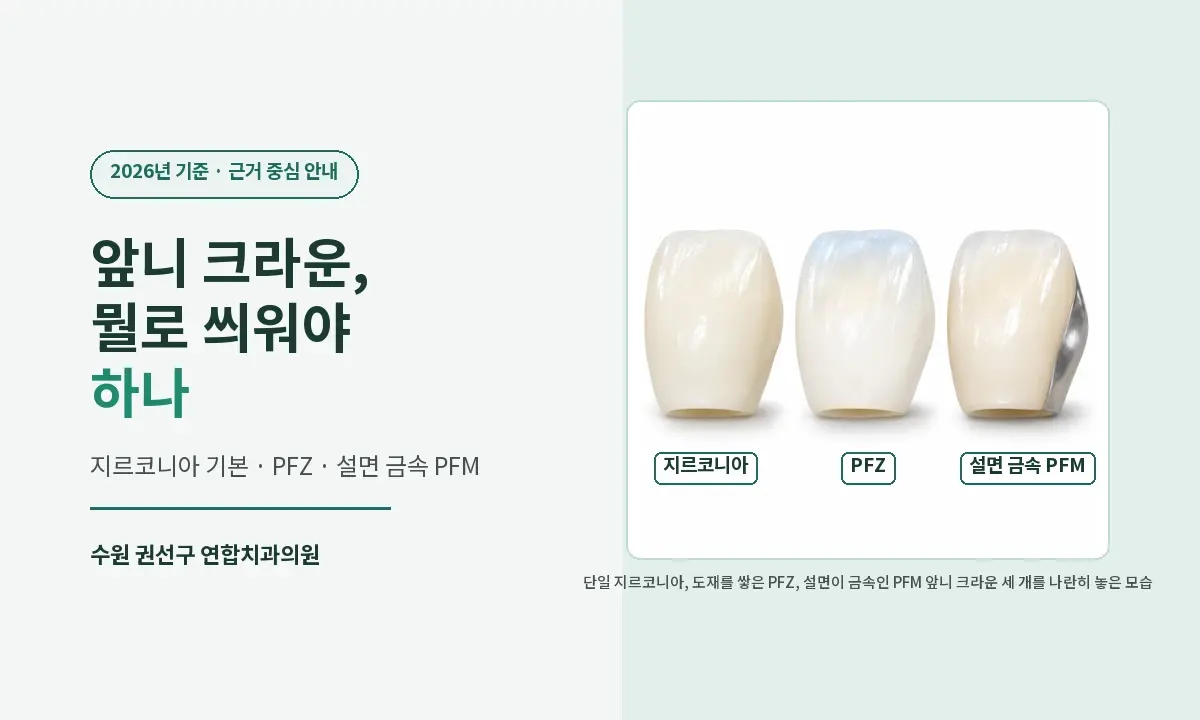
At Yeonhap Dental Clinic in Gwonseon-gu, Suwon, most front tooth crowns are made of zirconia, and PFZ is used when color matching is especially important. PFM, with a metal lingual surface, is chosen only when the conditions are clear, such as an abutment for a partial denture, a need to reduce tooth preparation, or a site under strong bite force. The material is not chosen first and the tooth fitted to it; the condition of the tooth narrows down the material.
 Endodontics
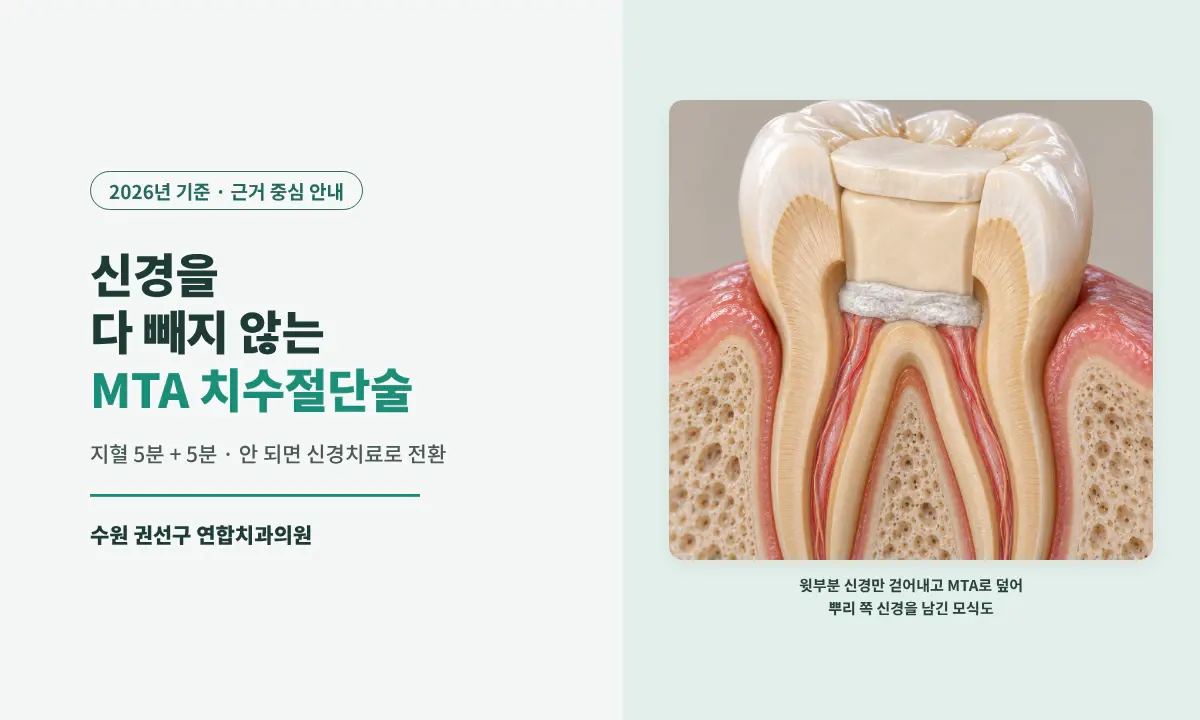
Even when decay has reached the nerve, if the inflammation is limited to the upper part, a pulpotomy may allow the nerve in the root to be kept alive. At Yeonhap Dental Clinic in Gwonseon-gu, Suwon, we isolate the tooth with a rubber dam, check for bleeding control using sodium hypochlorite of 6% or higher for 5 minutes (and 5 more minutes if needed), cover with MTA if the bleeding stops, and switch to root canal treatment on the spot if it does not.
 Specialist Column
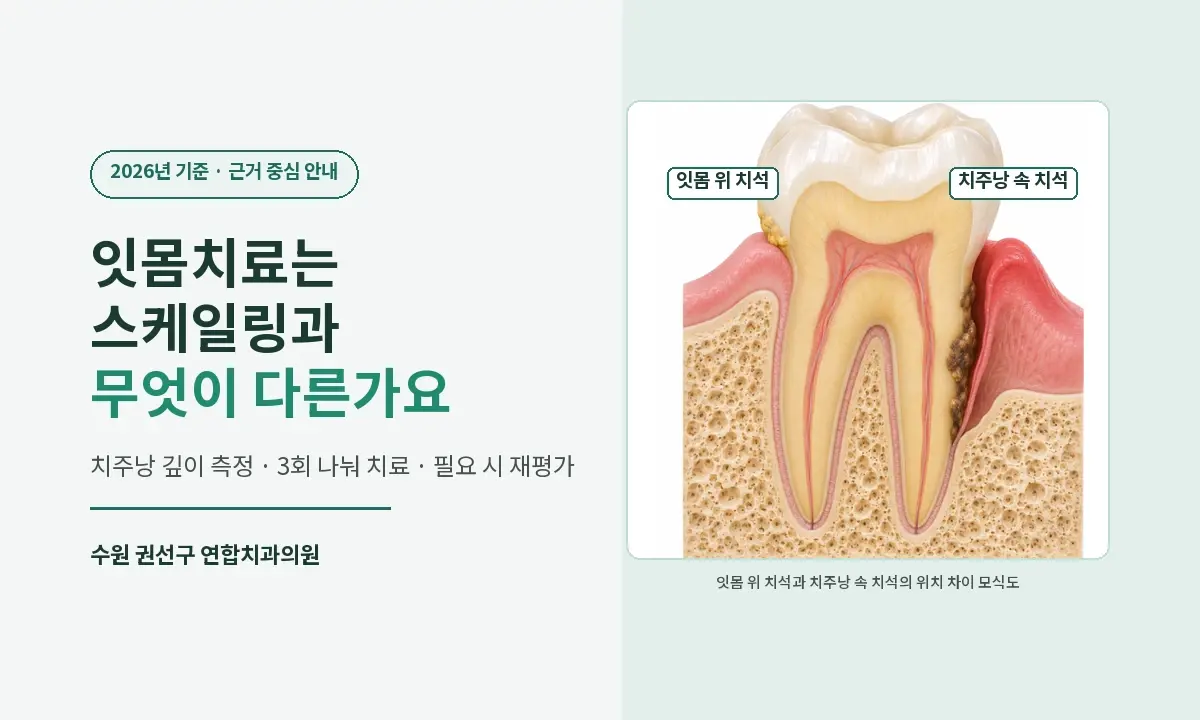
Scaling removes the tartar visible above the gum line, while gum treatment reaches inside the periodontal pocket under the gum. They are not two names for the same thing; they differ in the depth they reach. Cleaning the inside of the pocket is reported to reduce pocket depth by 1.7 mm on average and to close about 74% of pockets, and if any sites remain deeper than 4 mm, surgery is considered for those sites only. National Health Insurance applies one preventive scaling per year for patients aged 19 and older, and periodontal disease treatment is a separate item.
 Implant
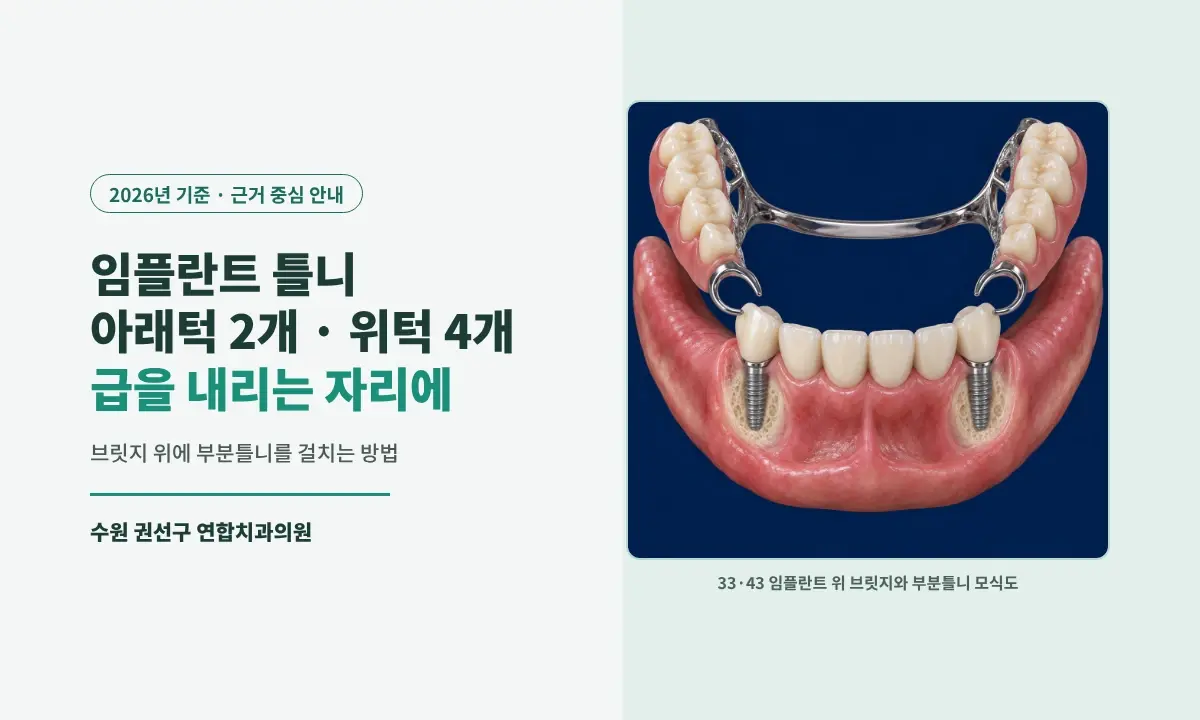
An implant-assisted denture (IARPD) is a treatment in which implants support a removable partial denture. Yeonhap Dental Clinic fixes a bridge on the implants and hooks the partial denture on with clasps, using two implants (33 and 43) for a fully edentulous lower jaw and four for a fully edentulous upper jaw.
 Implant
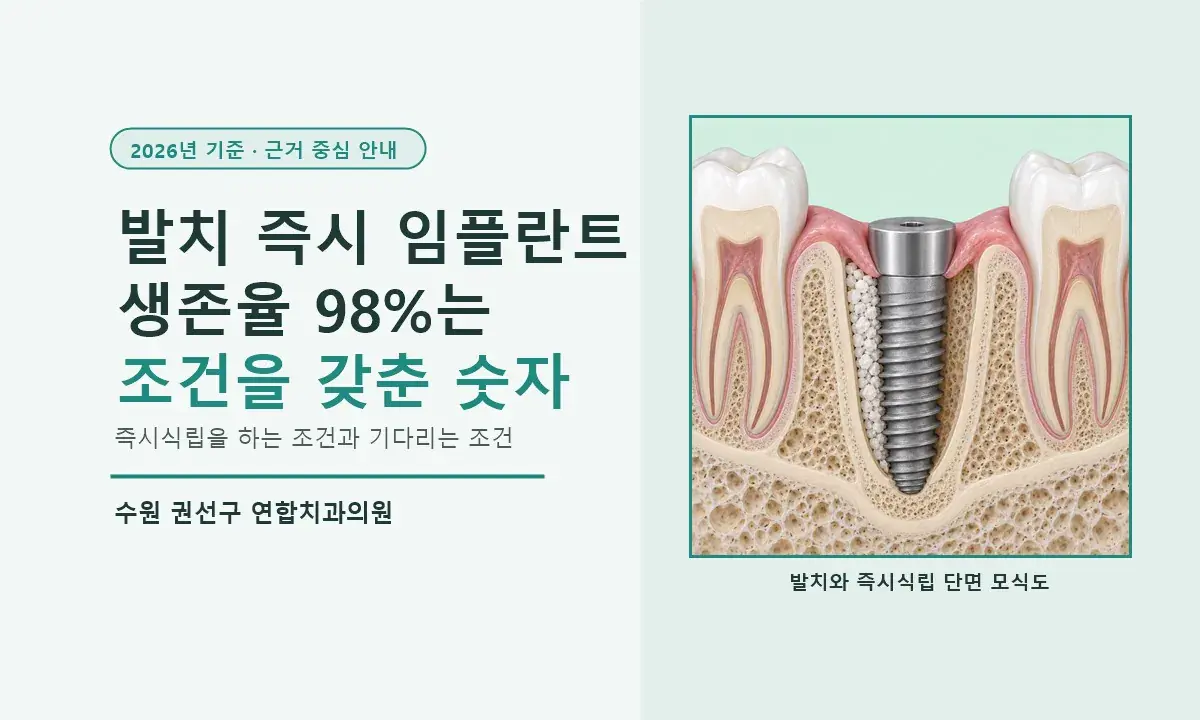
An immediate implant after extraction (immediate placement) places the implant in the same site on the day the tooth is removed. It removes the 2 to 3 months of waiting after extraction but does not shorten the 3 to 6 months it takes to bond to the bone. The 2-year estimated survival of 98.4% is a value calculated by pooling many studies, and in direct comparison studies, immediate placement had more early failures. We have laid out in numbers the conditions under which Yeonhap Dental Clinic places immediately and the conditions under which we wait.
 Implant
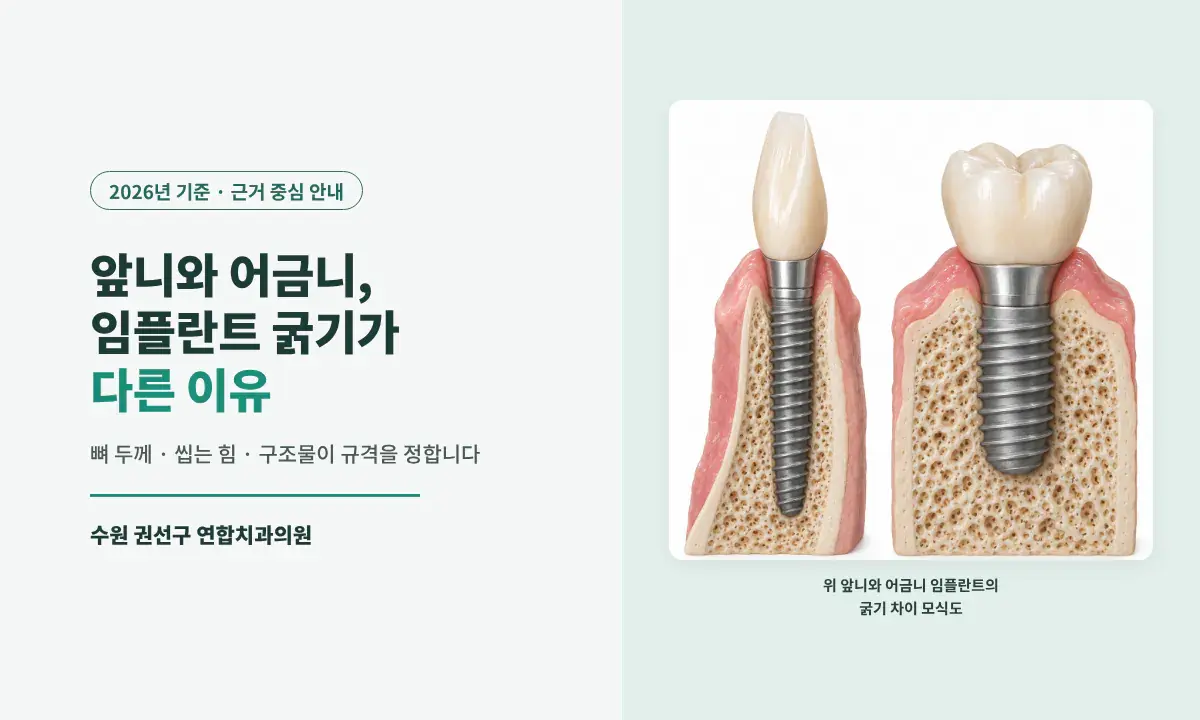
The same implant size is not used uniformly for front teeth and molars. For upper front teeth, where the bone is thin, we use thin implants of 3.0 to 4.0 mm diameter, and for molars, where chewing force is high, thick implants of 4.0 to 5.0 mm (premolars 4.0 to 4.5, molars 4.5 to 5.0). Yeonhap Dental Clinic sets the diameter, length, and number for each site on the first day from the CT, and places upper front-tooth implants at a position that does not extend forward of the line of the incisal edges of neighboring teeth.
 Prosthetics
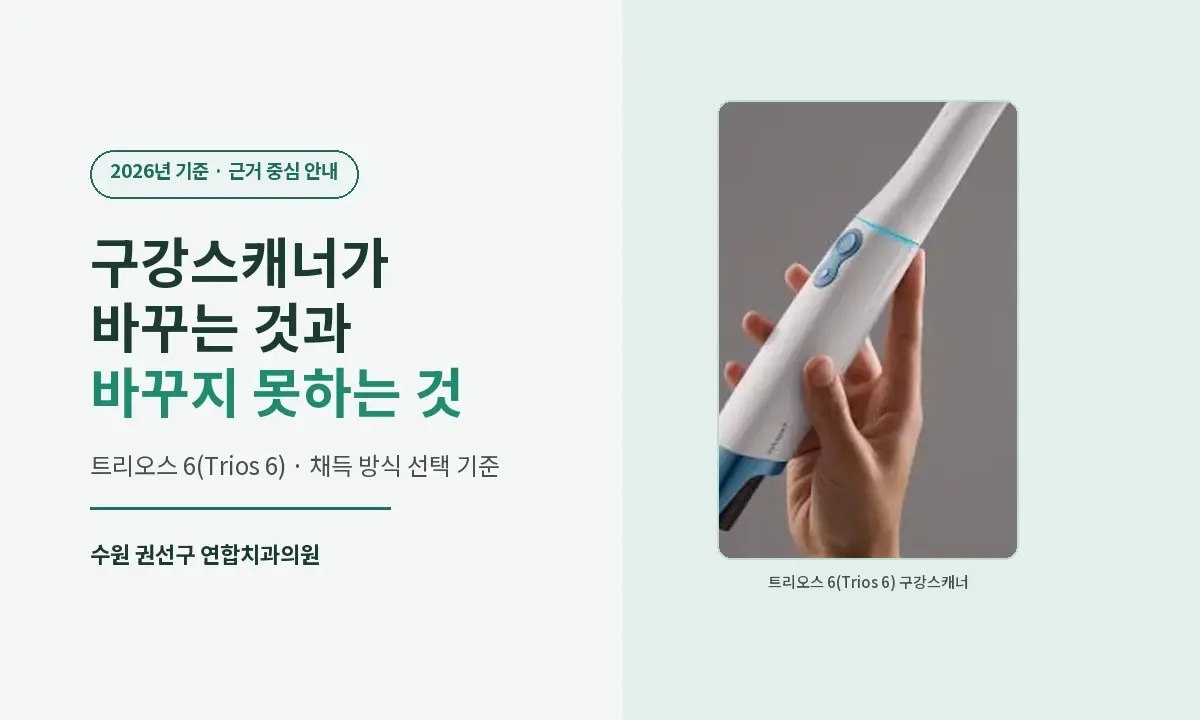
An intraoral scanner records the shape of your teeth by imaging, without putting impression material in your mouth. It is reported to be more comfortable than conventional impressions in terms of gagging and discomfort, and one study found a comfort score out of 10 of 9.14 versus 2.57. However, Yeonhap Dental Clinic does not scan complete dentures or partial dentures, that is, dentures; the director takes the impression by hand. The gum a denture rests on has to be recorded with movement and pressing separated, and current scanners cannot do that distinction in place of an impression.
 Implant
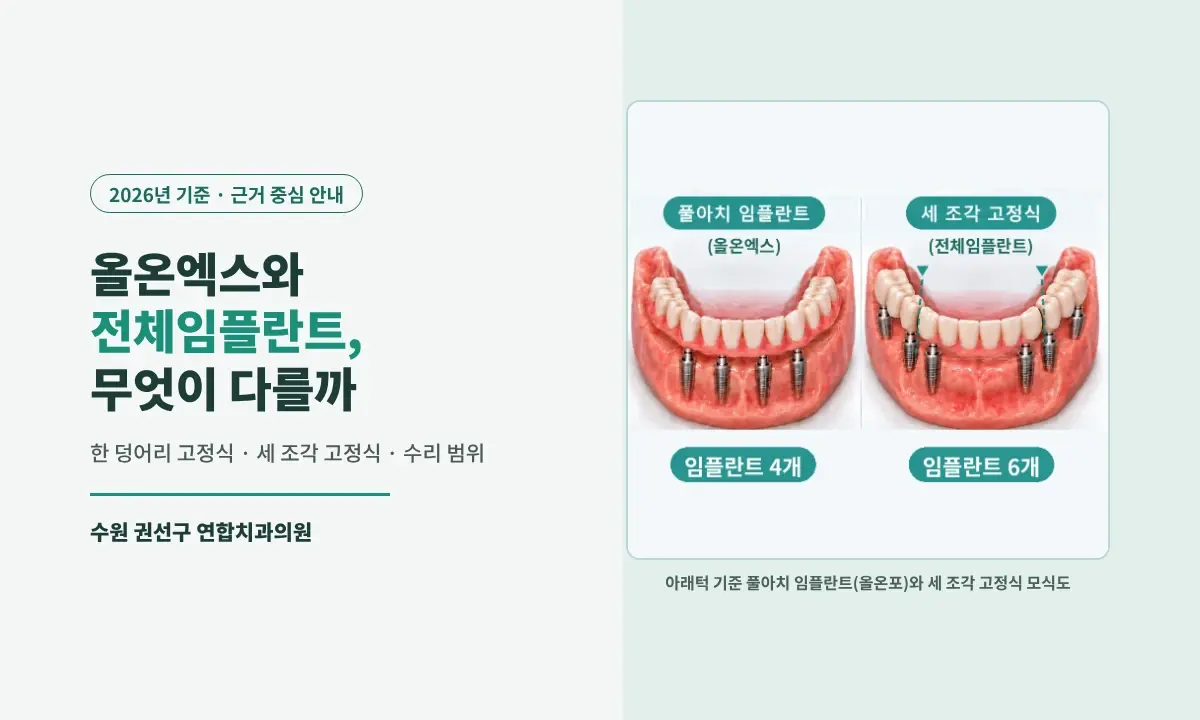
All-on-X is a one-piece fixed prosthesis, while Yeonhap Dental Clinic's full-mouth implants are a three-piece fixed prosthesis. We compare the two approaches by number of implants, repair scope, cleaning, placement sites, and cost, and outline how our clinic chooses between them.
 Implant
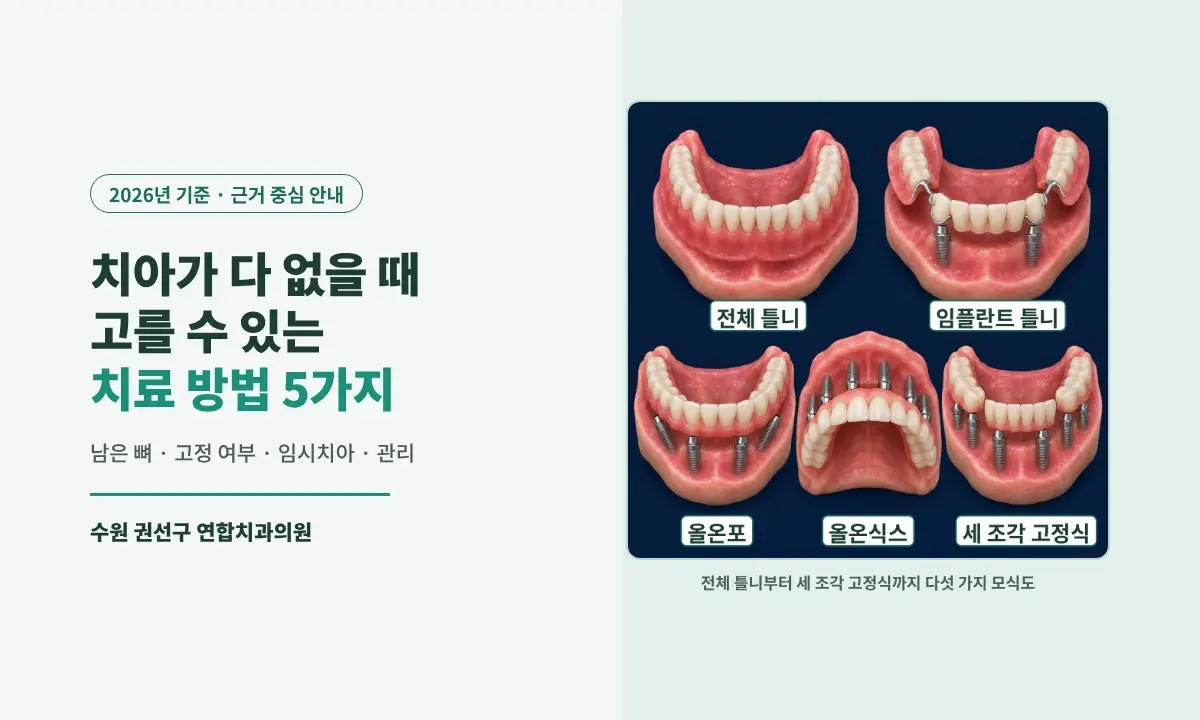
When all teeth are missing, Yeonhap Dental Clinic compares five treatment options: complete denture, implant-supported denture, All-on-4, All-on-6, and three-piece fixed. The choice depends on remaining bone, whether the prosthesis is fixed, cost and insurance, and maintenance.
 Root Canal
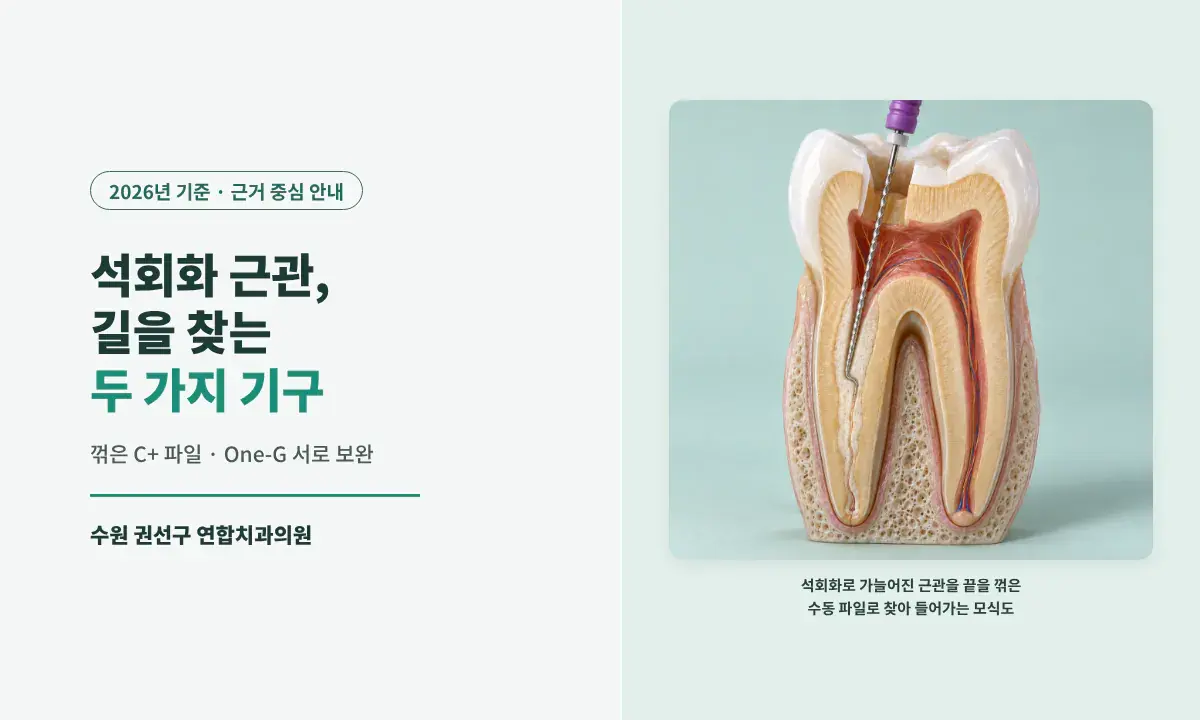
A calcified root canal does not mean root canal treatment starts right away. Yeonhap Dental Clinic in Gwonseon-gu, Suwon, decides whether treatment is needed by looking at symptoms, pulp testing, and root-tip imaging together; for calcified canals that do need treatment, we find the path with a pre-curved C+ file and an One-G glide path file, which complement each other depending on where and how the canal is blocked.
 Prosthetics
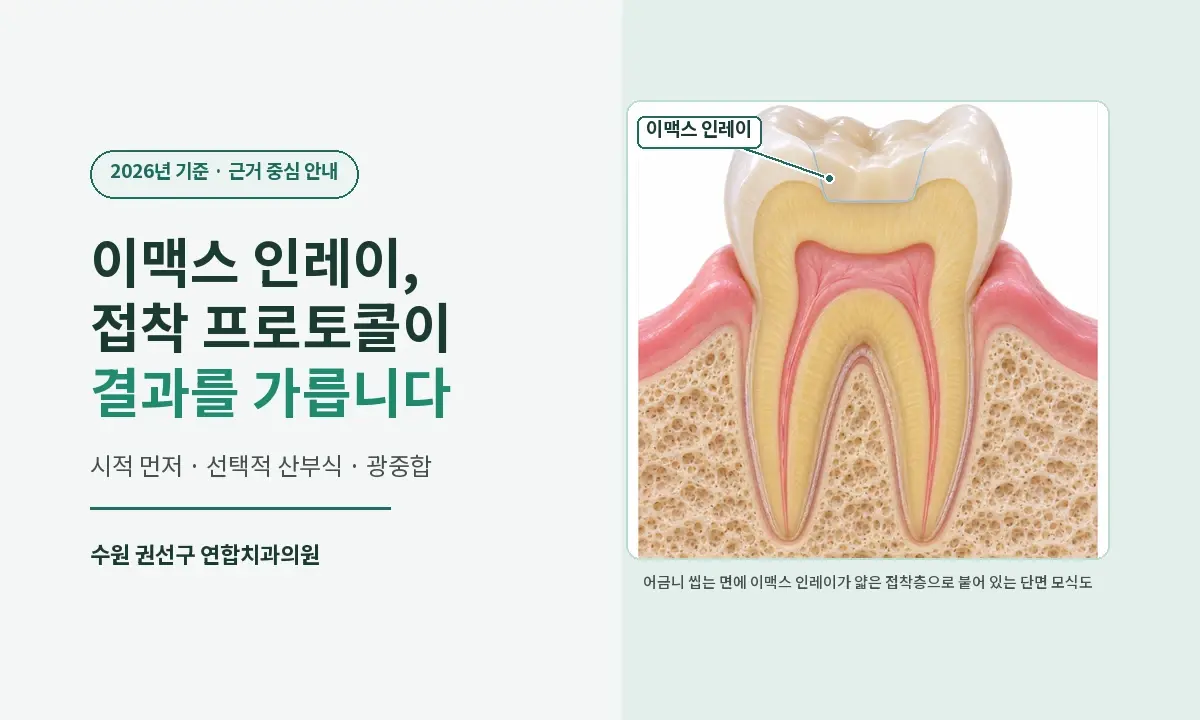
Unlike a gold inlay, which is retained by its shape, an e.max inlay is a restoration retained by bonding. So the completeness of the bonding protocol affects the result as much as the strength of the material. When bonding is done properly, the restoration and the remaining tooth structure behave as one body, but if any single step fails, bonding failure begins at that spot no matter how good the material is. Yeonhap Dental Clinic in Gwonseon-gu, Suwon, keeps to the sequence of doing the try-in first and then treating the ceramic surface, approaches enamel and dentin in different ways on the tooth surface, and, because we use a light-cure-only material, also manages the conditions under which light passes through the ceramic. The steps are not independent items; they are a chain in which each earlier choice determines the next.
 Prosthetics
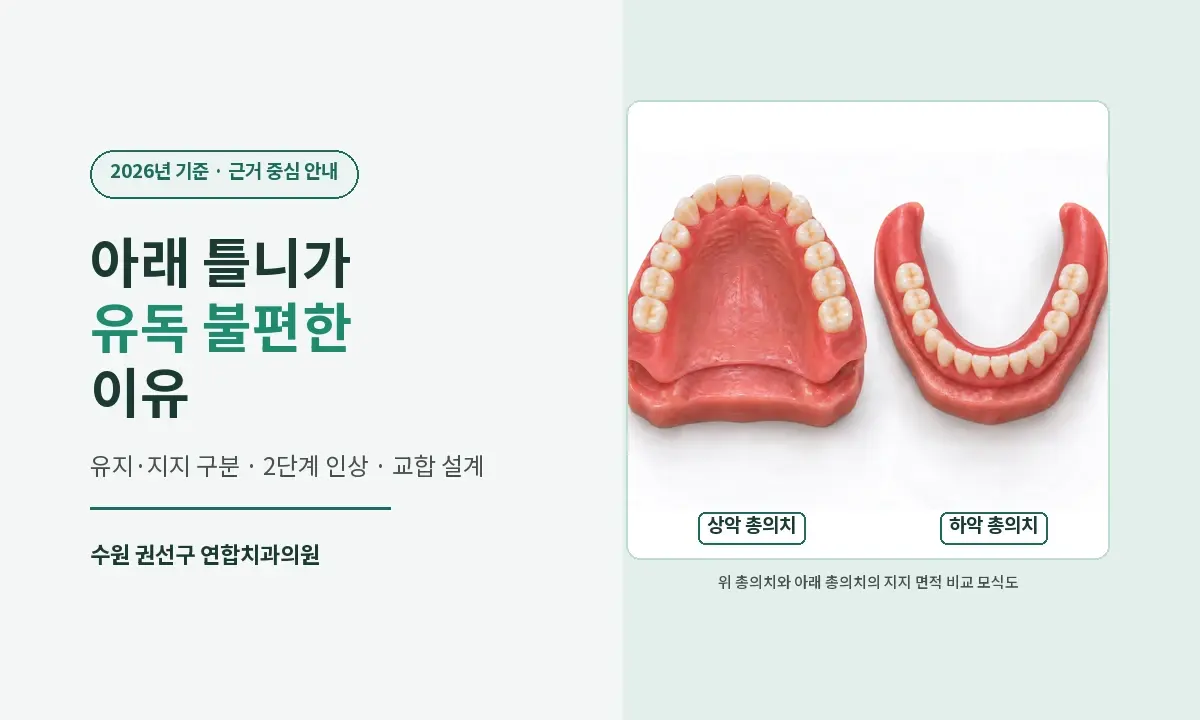
Lower denture discomfort should be divided into a problem of coming loose (retention) and a problem of pain when chewing (support). The lower jaw offers only about half the supporting area of the upper jaw, so chewing pressure concentrates on the gums. For the lower jaw only, Yeonhap Dental Clinic in Gwonseon-gu, Suwon takes impressions in two stages and uses a bite design that directs force to the center of the ridge.
 Specialist Column
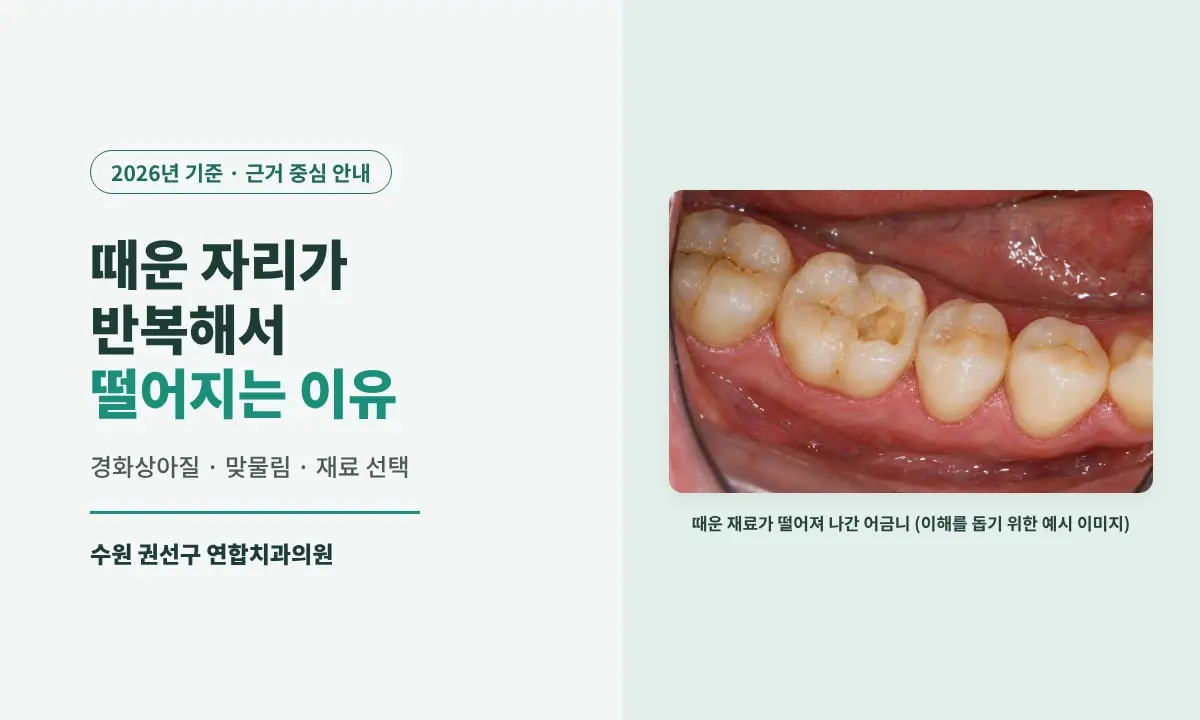
When a filling keeps coming off, the condition of the tooth, the bite, and chewing habits all need to be looked at together. Yeonhap Dental Clinic chooses the material again to fit the conditions we have checked.
 Implant
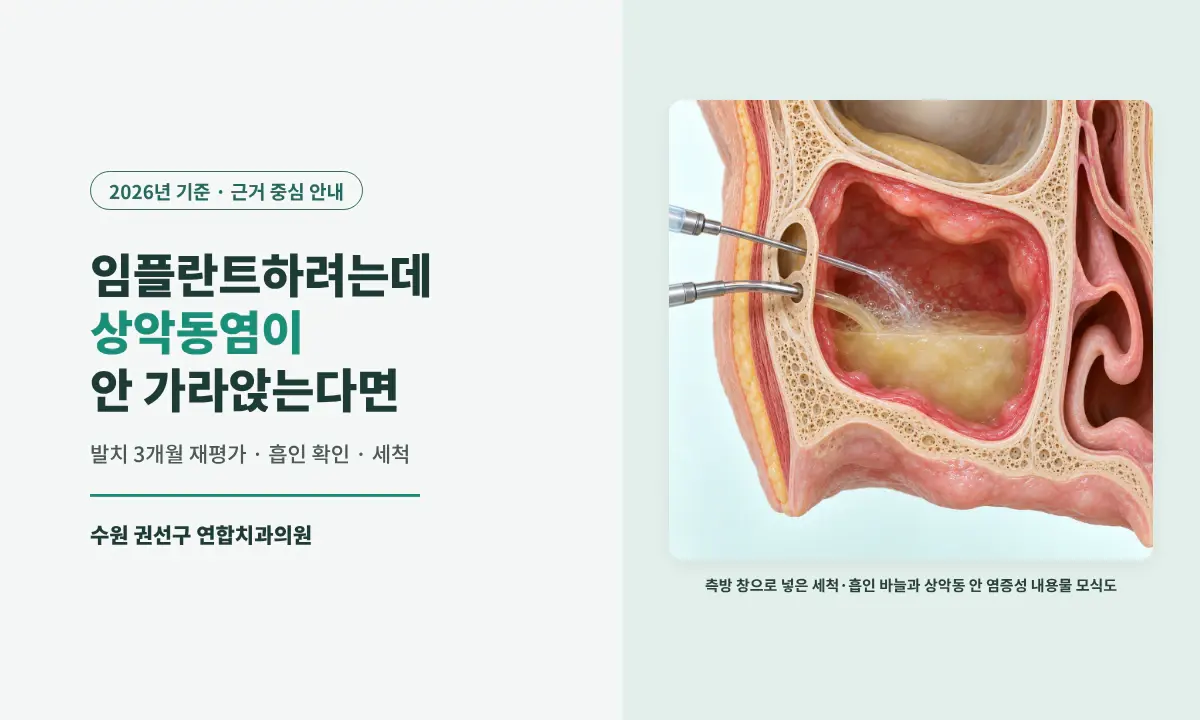
If sinusitis remains after an extraction and you are putting off your implant, what matters is less how long you wait than when it is rechecked and what the next step is. Three months after extraction, Yeonhap Dental Clinic uses CBCT to separate simple mucosal thickening from opacified lesions, and if the finding remains after one week of antibiotics, we open through a lateral approach and check directly.
 Implant
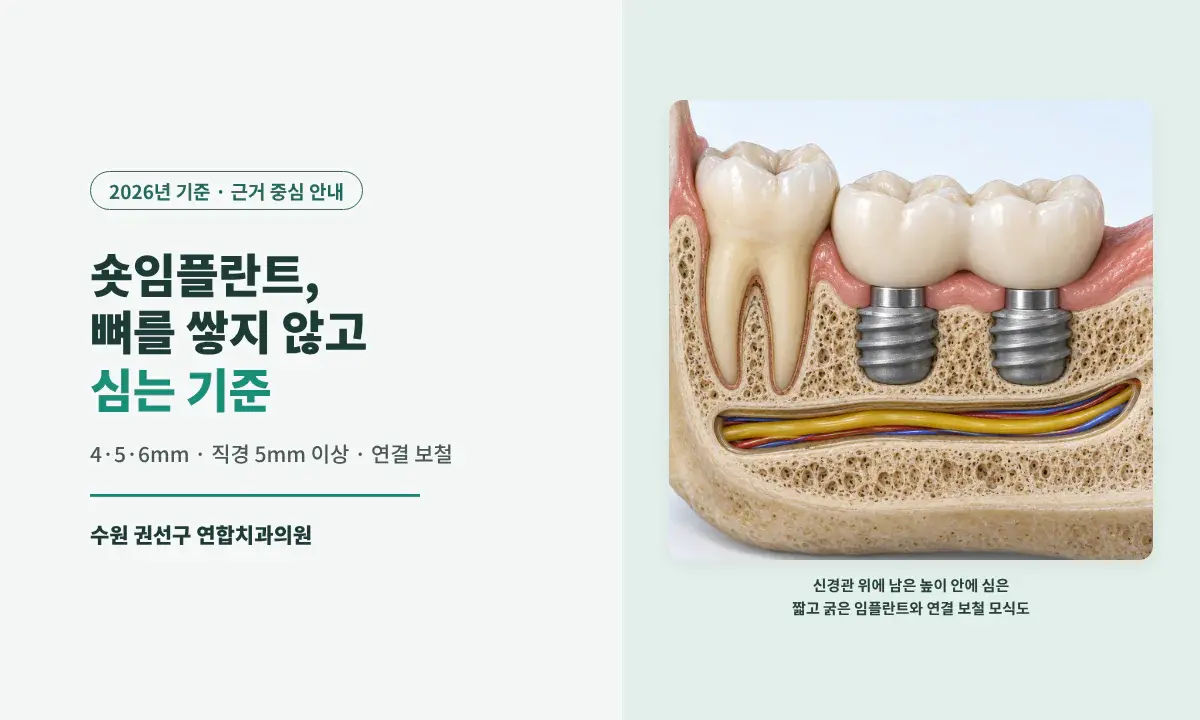
When there is not enough height above the nerve canal in a lower molar, the choices are vertical bone augmentation followed by a standard-length implant, or a short implant placed within the remaining height. In meta-analyses comparing the two, the short implant side had fewer complications and less marginal bone loss, but there are also reviews in which long implants had higher survival. At Yeonhap Dental Clinic in Tap-dong, Gwonseon-gu, Suwon, we consider a short implant 4–6 mm long and 5 mm or more in diameter when a standard length cannot be placed with a 2 mm margin above the nerve canal, and when 5 mm of height remains we apply our clinic's exception of placing a 4 mm implant, leaving a 1 mm margin.
 Implant
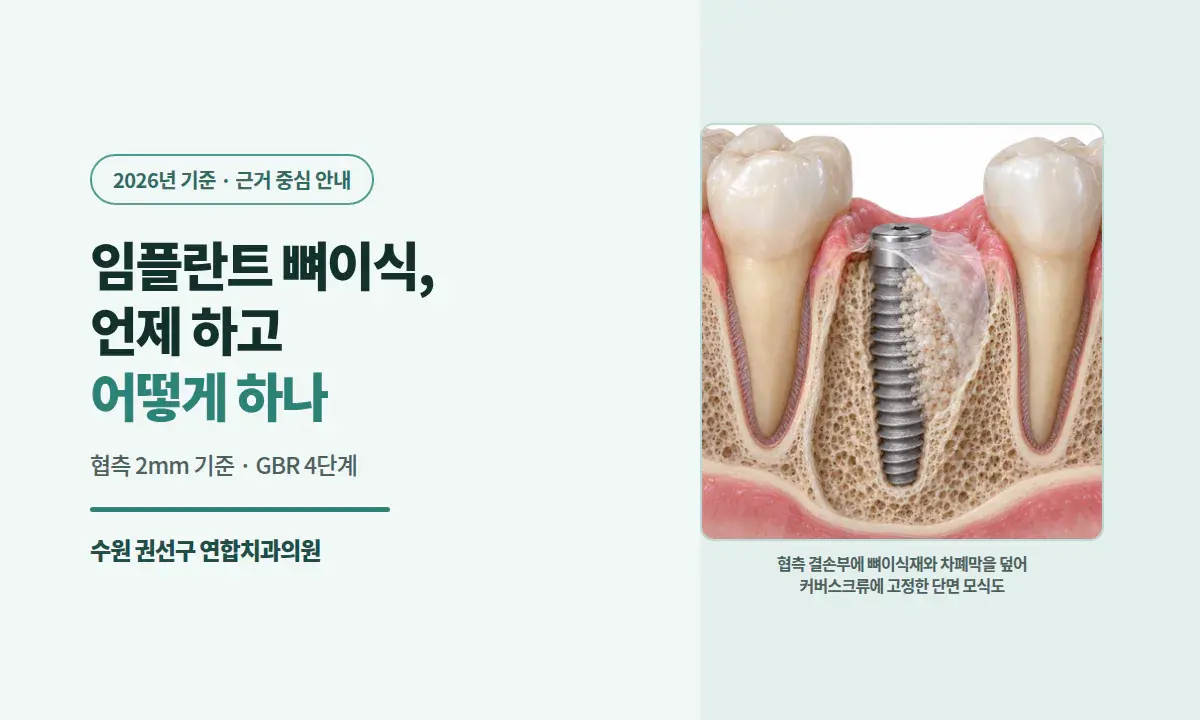
When you hear at an implant consultation that a bone graft is needed, the first worry is that the surgery will get bigger. Yeonhap Dental Clinic in Gwonseon-gu, Suwon first uses 3D CT to check whether a position can be found that leaves 2 mm of bone on the cheek side of the implant and 1.5 mm on the tongue side, and if so, we do not graft. A report that marginal bone loss decreased significantly as bone thickness approached 1.8 to 2 mm is the basis for this standard (Spray 2000), and when a graft is needed, we do it on the same day as placement in four steps: decortication, xenograft, barrier membrane, and fixation.
 Implant
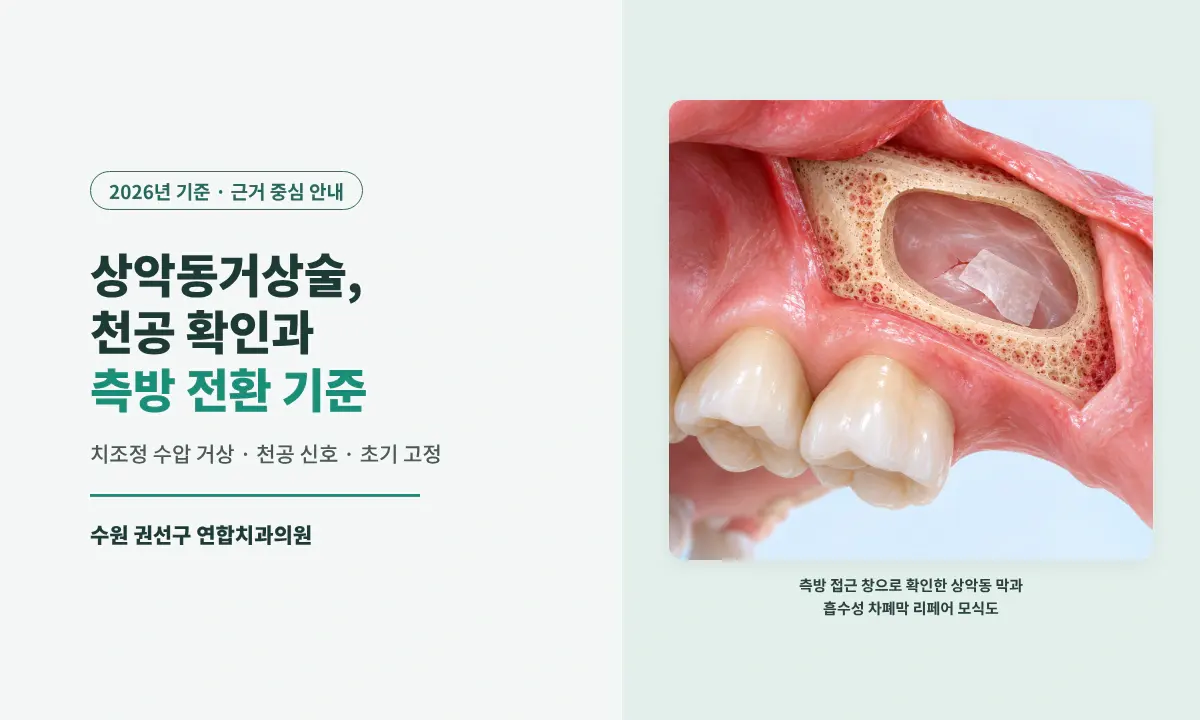
The crestal approach to a sinus lift is not always riskier than the lateral approach; the risk depends on the remaining bone, the condition of the membrane, and the instruments used. At Yeonhap Dental Clinic in Gwonseon-gu, Suwon, among crestal approaches we first consider the hydraulic lift that raises the membrane with saline pressure, treat unclear perforation signs as a perforation and switch to the lateral approach on the same day, and judge whether to place the implant separately based on primary stability.
 Specialist Column
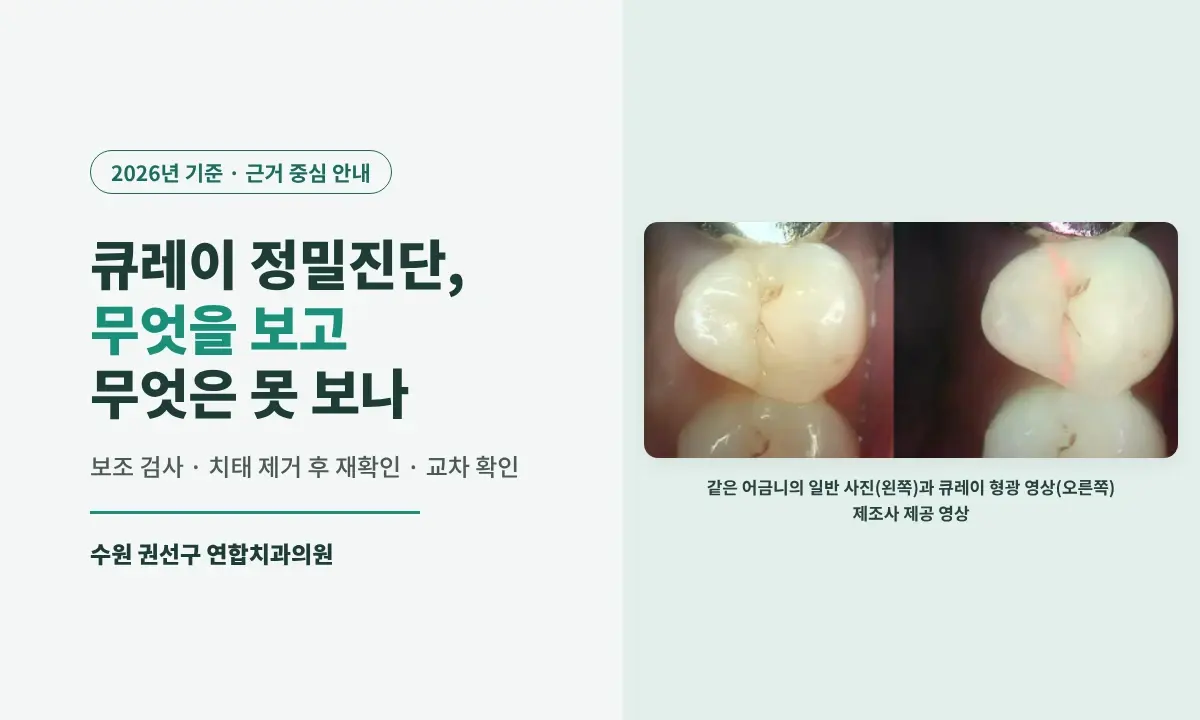
Q-ray shows early cavities, areas around fillings, and suspected cracks using fluorescence. Yeonhap Dental Clinic makes its judgment by adding repeat imaging and checks of radiographs and symptoms.
 Specialist Column
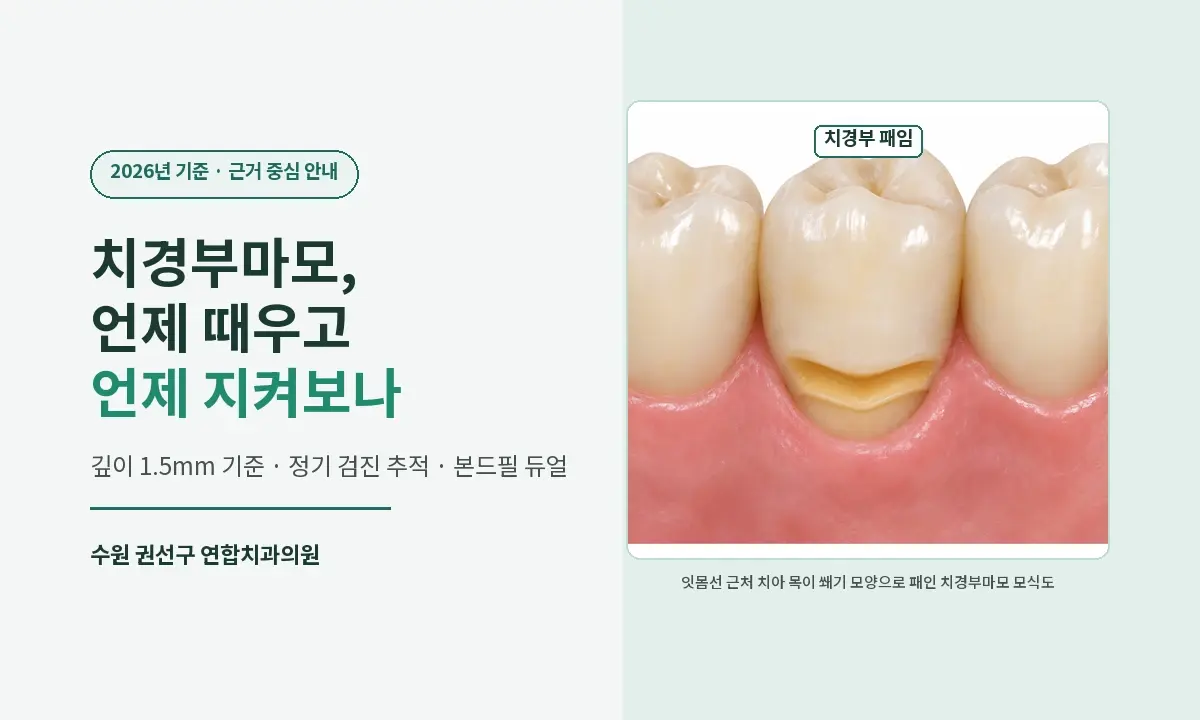
Once a notch forms at the neck of a tooth, it does not recover on its own and can only progress toward getting deeper. That said, we do not fill it the moment it is seen. At a very shallow stage there is not enough room for the restoration to be retained, and conversely, the deeper it gets, the greater the stress on the tooth. Yeonhap Dental Clinic uses an axial depth of about 1.5 mm as its threshold for intervention. In a study that loaded extracted premolars and measured deformation by depth, cervical deformation was reported to increase significantly at 1.5 mm (Du 2020), and Yeonhap Dental Clinic in Gwonseon-gu, Suwon, makes its judgment around that range and restores without delay.
 Wisdom Tooth
Even when an impacted wisdom tooth itself does not hurt, the large molar right in front of it can be damaged first. A systematic review analyzing 13 studies and 13,788 people reports the prevalence of distal-surface decay in the second molar next to an impacted lower third molar at 29.89%, and a mesioangular impaction raises that risk about 11.22 times. The problem is that this decay begins below the gum and is already deep by the time it is found. Yeonhap Dental Clinic in Gwonseon-gu, Suwon, judges whether to extract according to the impaction type, and for a tooth whose margin has already become deep, measures the crown-to-root ratio and chooses between crown lengthening and DME (distal margin elevation).
 Prosthetics
Crown lengthening is a procedure that exposes tooth structure that has dropped below the gum line to create a wall for the crown to grip, known as the ferrule. In exchange for gaining the wall, however, the bone around the tooth has to be reshaped, and the part that holds the root shrinks by the same amount. Yeonhap Dental Clinic aims for 1.5 to 2 mm of ferrule while stopping the removal at 2 mm between the restoration margin and the bone crest, and decides whether to proceed only after first measuring the root length that will remain after removal on 3D CT. The literature reports the lowest survival for teeth whose crown-to-root ratio became 1:1 after crown lengthening (Patil 2019), so Yeonhap Dental Clinic in Gwonseon-gu, Suwon, first checks whether the tooth will hold up afterward rather than whether the procedure can be done.
 Implant
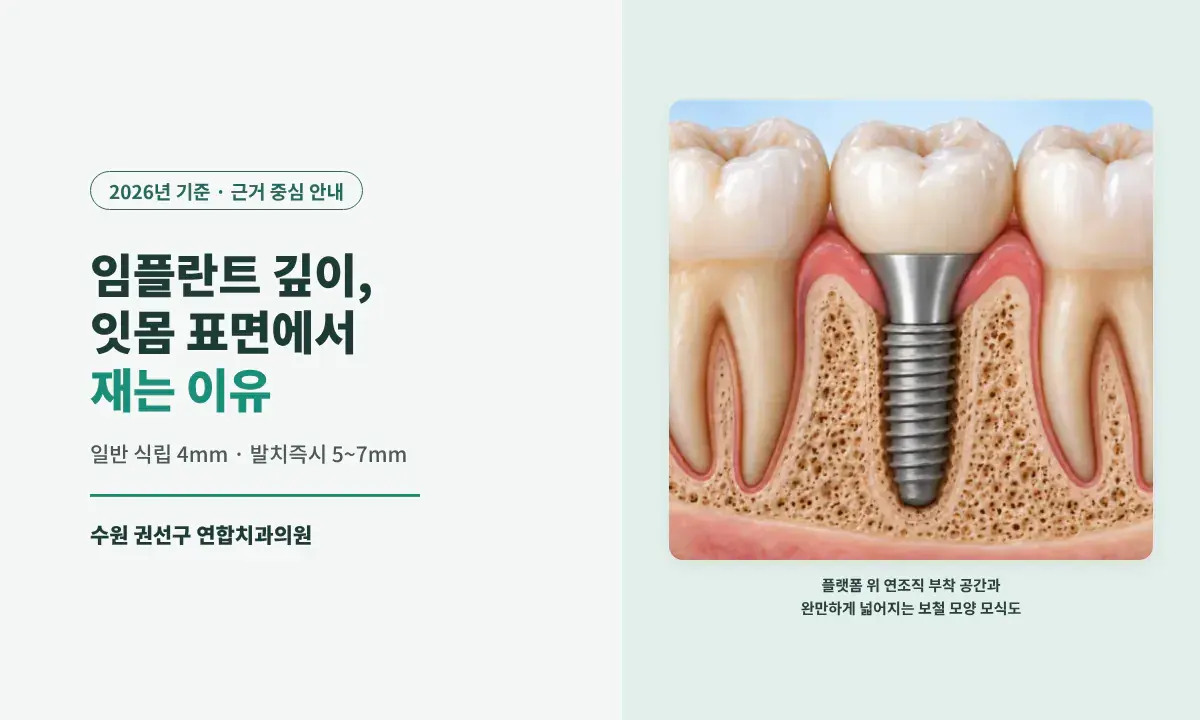
Peri-implantitis is an inflammatory disease linked to plaque, and placement depth, gum thickness, and prosthesis shape are conditions that determine how easy the area is to clean and maintain. Yeonhap Dental Clinic in Gwonseon-gu, Suwon measures depth from the gum surface to the implant platform, plans 4 mm for standard placement and usually 5 to 7 mm for immediate placement after extraction, and aims to build the prosthesis with an emergence angle within 30 degrees.
 Implant
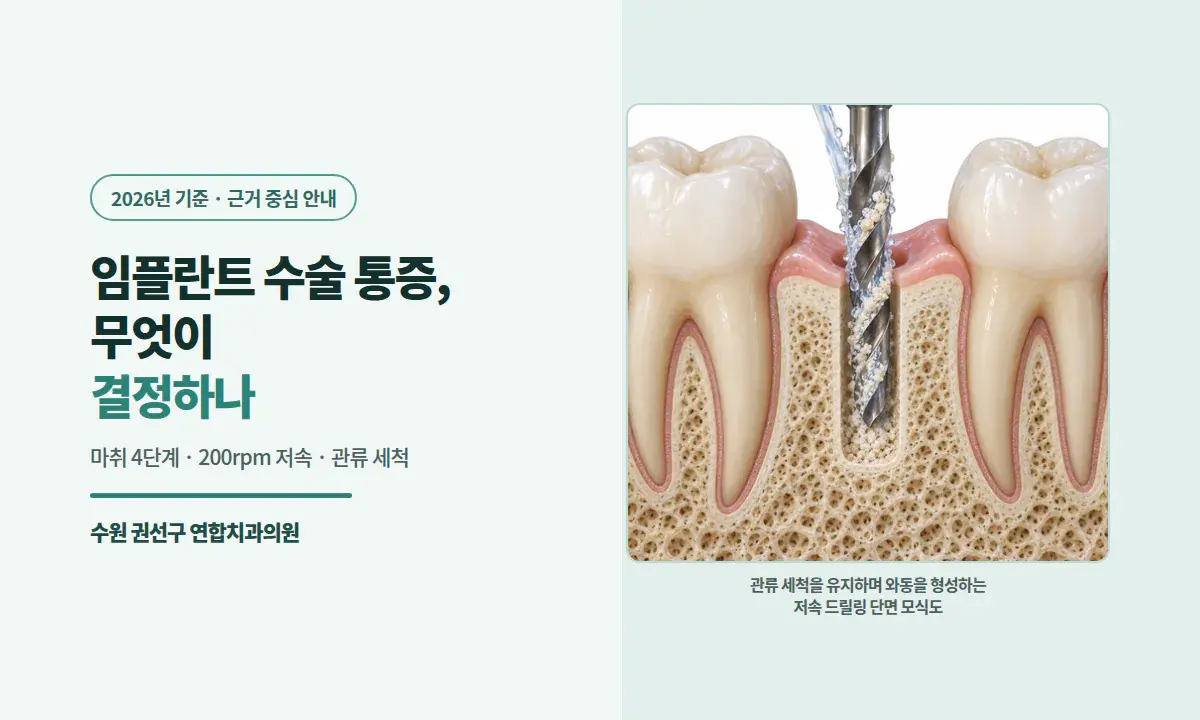
 pain varies with individual sensitivity and anxiety, and with the condition and extent of the surgical site. Yeonhap Dental Clinic in Gwonseon-gu, Suwon uses gargle anesthesia, topical anesthetic ointment, and an automatic anesthesia device as the standard, adds pressure for sensitive areas such as the palate, and reduces discomfort with a low-speed drill at around 200 rpm, flapless or minimal-incision planning, and follow-up at 1 week and 1 month after surgery.
 Root Canal
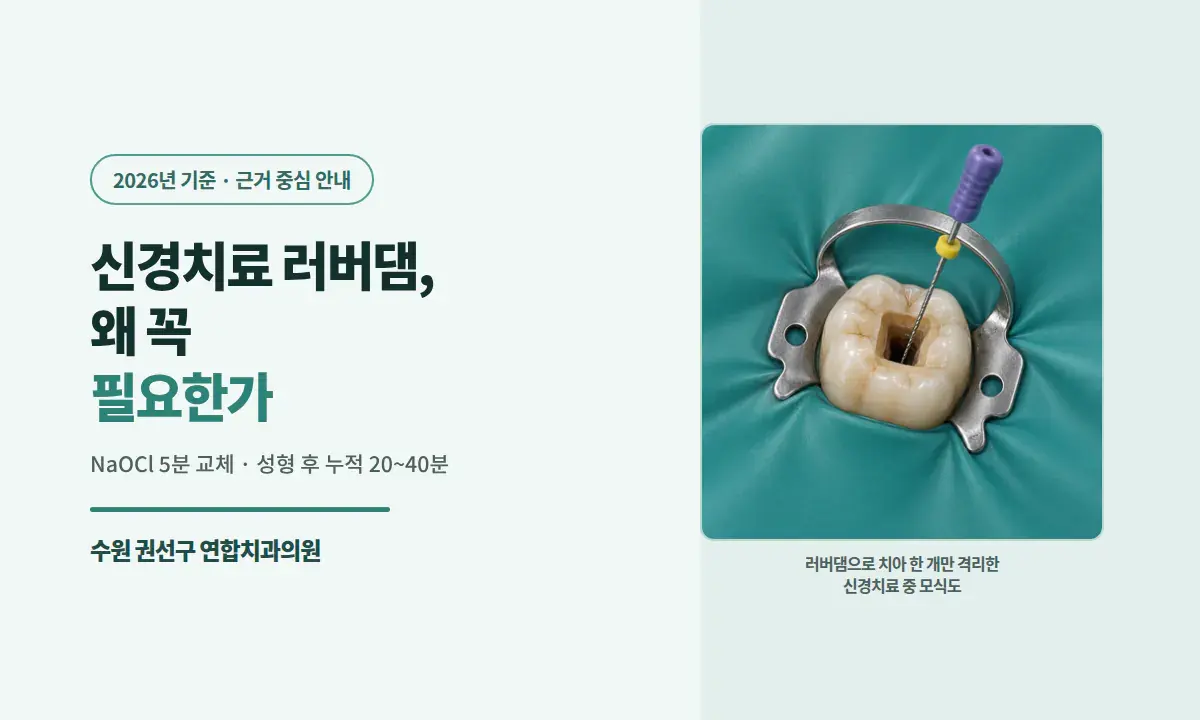
One of the conditions that influences the outcome of root canal treatment is keeping the canal from being re-contaminated by saliva and bacteria during treatment. At Yeonhap Dental Clinic in Gwonseon-gu, Suwon, we place a rubber dam for every root canal treatment, and from the point the canal has been enlarged to the planned size until it is filled, we replace sodium hypochlorite solution of 6% or higher every 5 minutes, for a total contact time of 20–40 minutes.
 Implant
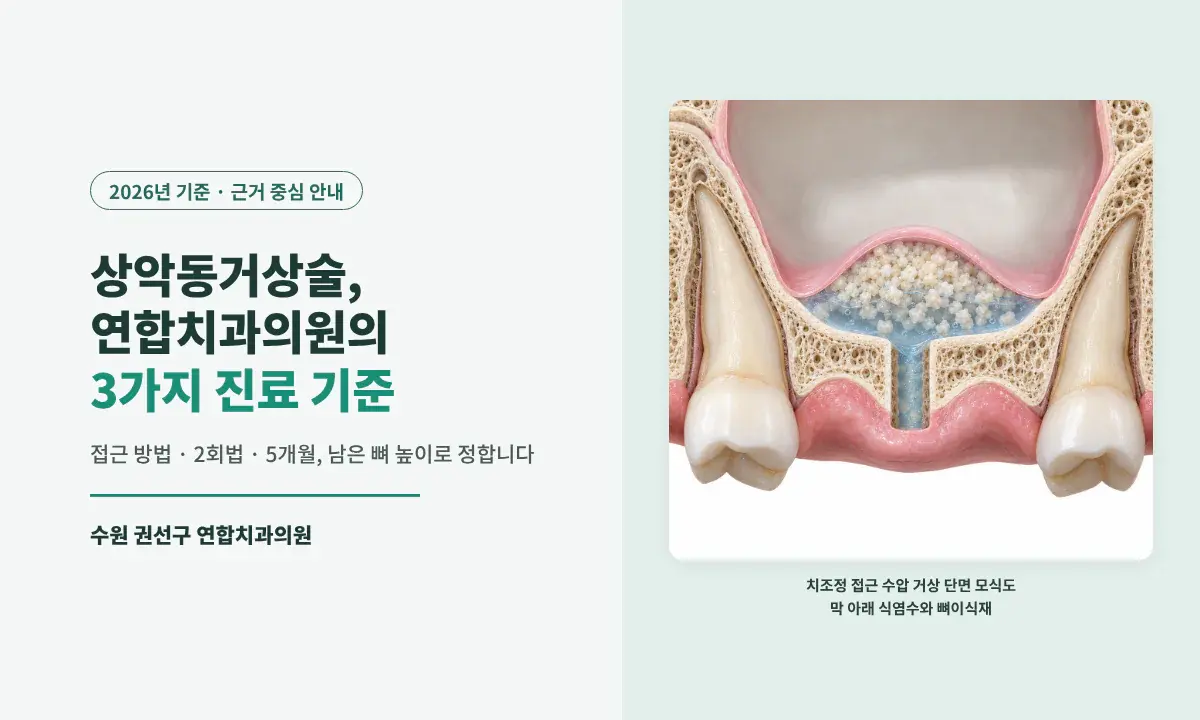
A sinus lift is surgery that raises the floor membrane of the maxillary sinus above the upper molars to create bone height for an implant. Yeonhap Dental Clinic in Gwonseon-gu, Suwon considers it when less than 7 mm of bone remains, and proceeds according to three criteria: approach, number of surgeries, and healing period. The estimated 3-year survival of implants at lifted sites is reported as 92.8% for the crestal approach and 90.1% for the lateral approach (Tan 2008, Pjetursson 2008).
 Implant
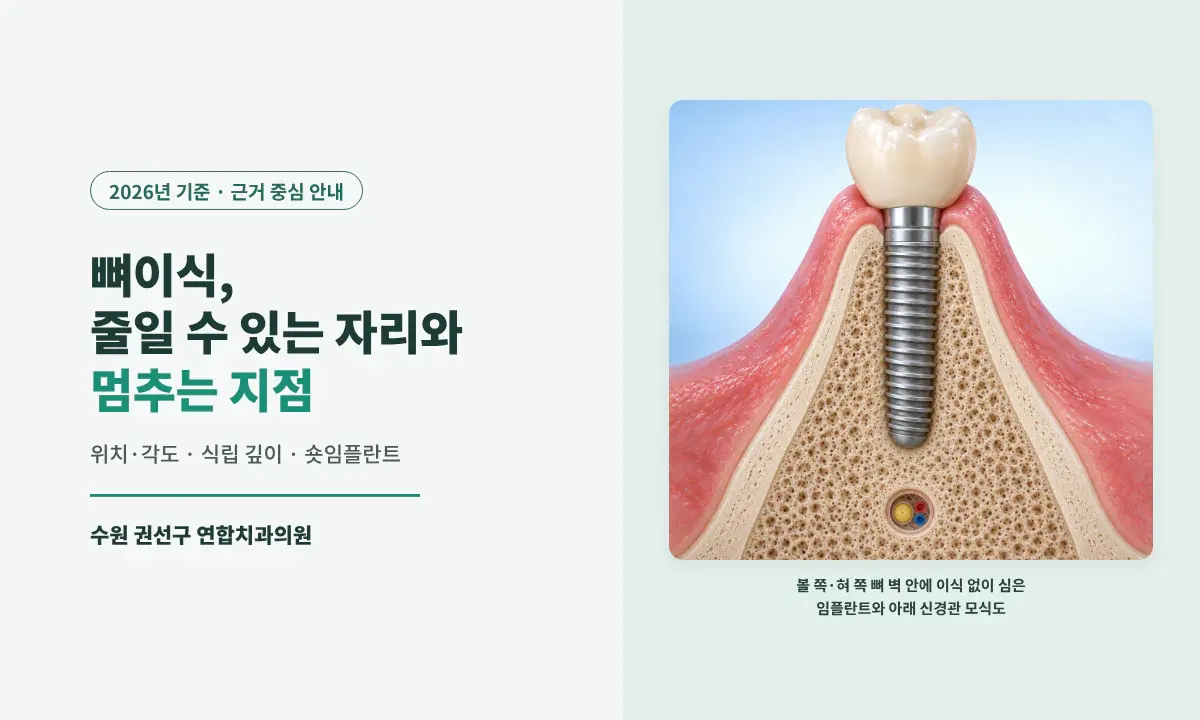
If you have been advised to have a bone graft for an implant, start by separating whether what is lacking is thickness or height. This article summarizes, by the standards of Yeonhap Dental Clinic in Gwonseon-gu, Suwon, how far position and angle, placement depth, and short implants can reduce grafting, and the points where we do not skip the graft.
 Implant
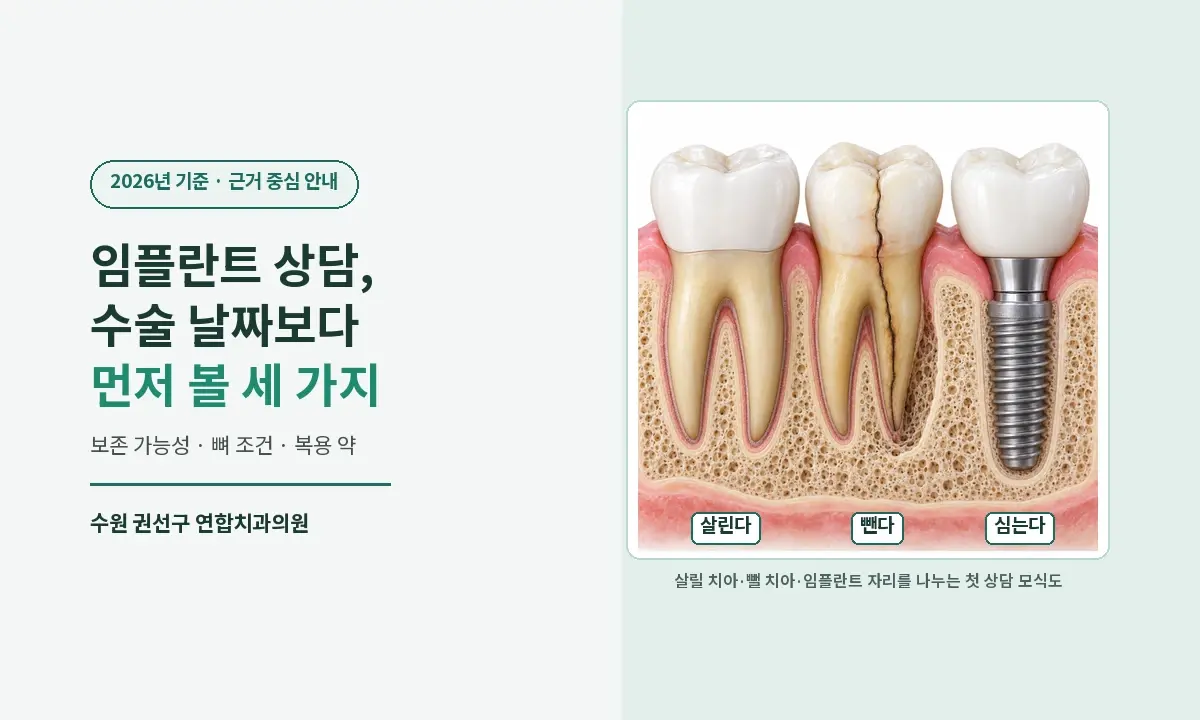
The worries patients most often have before an implant consultation are whether we will suggest pulling even healthy teeth, and whether the medications they take will be a problem for surgery. At Yeonhap Dental Clinic, we do not set a surgery date at the first consultation. First we evaluate whether the remaining tooth can be saved, using Q-ray and the Trios 6 intraoral scanner among other tools; we measure bone thickness and the distance to the nerve canal on 3D CT to confirm what is possible; and we check your medications and systemic conditions to adjust the plan. Yeonhap Dental Clinic in Gwonseon-gu, Suwon talks about a placement plan only after these three have been sorted out.
 Implant
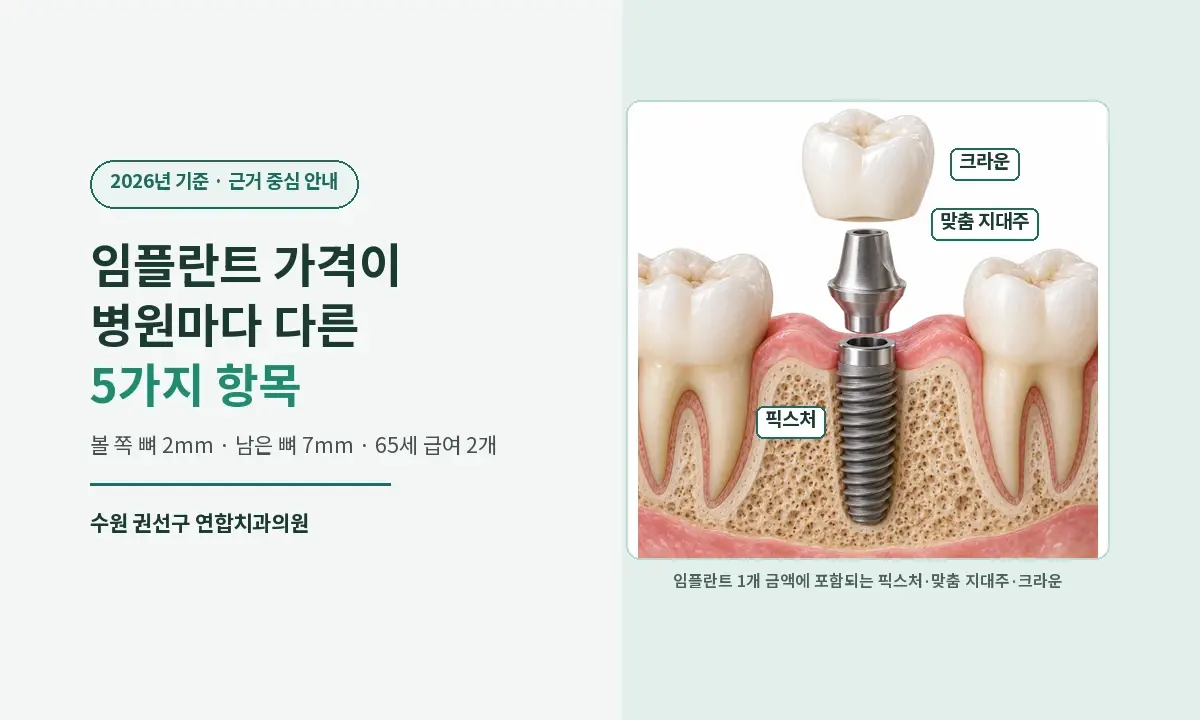
An implant price is not a single figure but the sum of items. Five items split the quotes: the number of implants, bone grafting, sinus lift, the type of abutment, and the follow-up schedule that runs from right after surgery to check-ups every 6 months. The quote changes with the number of implants, whether a bone graft or sinus lift is needed, the abutment configuration, and the scope of post-surgical care, and those decisions come from measurements, not from guesswork. At Yeonhap Dental Clinic in Gwonseon-gu, Suwon, our principle is to plan only the treatment that is needed, reducing unnecessary treatment based on 3D CT measurements. If you are 65 or older, still have some natural teeth, and meet the coverage conditions, National Health Insurance applies, and your burden differs.