
YEONHAP SPECIAL

What Makes Yeonhap Special

Two Integrated Dentistry specialists review diagnostic information together and explain treatment options and sequence for the current condition.

Our Difference

What Guides Yeonhap Care

When a care plan spans multiple areas, two Integrated Dentistry specialists review diagnostic information together and explain the treatment options and sequence.

Care-Plan Review by Two Specialists

01

Care-Plan Review by Two Specialists

Two Integrated Dentistry specialists explain treatment options and sequence based on oral findings and diagnostic information.

Expand
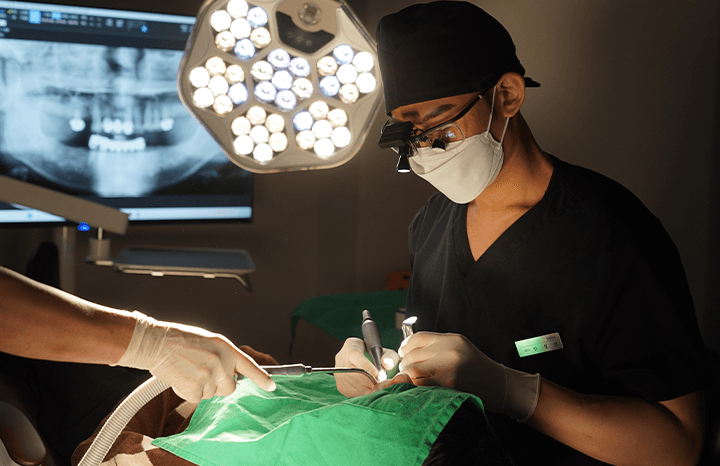
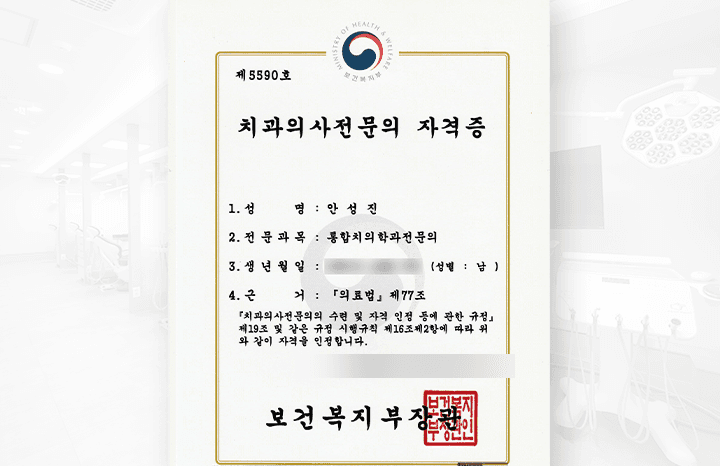
  • Chief Director Ahn Seong-jin and Director Jeong Yun-sik are both specialists in Integrated Dentistry. Integrated Dentistry is one of the 11 dental specialties recognized by Korea's Ministry of Health and Welfare.
  • We first review the oral examination and radiographs. We take a 3D CT scan when needed for implants, root canal treatment or wisdom tooth extraction.
Considering Preservation and Restoration Together

02

Considering Preservation and Restoration Together

We review preservation, root canal treatment, implants, and prosthetics together as appropriate for the current condition and care plan.

Expand
  • We use a rubber dam for every root canal treatment. After enlarging the canal to the planned size and before filling it, we replace the irrigating solution every five minutes. This is our clinic's protocol.
  • For implant placement, we look for a position within the prosthetic range that leaves 2 mm of bone on the cheek side and 1.5 mm on the tongue or palate side. If that is not possible, we consider bone grafting.
  • We scan for crowns, inlays and implant prostheses with Trios 6. The scan cost is included in the prosthetic fee.
Guidance on Treatment and Follow-Up Care

03

Guidance on Treatment and Follow-Up Care

We explain the current condition, treatment process, expected care guidance, and considerations in clear terms.

Expand
  • For anesthesia, we use a mouth rinse and topical anesthetic ointment, then slowly inject anesthetic with the i-JECT automated device. This aims to reduce discomfort during anesthesia; it does not mean treatment is completely painless.
  • For patients who have delayed scaling because cold water causes sensitivity, we use a warm-water scaler. Depending on gum condition, temporary sensitivity may still follow treatment.
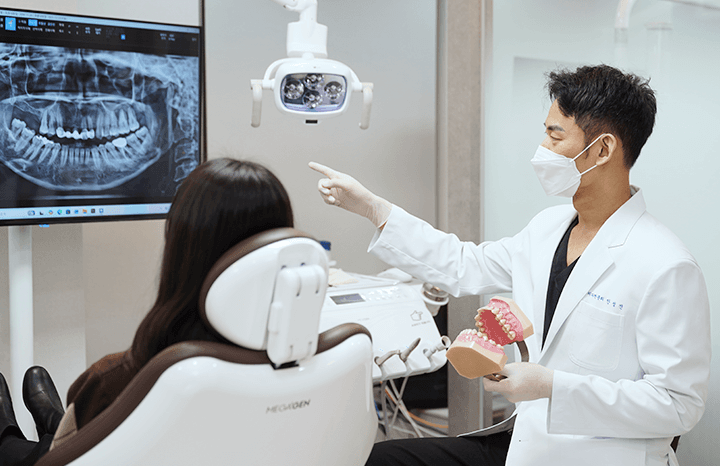
  • We review images and tooth scans together on a screen and explain an expected implant schedule at the first consultation.
  • During an implant consultation, we explain cleaning tools and areas for the planned prosthesis, and distinguish daily care from tasks at the six-month check-up.