
ABOUT YEONHAP

About Yeonhap Dental Clinic

A dental clinic in Gwonseon-gu, Suwon, where two Integrated Dentistry specialists provide care.

Yeonhap Dental Clinic

Yeonhap Story

Caring for You Like Family

At Yeonhap Dental Clinic, two Integrated Dentistry specialists provide care. We review diagnostic information and oral findings together to explain treatment options and sequence, and review whether a natural tooth can be preserved before extraction.

We use diagnosis and clear explanations to guide care, and explain the treatment process and follow-up guidance.

Yeonhap Special

Reviewing Each Person's Condition Together

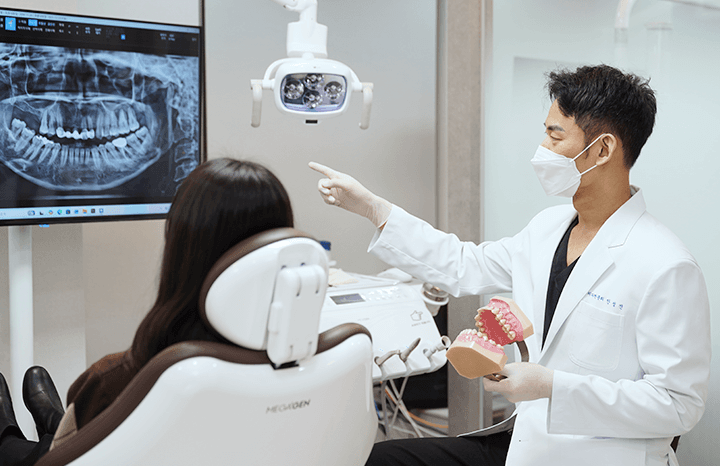
When a care plan spans multiple areas, two Integrated Dentistry specialists review diagnostic information together and explain the treatment options and sequence.

Care-Plan Review by Two Specialists

Yeonhap Special

Care-Plan Review by Two Specialists

Two Integrated Dentistry specialists explain treatment options and sequence based on oral findings and diagnostic information.

Expand
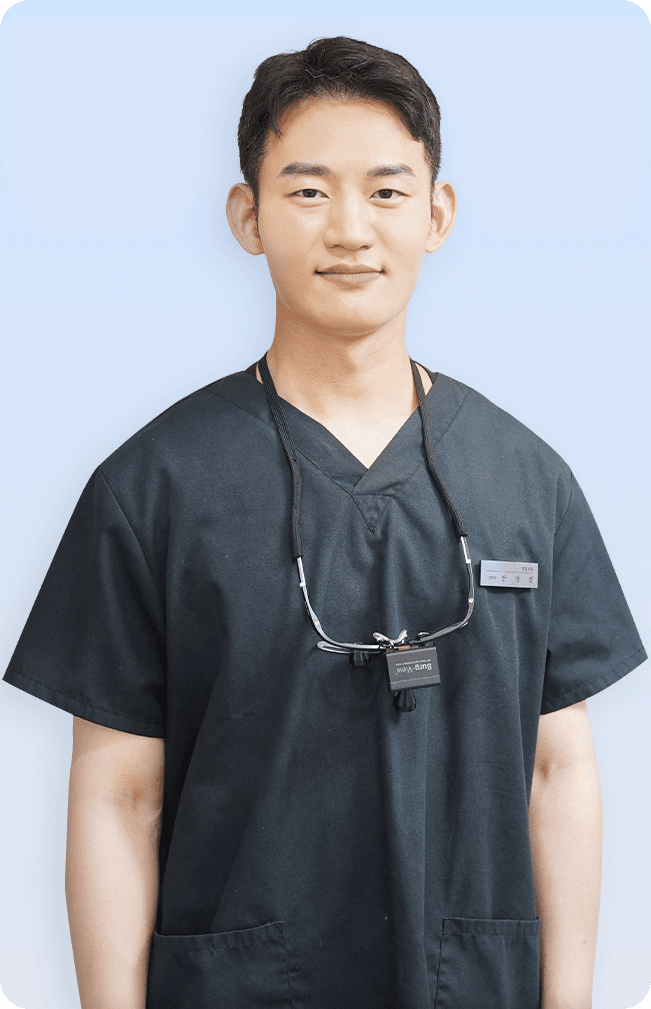
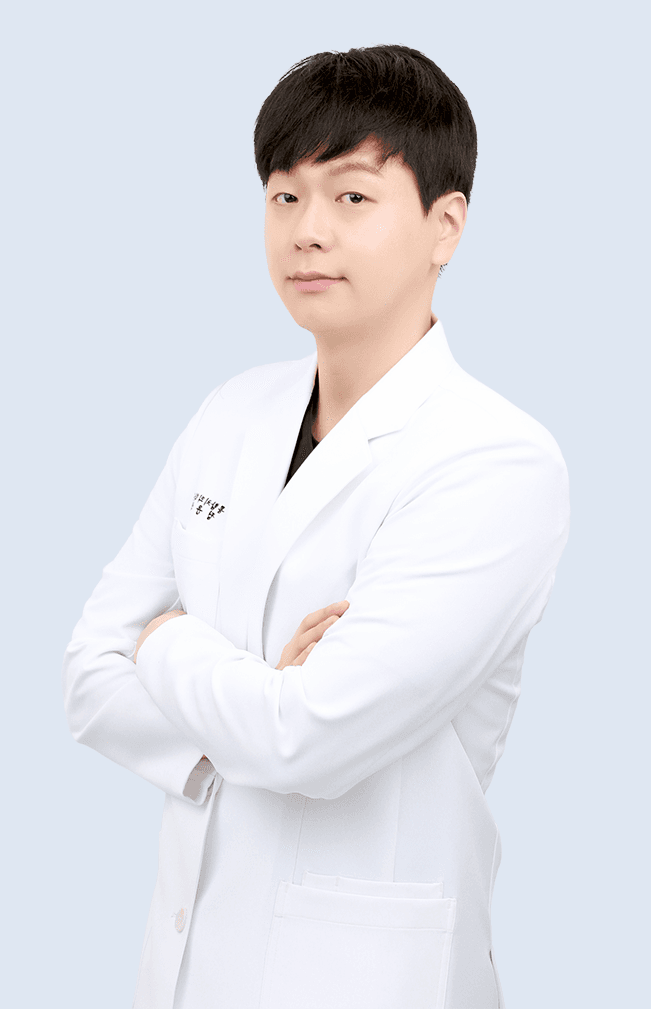
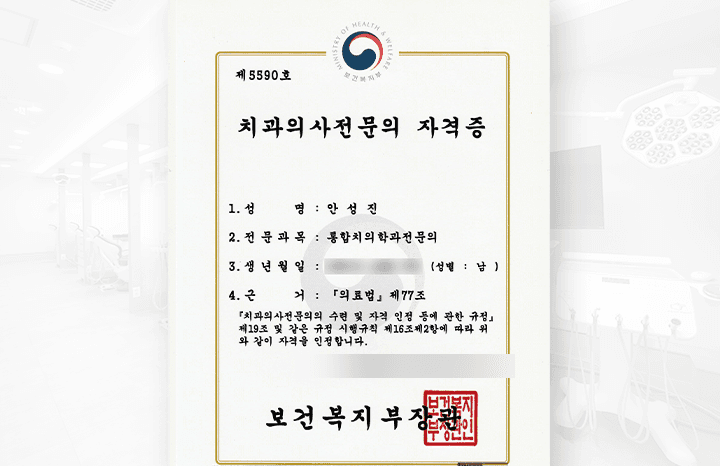
  • Chief Director Ahn Seong-jin and Director Jeong Yun-sik are both specialists in Integrated Dentistry. Integrated Dentistry is one of the 11 dental specialties recognized by Korea's Ministry of Health and Welfare.
  • We first review the oral examination and radiographs. We take a 3D CT scan when needed for implants, root canal treatment or wisdom tooth extraction.
Considering Preservation and Restoration Together

Yeonhap Special

Considering Preservation and Restoration Together

We review preservation, root canal treatment, implants, and prosthetics together as appropriate for the current condition and care plan.

Expand
  • We use a rubber dam for every root canal treatment. After enlarging the canal to the planned size and before filling it, we replace the irrigating solution every five minutes. This is our clinic's protocol.
  • For implant placement, we look for a position within the prosthetic range that leaves 2 mm of bone on the cheek side and 1.5 mm on the tongue or palate side. If that is not possible, we consider bone grafting.
  • We scan for crowns, inlays and implant prostheses with Trios 6. The scan cost is included in the prosthetic fee.
Guidance on Treatment and Follow-Up Care

Yeonhap Special

Guidance on Treatment and Follow-Up Care

We explain the current condition, treatment process, expected care guidance, and considerations in clear terms.

Expand
  • For anesthesia, we use a mouth rinse and topical anesthetic ointment, then slowly inject anesthetic with the i-JECT automated device. This aims to reduce discomfort during anesthesia; it does not mean treatment is completely painless.
  • For patients who have delayed scaling because cold water causes sensitivity, we use a warm-water scaler. Depending on gum condition, temporary sensitivity may still follow treatment.
  • We review images and tooth scans together on a screen and explain an expected implant schedule at the first consultation.
  • During an implant consultation, we explain cleaning tools and areas for the planned prosthesis, and distinguish daily care from tasks at the six-month check-up.

Philosophy

Yeonhap's Four Care Principles

Reviewing diagnostic information, considering natural-tooth preservation, explaining the care plan, and providing follow-up guidance are the basis of our care.

01

Evidence-Based Diagnosis

We review the current oral condition and diagnostic information together, then explain treatment options and planning.

Evidence-Based Diagnosis
Expand
  • We consider Q-Ray images, oral examination findings, panoramic radiographs and previous records together to distinguish cavities needing treatment from lesions that can be monitored.
  • Chief Director Ahn Seong-jin selects the references used in our guidance. We distinguish our clinic's own clinical criteria for treating or monitoring a site and its usual six-month examination interval from the cited evidence.

02

Natural Tooth Preservation First

Before extraction, we first review whether the natural tooth can be preserved. The treatment approach is explained based on the tooth condition and diagnosis.

Natural Tooth Preservation First
Expand
  • Depending on the extent of a cavity, we consider a resin filling, inlay or crown.
  • For decay reaching the pulp, we first consider whether pulpotomy could preserve the tooth.
  • If root canal treatment does not resolve the problem, we first consider retreatment. If retreatment fails, we consider apical surgery, and then extraction if necessary.

03

Care with a Family Mindset

We explain the current condition and treatment options together, along with the care plan and relevant follow-up guidance.

Care with a Family Mindset
Expand
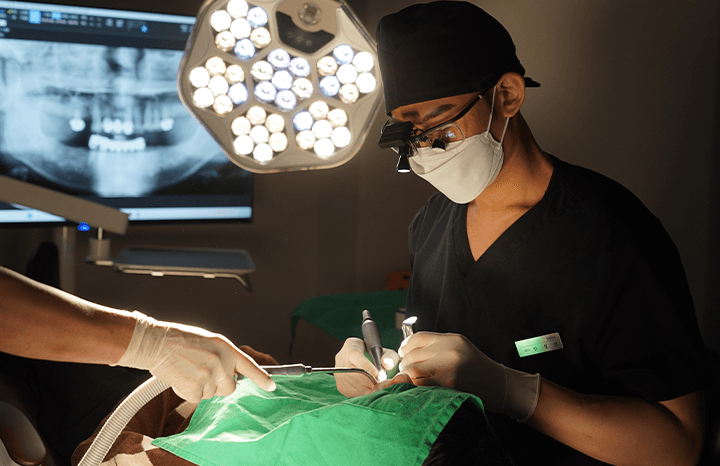
  • Chief Director Ahn Seong-jin and Director Jeong Yun-sik, both Integrated Dentistry specialists, provide care directly. The treating dentist follows the consultation, surgery and prosthetic care.
  • Before considering bone grafting for an implant, we look for a position with sufficient remaining bone within the prosthetically feasible range.

04

Follow-Up Care Guidance

We explain the necessary aftercare and follow-up schedule. The care plan can vary depending on the treatment and individual condition.

Follow-Up Care Guidance
Expand
  • We usually recommend a check-up every six months even without symptoms. More frequent checks may be advised for severe gum disease or diabetes.
  • Clean around the implant prosthesis with a toothbrush and interdental brush every day, and have it checked every six months. Peri-implantitis has been reported less often among patients who receive regular maintenance.

Our Doctors

Care by Two Integrated Dentistry Specialists

You can review each clinician's qualifications and experience, and receive a detailed explanation of your current condition and treatment plan during care.

Ahn Seong-jin, Chief Director

Specialist in Integrated Dentistry

Ahn Seong-jin Chief Director

“Dental care is not just about treating what hurts; it is about safeguarding each patient's everyday life and future well-being.”
  • Board-Certified Specialist in Integrated Dentistry (Ministry of Health and Welfare)
  • Graduate, Department of Dentistry, Dankook University
  • Completed the Implant Program, Seoul National University School of Dentistry
  • Completed the Endodontics Program, University of Pennsylvania
  • Full Member, Korean Academy of Advanced General Dentistry
  • Advisory Dentist, Osstem Implant
  • Advisory Dentist, MegaGen Implant
  • Current Chief Director, Yeonhap Dental Clinic
  • Former Head of the Implant Center, Seoul Hyo Dental Clinic
  • Former Clinical Director, Seoul Mi Dental Clinic
  • Former Clinical Director, Simple Dental Clinic
  • Former Clinical Director, Raon Dental Hospital
Jeong Yun-sik, Clinical Director

Specialist in Integrated Dentistry

Jeong Yun-sik Clinical Director

“I will continue to provide care by explaining a little more, considering each decision a little more carefully, and taking responsibility through to the end.”
  • Board-Certified Specialist in Integrated Dentistry (Ministry of Health and Welfare)
  • Graduate, Department of Dentistry, Dankook University
  • Advisory Dentist, Osstem Implant
  • Advisory Dentist, MegaGen Implant
  • Completed the KPS Endo Seminar Course
  • Completed the ATC Implant Course
  • Former Head of Dentistry, Cheongyang Medical Center
  • Former Clinical Director, Annyeong Plant Dental Clinic

Digital System

Yeonhap Digital System

These are devices used by our two Integrated Dentistry specialists. Each card explains when and how we use it in our clinic.

Trios 6

Instead of holding impression material in the mouth while it sets, we take an impression with a scanner. We can review the scan together on screen immediately and record how the teeth meet.

Expand
  • There is no need to hold impression material in the mouth while it hardens. If an area is missed, we scan it again immediately.
  • We record the bite with the upper body upright and the head slightly tilted back, rather than lying down, to guide the height of the prosthesis.
  • We use it for crowns, inlays and implant prostheses; the scan cost is included in the prosthetic fee.

3D CT

A three-dimensional scan shows bone thickness, the positions of the nerve canal and maxillary sinus, and root shape that ordinary radiographs may not show clearly. We take it when needed for implant planning, impacted wisdom tooth extraction or complex root canal anatomy such as a C-shaped canal.

Expand
  • For implants, we measure whether 2 mm of bone remains on the cheek side and 1.5 mm on the tongue side to decide whether a bone graft is needed.
  • For upper molars, we check whether 7 mm remains to the maxillary sinus; for lower molars, whether 5 mm remains above the nerve canal. We then consider a sinus lift or short implant.
  • For an impacted wisdom tooth, we check the distance between its root and the nerve canal before deciding how to extract it.
  • We take a CT for root canal treatment when anatomy is complex, such as a C-shaped canal, or a root-tip lesion needs closer review. We do not take one for every root canal treatment.

Q-Ray

This fluorescence camera uses light without ionizing radiation. It displays possible early decay, cracks and plaque that may be hard to judge by eye. We review the image together with you before deciding whether to treat or monitor.

Expand
  • We keep an image so we can compare the same area at the next check-up.
  • A fluorescence finding alone does not mean drilling immediately. We also consider symptoms, the oral examination and radiographs.
  • There is no separate fee for a Q-Ray examination.

Automated anesthesia device (i-JECT)

After a rinse and topical anesthetic ointment, we inject the anesthetic slowly with the automated device. For palatal anesthesia, we add pressure as the fourth step.

Expand
  • The device controls the injection speed consistently rather than relying on manual pressure.
  • This aims to reduce discomfort during anesthesia; it does not mean there will be no pain at all.
Related guidesImplant pain

Warm-water scaler

For patients who have delayed scaling because cold water causes sensitivity, we use a scaler that supplies lukewarm water.

Expand
  • For gum treatment, we first remove calculus below the gumline with hand instruments and finish with this scaler.
  • Even with lukewarm water, temporary sensitivity may follow treatment depending on gum condition.
Related guidesGeneral dental care

Aquacare

This small intraoral sandblaster prepares the tooth surface for adhesive treatments such as hybrid and ceramic inlays, and resin restorations when needed.

Expand
  • It sprays water and fine particles together to remove contamination and residue from the tooth surface before bonding.
  • Because bond strength depends on surface condition, we do this immediately before bonding.

PHL-15

This temporomandibular joint therapy device combines low-level laser and transcutaneous electrical nerve stimulation (TENS). We use it with medication and warm compresses as an initial treatment.

Expand
  • Depending on symptoms and diagnosis, we may begin with around seven days of medication including a muscle relaxant, physical therapy and warm compresses at home.
Related guidesGeneral dental care

K2 dental laser

We use this laser for gum procedures needed during treatment, including hemostasis and gingivectomy.

Expand
  • When decay extends below the gumline and makes taking an impression or bonding difficult, we manage the gum to expose the area for treatment.
  • It is also used for gum procedures during crown lengthening.

Low-temperature plasma sterilizer

Alongside the autoclave, we have a low-temperature plasma sterilizer. We sterilize instruments that cannot tolerate hot steam with low-temperature plasma.

Expand
  • Heat-resistant instruments are sterilized in a high-temperature, high-pressure steam autoclave; heat- and moisture-sensitive instruments use low-temperature plasma.
  • We choose the method according to the instrument material and the manufacturer’s reprocessing instructions.