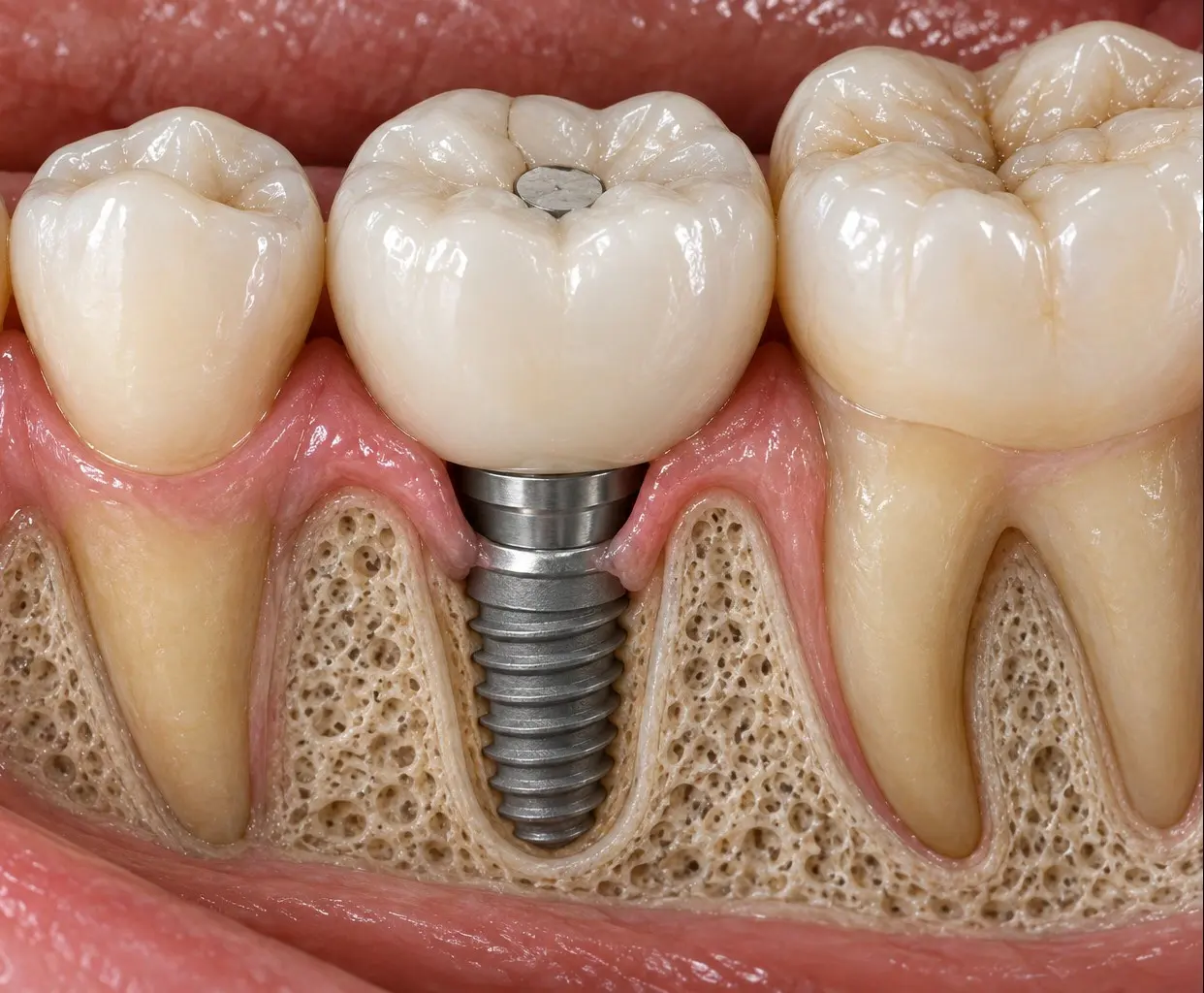
Intraoral photo of an implant crown placed at a lower molar site, height-matched to the natural teeth

MOLAR IMPLANT

Molar Implants Three Key Points

Molars bear far greater chewing force than front teeth. So for the molars, we place a diameter of 4.5–5.0 mm and a length of 7 mm or more as the baseline.

Why Diagnosis Matters

A molar implant is a design that withstands chewing force

The molars are where the most chewing force is borne, so thickness, length, and number decide the result. The maxillary sinus limits length for upper molars, and the nerve canal for lower molars. Yeonhap Dental Clinic secures thickness first, and where length falls short, makes up for it with a sinus lift in the upper jaw and a short implant in the lower jaw.

Consultation Checklist

What we check at your first consultation

At the first consultation, we check the five points below in millimeters on a 3D CBCT.

  • For an upper molar, whether the remaining bone height up to the floor of the maxillary sinus is 7 mm or more
  • For a lower molar, whether 2 mm of clearance above the nerve canal can be achieved
  • Whether the bone width at the missing site can accept an implant with a diameter of 4.5–5.0 mm
  • Whether the opposing tooth that used to bite has drifted down or up into the empty site
  • Whether the missing site is the 6th or 7th molar, and how many sites in a row are empty

Treatment Options

Three Things We Look at First in Molar Implants

We place thick, we place even the very last 7th molar, and if conditions allow, we place on the day of extraction.

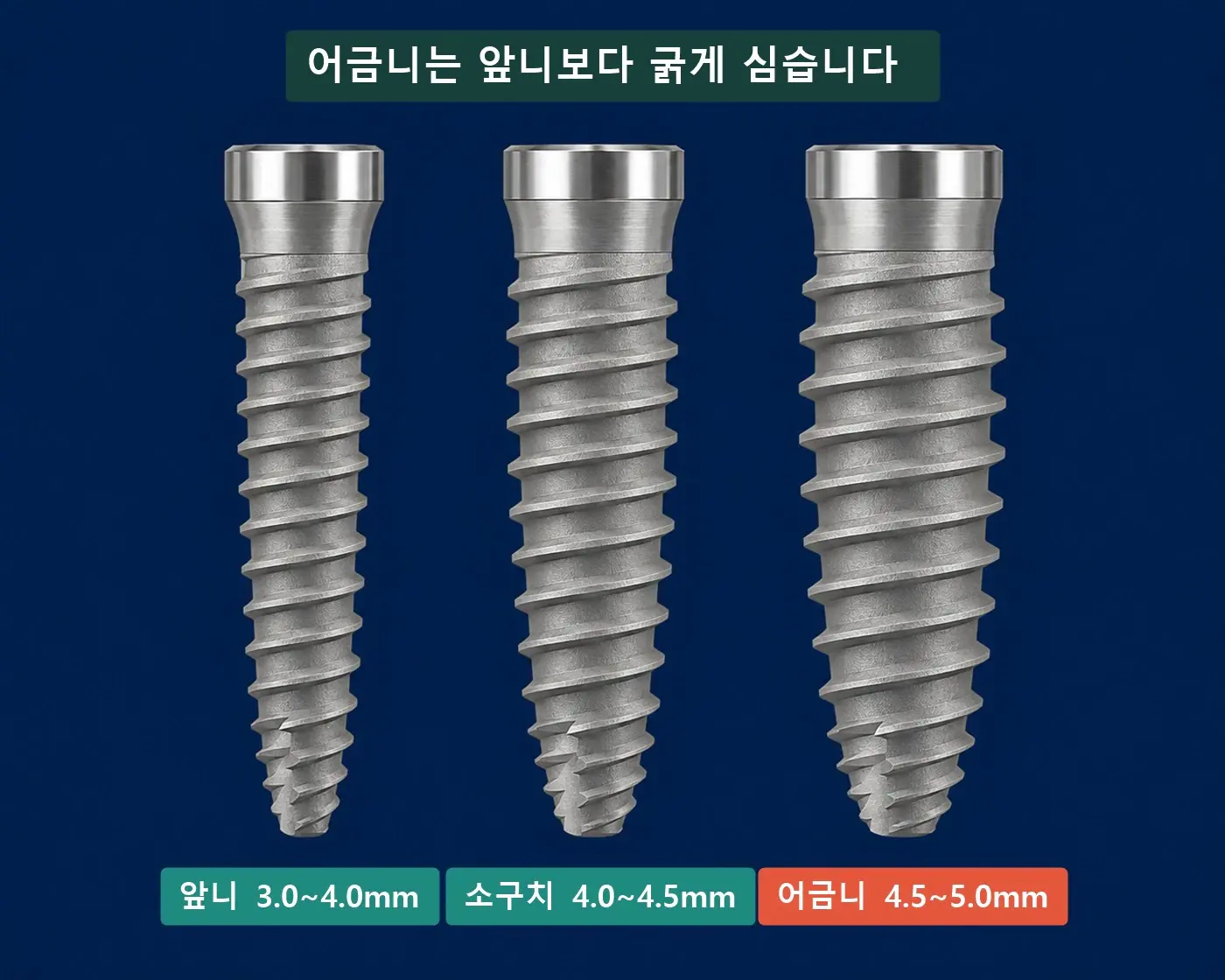
Infographic of molar implant diameter standards: 4.0 mm for tooth #4, 4.5 mm for #5, and 4.5–5.0 mm for #6 and #7

Molar implants are placed thicker than front teeth

We use diameters of 4.0–4.5 mm for premolars and 4.5–5.0 mm for molars as the baseline. This is one step thicker than front teeth (3.0–4.0 mm). The thicker the implant, the larger the area in contact with bone, and the more widely it spreads the chewing force.
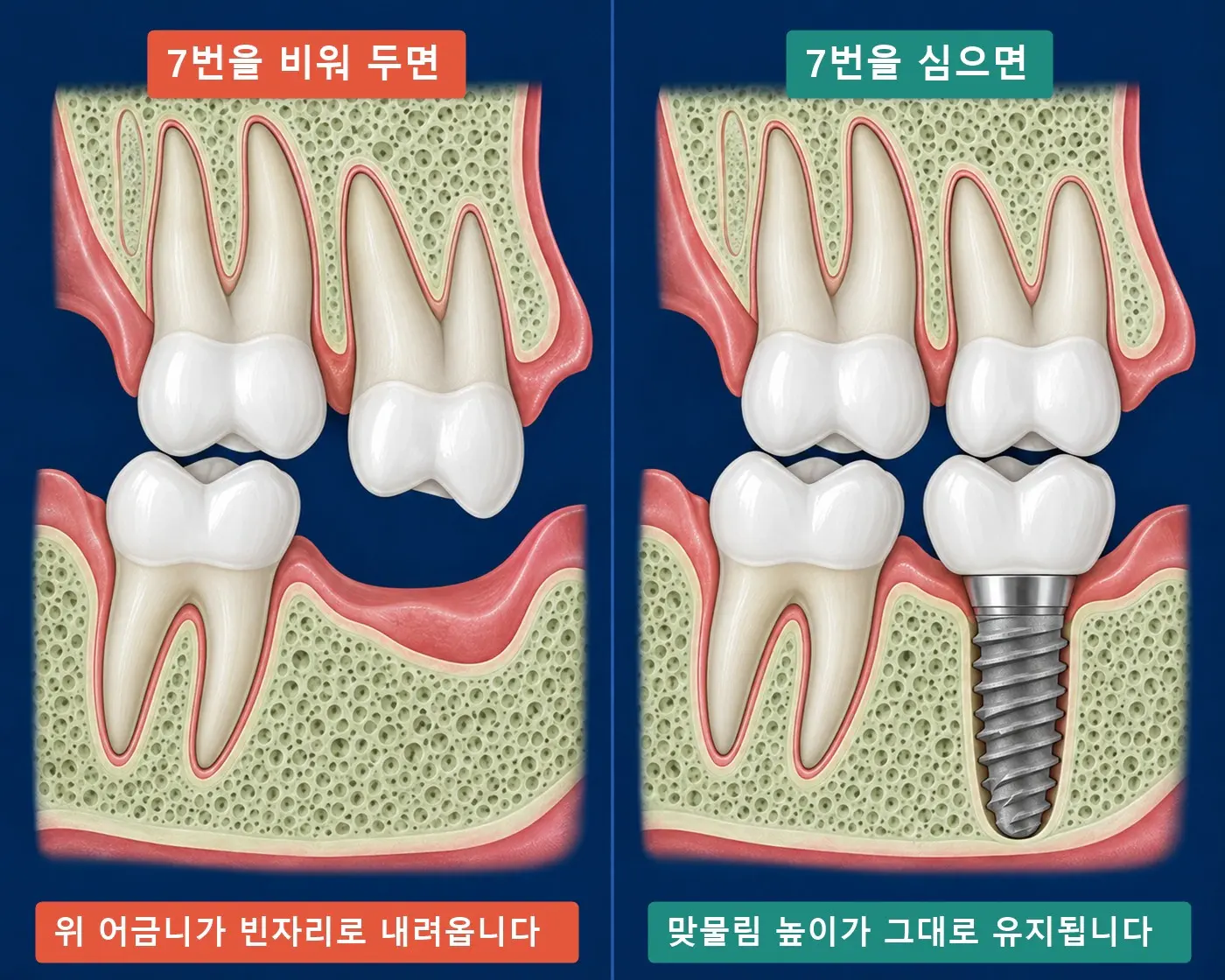
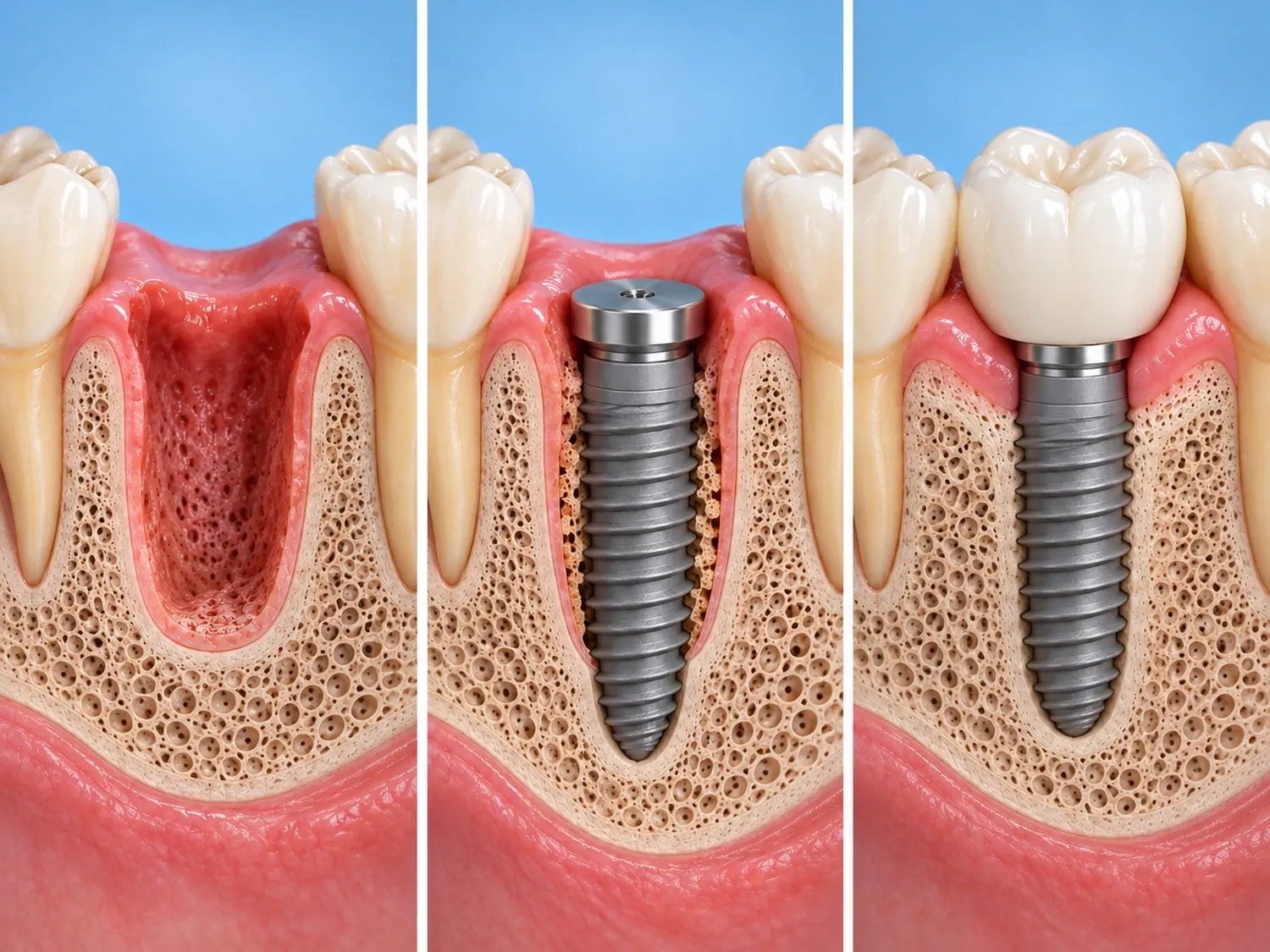
Diagram explaining that if one 7th molar is left empty, the opposing tooth drifts down

We place an implant even if only the 7th molar is missing

If there is no opposing tooth, the tooth drifts down or up toward the empty site, which is called supraeruption. Depending on the degree of supraeruption, that tooth may also need treatment, so Yeonhap Dental Clinic fills even a case where only the 7th molar is missing with an implant.

Three-stage cross-section: the empty site right after extraction, an implant anchored in bone below the socket on the same day, and the crown attached after bonding

Molars too are placed on the day of extraction if conditions allow

If the infection can be completely curetted, it can be anchored in bone 2–3 mm below the socket floor, and there is no maxillary sinus or nerve canal at that depth, we place it on the day of extraction; if not, we place it three months later. We do not chew right after placement, and attach the prosthesis after it has bonded with the bone.

Planning Points

Two Things Decided on the First-Day CBCT: Length and Number

The remaining bone height decides the length, and the number of missing sites and bone condition decide the number.

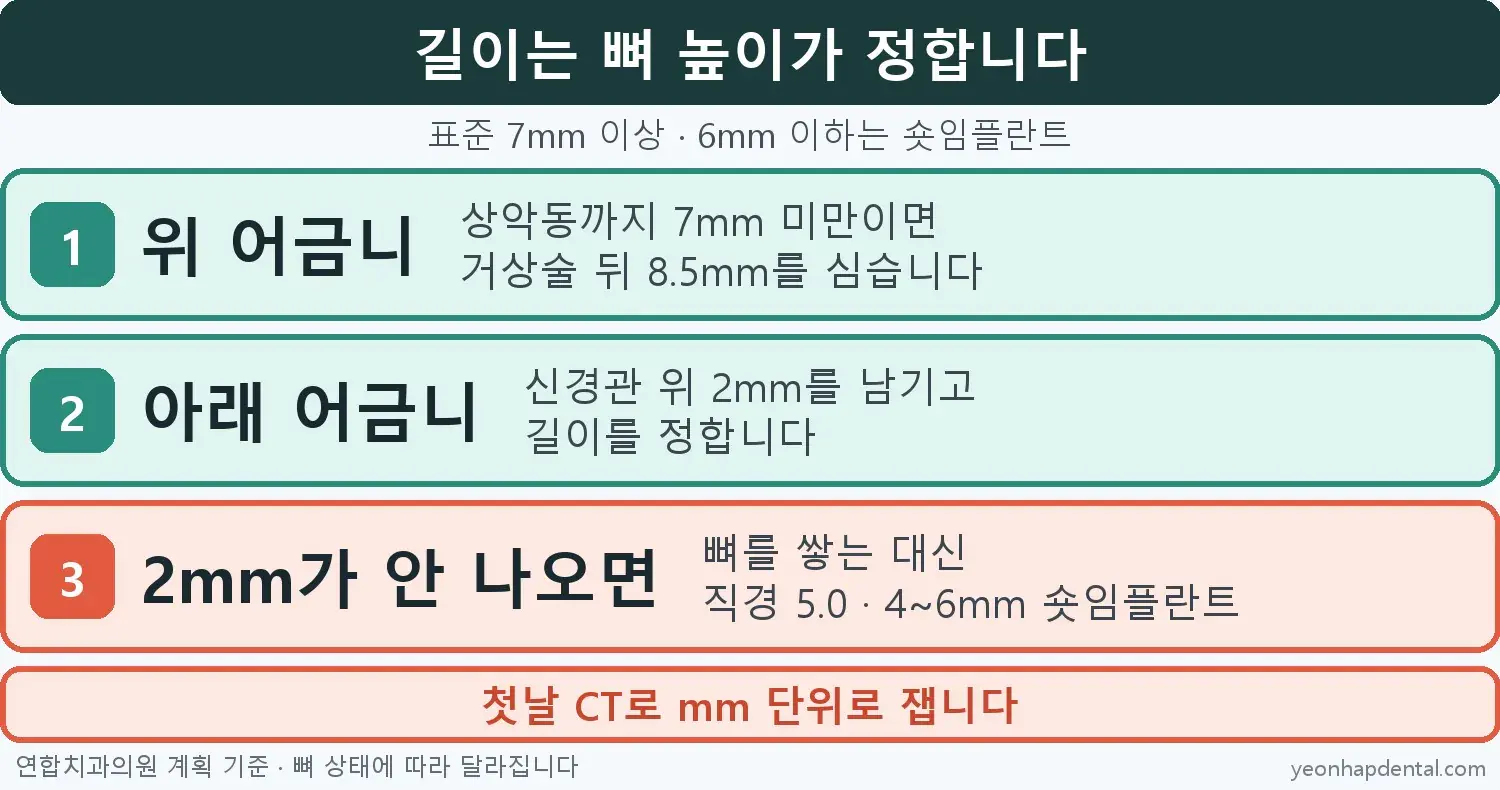
Infographic of deciding implant length by the 7 mm standard to the maxillary sinus for upper molars and the 2 mm standard to the nerve canal for lower molars

Bone height decides length, and where it falls short, thickness makes up for it

The standard is 7 mm or more, and 6 mm or less is a short implant. For an upper molar with less than 7 mm up to the maxillary sinus, we place 8.5 mm after a sinus lift, and for a lower molar we leave 2 mm above the nerve canal. If 2 mm cannot be left in a lower molar, we first consider a short implant with a diameter of 5.0 mm and a length of 4–6 mm instead of building up bone. For upper molars, we secure length with a sinus lift.

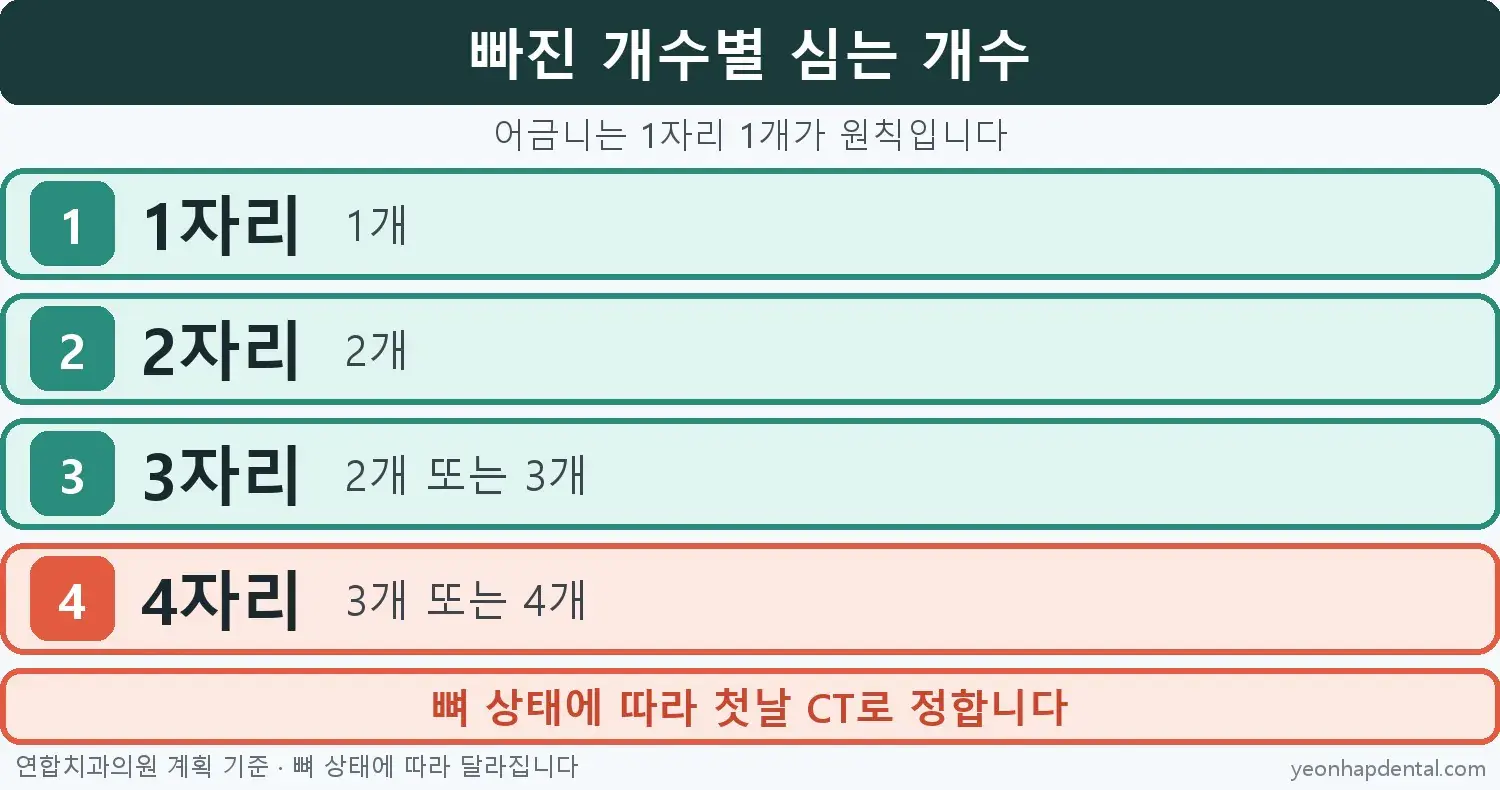
Infographic of implant number standards by number of missing molars

Number to place by number of missing teeth

The principle for molars is 1 implant per site. We place 2 for 2 sites, 2 or 3 for 3 sites, and 3 or 4 for 4 sites depending on bone condition. This is Yeonhap Dental Clinic's planning standard.

Before Visit

Helpful details before your visit

If you come prepared with the points below at your first visit, we can explain the plan that same day.

  • The names of the medications you take (blood pressure, diabetes, osteoporosis)
  • If you have had an implant or denture before, the details
  • When and why the missing molar was lost
  • Whether you feel the opposing tooth has come down into the empty site

Molar Implant Specifications: Yeonhap Dental Clinic's Standards

Diameter: 4.0 mm for tooth #4, 4.5 mm for #5, and 4.5–5.0 mm for #6 and #7. Length: 7 mm or more is standard, and 6 mm or less is a short implant (4, 5, or 6 mm, used with a diameter of 5.0 mm or more). Number: 1 implant for 1 site, 2 for 2 sites, 2–3 for 3 sites, and 3–4 for 4 sites. For an upper molar with less than 7 mm up to the maxillary sinus, 8.5 mm after a sinus lift; for a lower molar, we leave 2 mm above the nerve canal, and if 2 mm cannot be achieved, we first consider a short implant.

The Three Things Yeonhap Dental Clinic Keeps in Molar Implants

A molar implant is decided between chewing force and the limits of the bone. For thickness, 4.5–5.0 mm for the molars; for length, 7 mm to the maxillary sinus for upper molars and 2 mm to the nerve canal for lower molars; and for number, 1 per site is the principle. There is a report that 5–8 mm short implants in upper molars showed no significant difference in survival from implants over 8 mm after a sinus lift (7 randomized studies, 554 implants, Fan 2017), but at Yeonhap Dental Clinic, because upper molar bone is soft and a sinus lift is possible, we use short implants only in lower molars. Even if only the 7th molar is missing, we place before the opposing tooth drifts out. In studies, supraeruption is observed in 92% of molars with no opposing tooth (Craddock 2007). References: Lee 2005, literature review of implant diameter, length, shape, and success rate · Fan 2017, meta-analysis of randomized studies of short implants versus sinus lift in upper molars · Craddock 2007, supraeruption of molars with no opposing tooth Treatment results may vary by individual oral condition.

Last updated:

Schedule a consultation by phone or Naver Booking

Leave a few details on our consultation page and we'll get back to you promptly.

Frequently Asked Questions

Q. Why do molar implants use a thicker implant than front teeth?
Molar implants bear the most chewing force, so we use a thick diameter to spread the force over a wide area. Yeonhap Dental Clinic uses 4.5–5.0 mm as the baseline for the 6th and 7th molars, and 3.0–4.0 mm for front teeth.
Q. Can I get an implant in an upper molar even if I lack bone?
For an upper molar implant, the remaining bone height up to the floor of the maxillary sinus decides. At Yeonhap Dental Clinic, if the remaining bone is under 7 mm, we build height with a sinus lift and then place an 8.5 mm length; if it is 7 mm or more, we place without a sinus lift.
Q. Do I need an implant even if only the last molar is missing?
Studies show supraeruption in 92% of molars with no opposing tooth (Craddock 2007), and depending on the degree of supraeruption, that tooth may also need treatment. Yeonhap Dental Clinic fills even a case where only the 7th molar is missing with an implant.
Q. Can a molar implant be placed on the day of extraction and chewed on right away?
A molar implant is placed on the day of extraction if the infection can be removed, it can be anchored in bone 2–3 mm below the socket floor, and there is no maxillary sinus or nerve canal at that depth; if not, it is placed three months later. In either case, Yeonhap Dental Clinic does not let you chew until it has bonded with the bone, and attaches the prosthesis after that.