Schedule a consultation by phone or Naver Booking
Leave a few details on our consultation page and we'll get back to you promptly.
Frequently Asked Questions
- Q. Is a sinus lift implant very painful?
- Severe pain is rare and is at a level controlled with prescribed painkillers. Swelling is greatest 2–3 days after surgery and mostly subsides within a week, and the crestal approach is done without an incision or with a minimal one, so swelling tends to be mild. Yeonhap Dental Clinic uses four-step anesthesia: gargle, ointment, and a digital anesthesia device, plus palatal pressure anesthesia.
- Q. How long does a sinus lift implant take?
- If the remaining bone and the stability and healing are good, we expect about 4–5 months to the final prosthesis; if bone formation and adaptation to a temporary tooth are needed, about 6–7 months. If the sinus lift is done first and the implant is placed later, it is about 7–8 months. All are our clinic's expected schedules.
- Q. Is a sinus lift implant done with the crestal or the lateral approach?
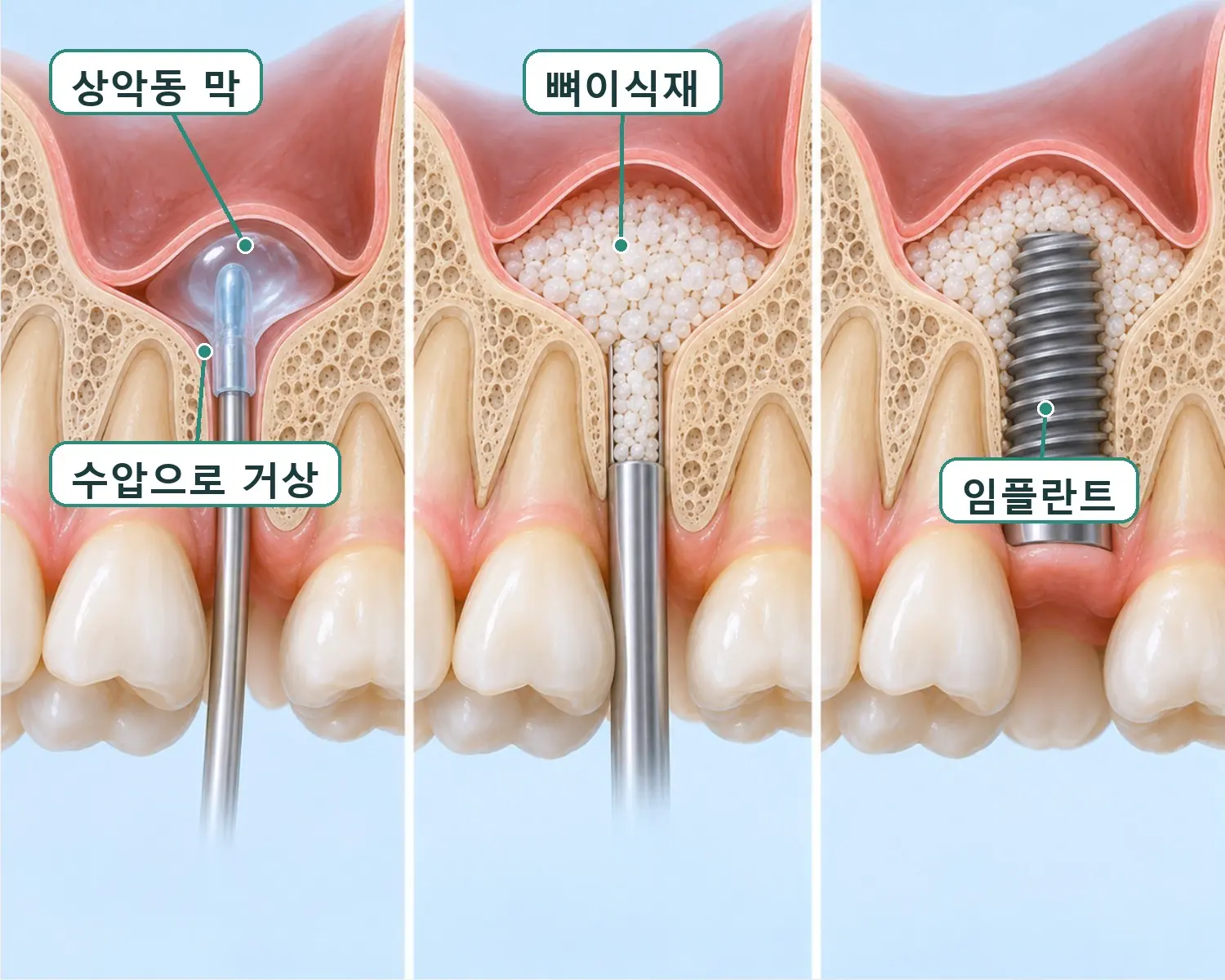
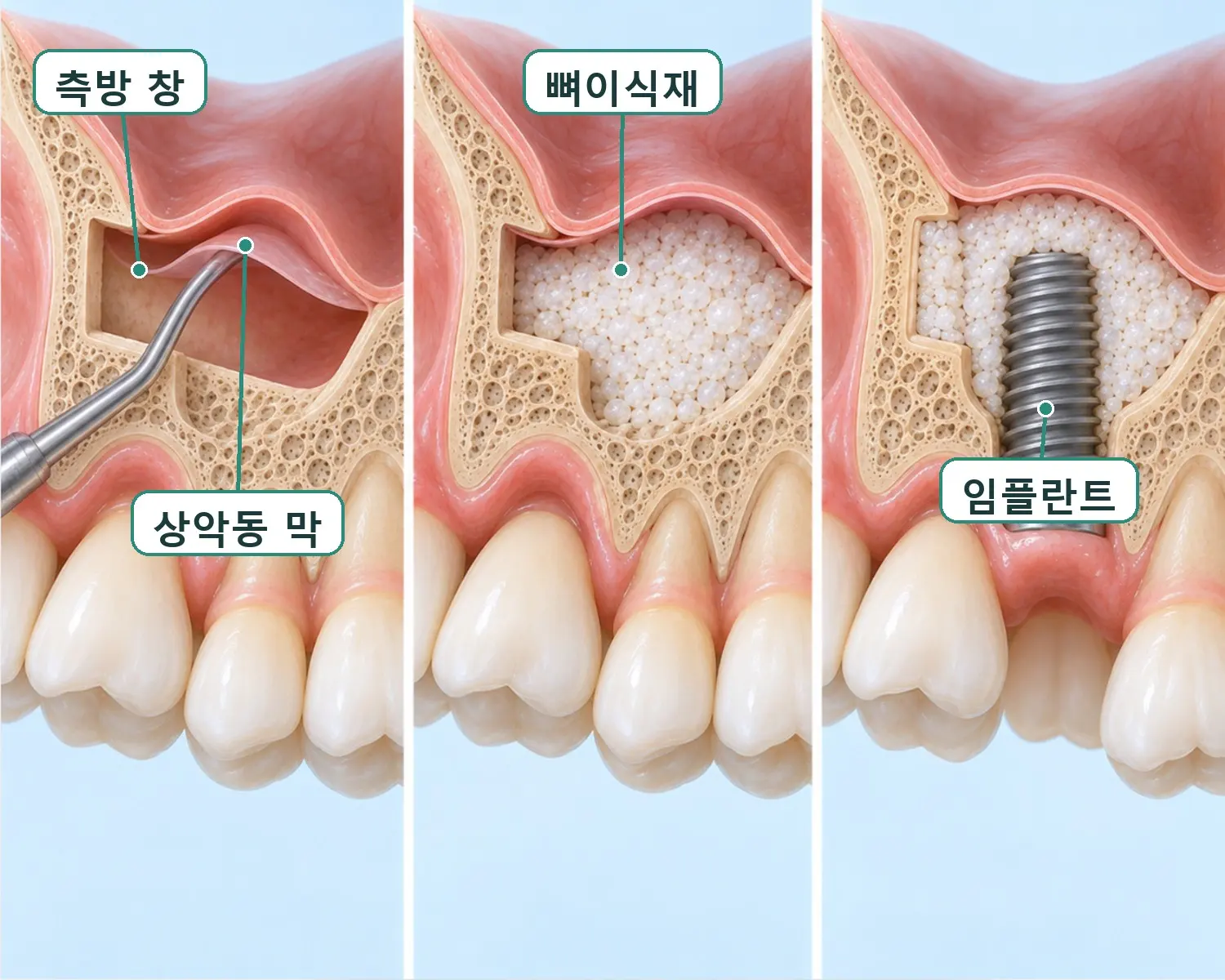
- At Yeonhap Dental Clinic, even when the remaining bone is small, if the sinus membrane is healthy, we first try the crestal approach (a hydraulic lift done without an incision or with a minimal one), which is much less painful; we check the perforation signal, and if it is ambiguous or a perforation is confirmed, we switch to the lateral approach on the spot and complete the bone graft and placement. If the membrane is thin or a lesion is seen in the sinus, we consider the lateral approach from the start, and sinusitis is treated first. If initial stability is secured, we continue through to placement; if not, we do the sinus lift first.
- Q. How long an implant is placed after a sinus lift?
- After building height with a sinus lift, Yeonhap Dental Clinic usually places an 8.5 mm implant. 7 mm is also fine, but that is to use the height secured; a longer implant is not necessarily better, and longer ones are rare. If the remaining bone is 7 mm or more, we place without a sinus lift and use the same diameter standards as for molars (4.0–4.5 mm for premolars, 4.5–5.0 mm for molars).