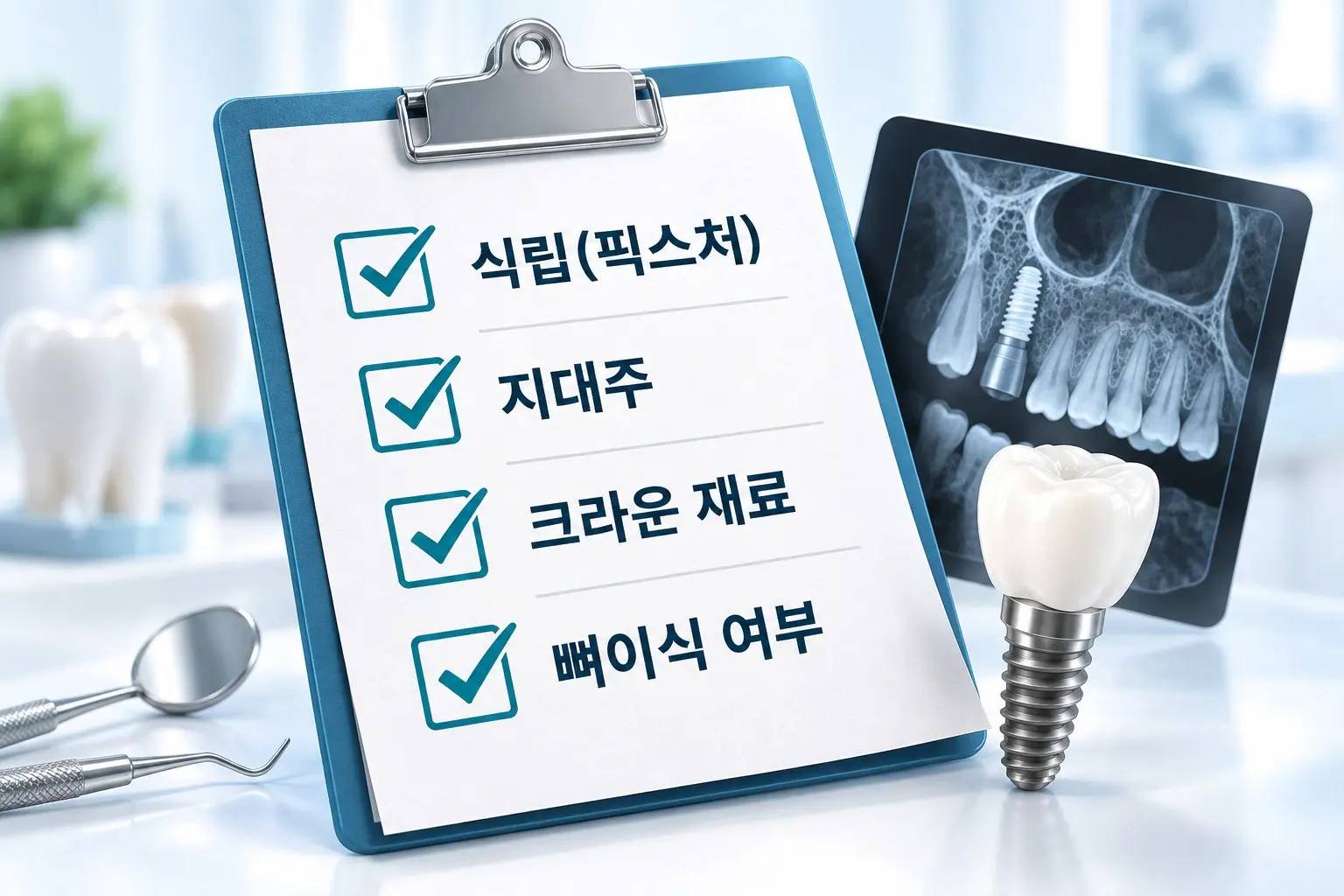
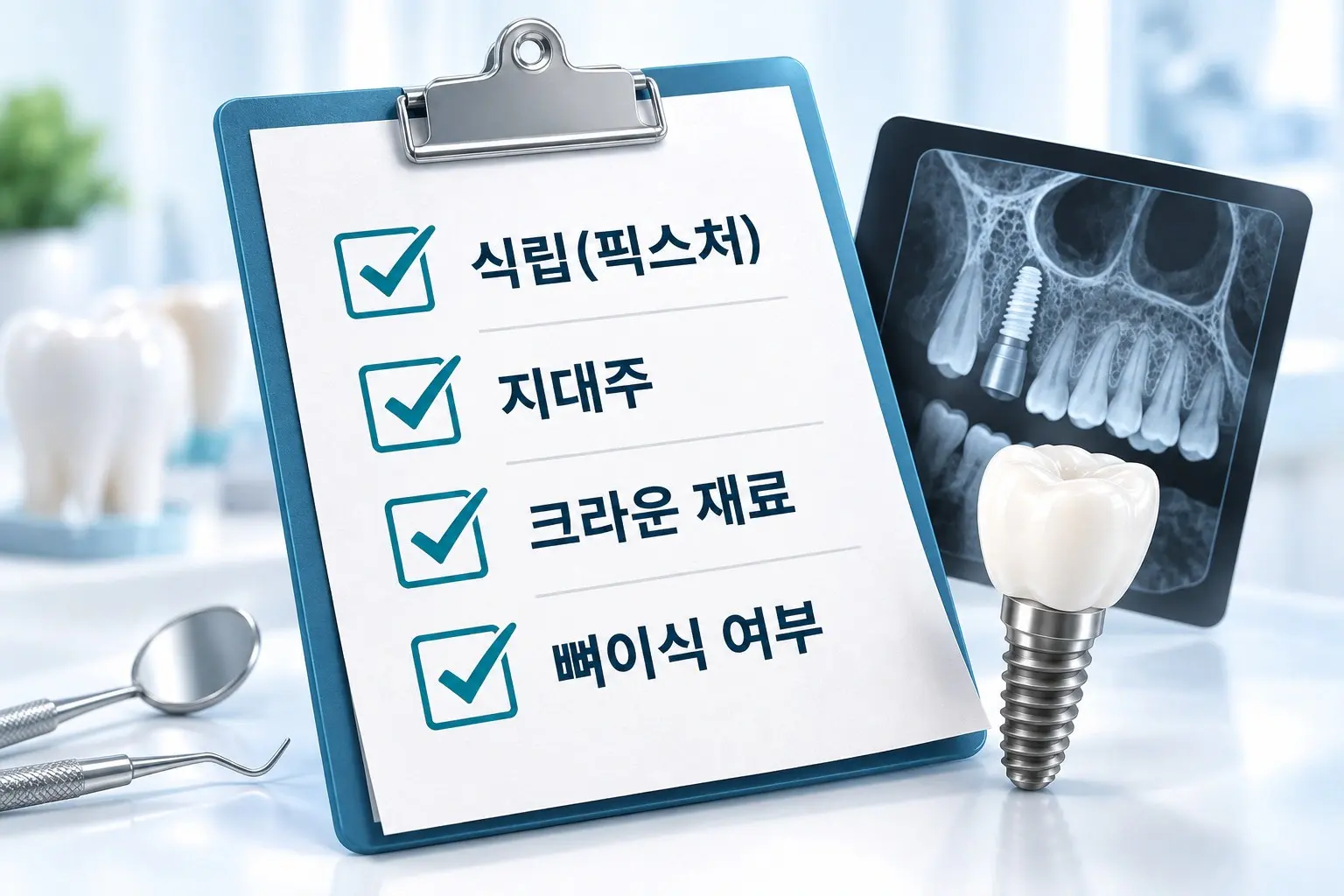
Diagram of an estimate with checkmarks on the items to confirm at an implant consultation

SUWON IMPLANT GUIDE

Implant Clinics in Suwon Ask These 5 Things Instead of Trusting Ads

You cannot tell which clinic is good from advertising. Ask these five things at the consultation and the answers will come out.

Why Diagnosis Matters

How can you tell a good implant clinic?

What separates implant results is not advertising copy but the precision of diagnosis, the criteria for reducing surgery, and the response when problems occur. There are five things to check at the consultation: who diagnoses and places the implant, whether they tell you the CT measurements (2 mm of cheek-side bone, 7 mm of remaining bone in upper molars) in numbers, why a bone graft or sinus lift is added, what the anesthesia and drilling methods are, and whether the failure criteria and check-up interval are set. Yeonhap Dental Clinic explains these five in numbers at the consultation and writes them as line items on the estimate. Any clinic should be able to answer these questions, and

Consultation Checklist

What we check at your first consultation

At the first consultation, we first check the five items below for you.

  • Who diagnoses and who places the implant. Two Integrated Dentistry specialists personally handle everything from diagnosis to prosthesis adjustment
  • 3D CT measurements. Explained against 2 mm on the cheek side, 1.5 mm on the tongue side, and 7 mm to the sinus for upper molars
  • If a bone graft or sinus lift is on the estimate, whether the clinic shows you the basis for it on CT
  • Anesthesia and bone cutting method. 3-4 steps of anesthesia, cutting with a 200 rpm low-speed drill with water flowing, and minimal incision
  • Failure criteria and check-up interval. Judged by bone loss, stability value, and response to treatment; placement again 2-3 months after removal; check-ups every 6 months

Treatment Options

This is how Yeonhap Dental Clinic answers the five questions

We answer with numbers and criteria instead of saying we are good. We set them in advance: for diagnosis, CT measurements; for procedures, the criteria for leaving out unnecessary surgery; and for maintenance, the criteria for revision and check-ups.

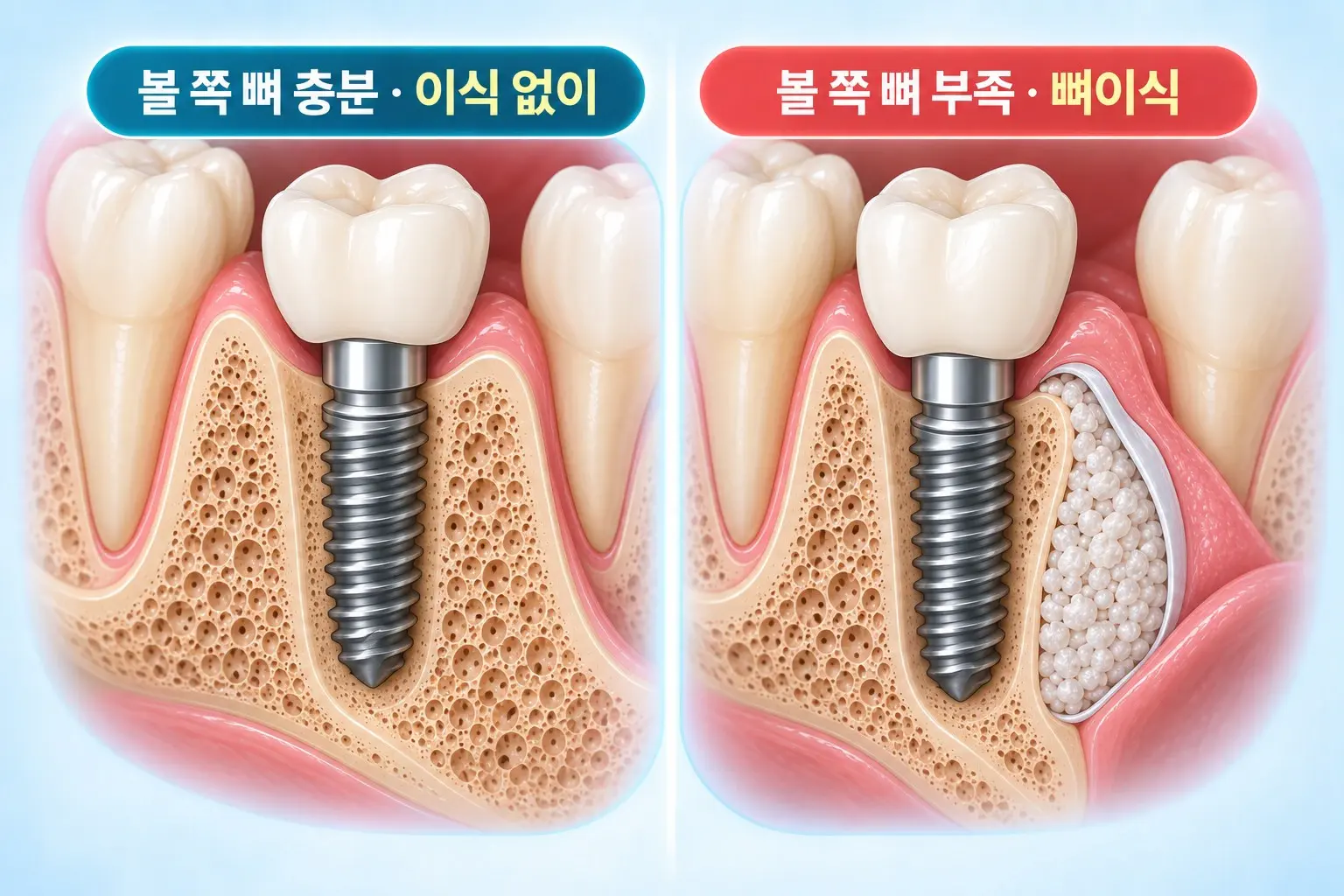
Cross-section diagram comparing an implant placed without a graft because the cheek-side bone was sufficient with one supplemented by a graft because the bone was thin

Diagnosis: they speak in CT measurements

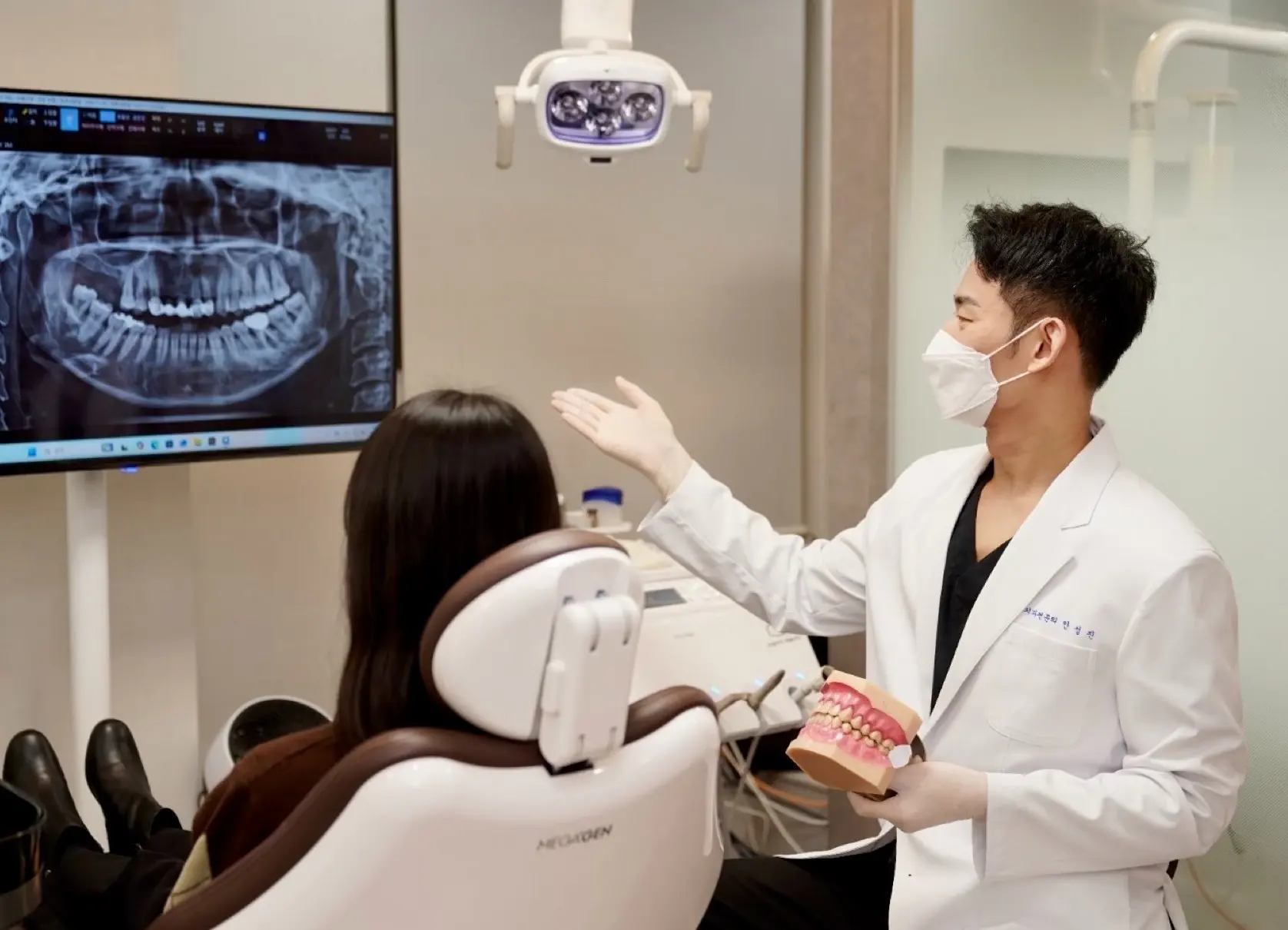
On the CT screen, we look together at whether a position that leaves 2 mm on the cheek side and 1.5 mm on the tongue side exists after the implant is placed, and for upper molars whether there is 7 mm to the sinus. These numbers decide whether a bone graft or sinus lift is done.

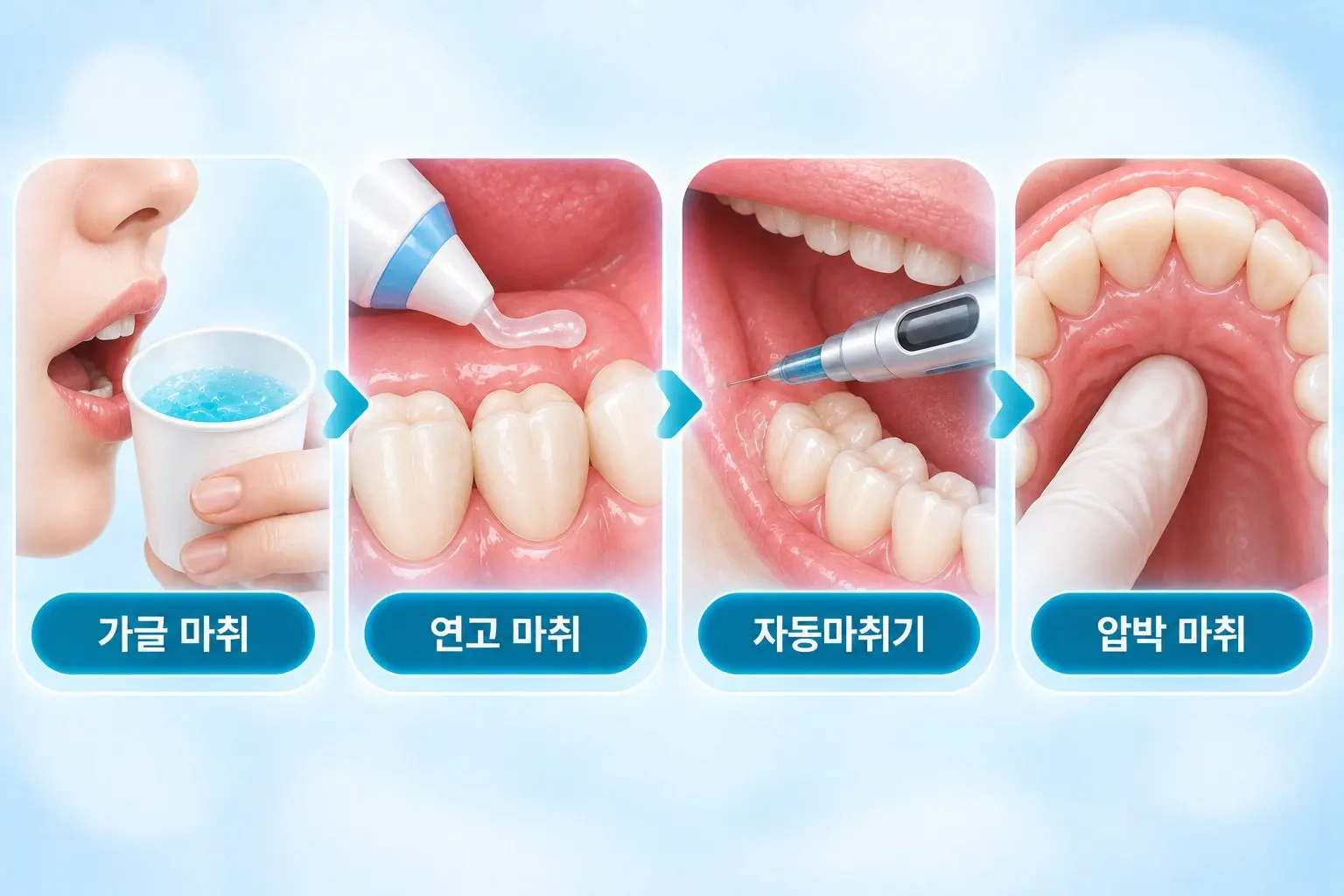
Diagram of the four-step implant anesthesia sequence: gargle anesthesia, ointment anesthesia, automatic anesthesia device, and palatal pressure anesthesia

Procedure: leave out unnecessary surgery, and handle pain through design

If 2 mm is achieved, no bone graft is done, and if it exceeds 7 mm, no sinus lift is done. Anesthesia basically uses a gargle, ointment, and an automatic anesthesia device, with pressure added at the palate for four steps, and the bone is cut with a low-speed drill at around 200 rpm with water flowing to cool it.

A dentist explaining a panoramic X-ray on a monitor to a patient in a treatment room

Maintenance: failure criteria and check-up interval are set in advance

For peri-implantitis, we first look at whether it can be resolved while keeping the implant body, and decide on removal by judging bone loss, changes in the stability value (ISQ), and response to treatment together. If removed, we place again after 2-3 months, and the director personally adjusts the bite of the prosthesis and checks it every 6 months. We give you these criteria in writing at the consultation.

Planning Points

A five-point checklist for choosing an implant clinic

The five items below are questions you can ask at any clinic. Just look at whether the answers come as numbers.

Diagram marking the items to check on an implant estimate

Five questions to ask at the consultation

① Who places it? ② How many millimeters of my bone remain? ③ Why is a bone graft needed? ④ How are anesthesia and drilling done? ⑤ What are the criteria if it fails? If all five answers come as numbers, it is a consultation you can trust.

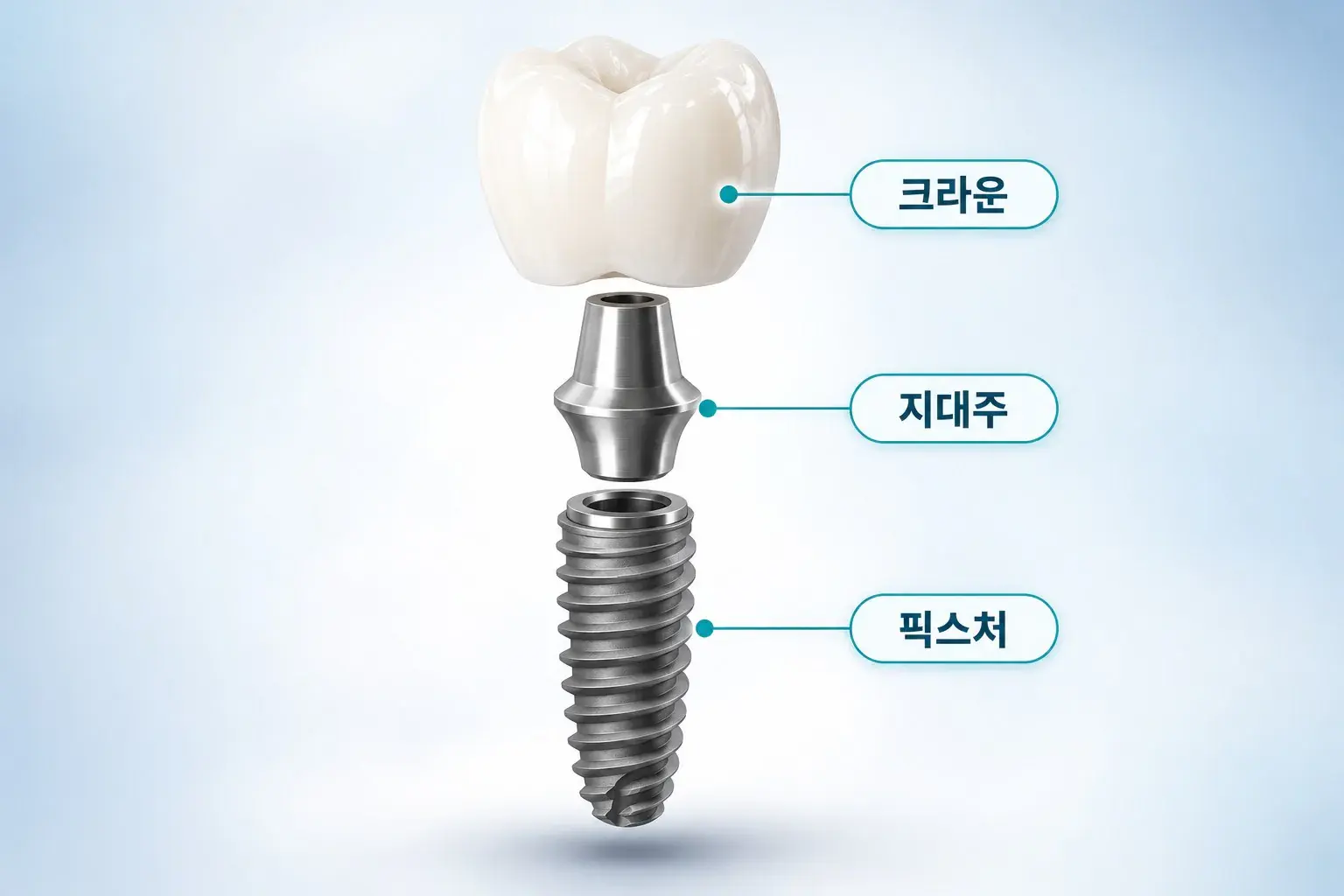
Diagram showing an implant separated into three parts: crown, abutment, and fixture

Why you should not choose by advertising copy

Words like “best,” “painless,” and “guaranteed” cannot be used under Korea's medical advertising law. Instead, look at whether the estimate is divided into items and whether the materials and warranty criteria are written down. Those two things are connected to the result.

Before Visit

Helpful details before your visit

If you prepare the items below, we can give you all five answers at the first consultation.

  • The area and symptoms that bother you most right now
  • The one thing you worry about most: pain, cost, timeline, or lack of bone
  • Whether you take diabetes or osteoporosis medication or antiplatelet drugs
  • The result you want: your priorities among chewing well, appearance, and finishing quickly

Why you should ask for numbers instead of “we're good at it”

Implants look similar everywhere, but the differences in results come from what you cannot see: whether a position that leaves 2 mm of cheek-side bone was found, whether an unnecessary bone graft was left out, whether the bone was cut with less heat, and whether there are criteria for when to place again if it fails. These four things do not appear in advertising and come out only if you ask at the consultation. Yeonhap Dental Clinic answers these questions with numbers and shows you those numbers on the estimate and the CT screen. Treatment results may vary depending on each person's oral condition. What we check on the first day of a consultation is in Three Things We Check at an Implant Consultation, the design that reduces pain is in Implant Pain: What Decides It?, and the criteria for minimizing bone grafts are in Implant Bone Grafts: When and How Are They Done?. Reference: Howe 2019, systematic review of 10-year implant survival

Last updated:

Schedule a consultation by phone or Naver Booking

Leave a few details on our consultation page and we'll get back to you promptly.

Frequently Asked Questions

Q. How do I choose a good implant clinic?
Ask five things: who places the implant, whether they tell you the CT measurements (2 mm on the cheek side, 7 mm for upper molars) in numbers, why a bone graft is added, the anesthesia and drilling methods, and the failure criteria and check-up interval. If a clinic answers all five with numbers, you do not need to look at any advertising copy.
Q. Is there a separate implant specialist?
There is no such title as “implant specialist.” The dental specialties recognized by the Ministry of Health and Welfare include oral and maxillofacial surgery, periodontics, prosthodontics, and integrated dentistry, and implants are a treatment these specialties handle together. At Yeonhap Dental Clinic, two Integrated Dentistry specialists personally handle everything from diagnosis to prosthesis adjustment.
Q. How is a low-priced implant different?
Even for the same single implant, what differs is whether all three items (fixture, abutment, and crown) are included, whether the crown material is PFM or zirconia, and whether there are warranty and revision criteria. Get an itemized estimate rather than a total, and compare. A bone graft should be added only when 2 mm on the cheek side cannot be achieved.
Q. What happens if an implant fails?
For peri-implantitis, we first look at whether it can be resolved while keeping the implant body, and decide on removal by judging bone loss, changes in the stability value (ISQ), and response to treatment together. After removal, we wait 2-3 months for recovery and then place again, with a bone graft done together if needed. We do not recommend placing again right away. In the literature, 10-year implant survival is reported at 96.4%, and a good share of failures can be caught early with check-ups every 6 months.