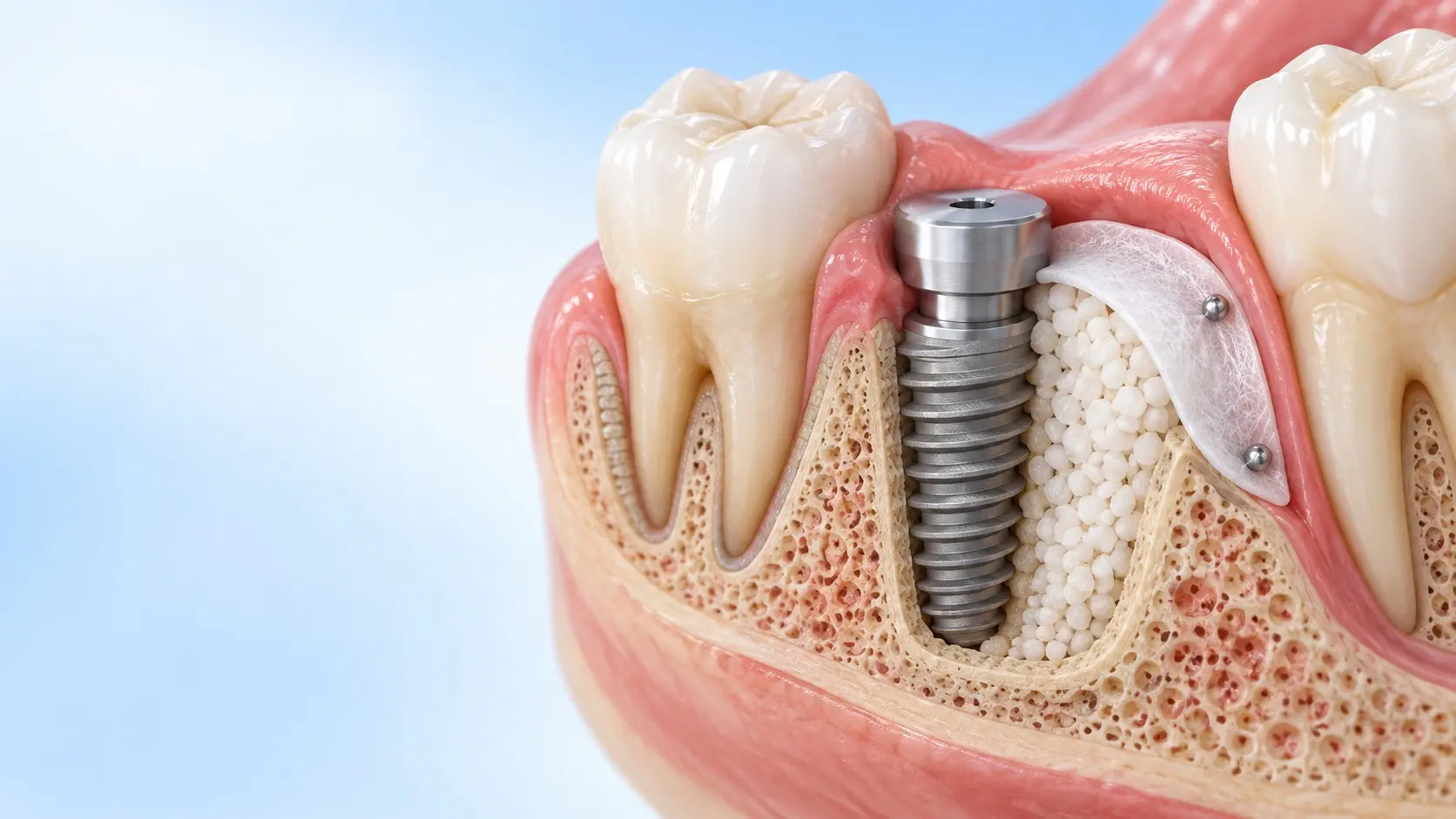
Cross-section diagram of an implant with bone graft material filling an area of thin cheek-side bone and a barrier membrane fixed with pins

BONE GRAFT IMPLANT

Bone Graft Implants Three Key Points

If a bone graft has been recommended to you, first check whether 2 mm of bone remains at that site.

Why Diagnosis Matters

When is a bone graft needed for an implant?

An implant bone graft (guided bone regeneration, GBR) is a procedure in which graft material is placed and covered with a membrane to supplement bone when there is not enough bone around the implant. After a tooth is extracted, the cheek-side bone thins first, so even when there is a site to place the implant, the surrounding bone can be thin and a graft may be needed. At Yeonhap Dental Clinic, if 3D CT shows a position that leaves 2 mm on the cheek side and 1.5 mm on the tongue side, no graft is done, and only when it does not, a graft is done on the same day as placement.

Consultation Checklist

What we check at your first consultation

We decide whether a bone graft is needed from 3D CT measurements and your medical history.

  • The bone thickness that remains: 2 mm on the cheek side and 1.5 mm on the tongue and palate side
  • Bone height: the distance to the lower-jaw nerve canal and to the maxillary sinus at upper molars
  • When the tooth was extracted, any inflammation, whether you take osteoporosis medication or antiplatelet drugs, and whether you have diabetes

Treatment Options

This is how Yeonhap Dental Clinic judges a bone graft

A bone graft is not something decided in advance. We first look on CT for a position that leaves 2 mm and 1.5 mm, and add a graft only when it cannot be found. If height is lacking in an upper molar, it is covered in the sinus lift section.

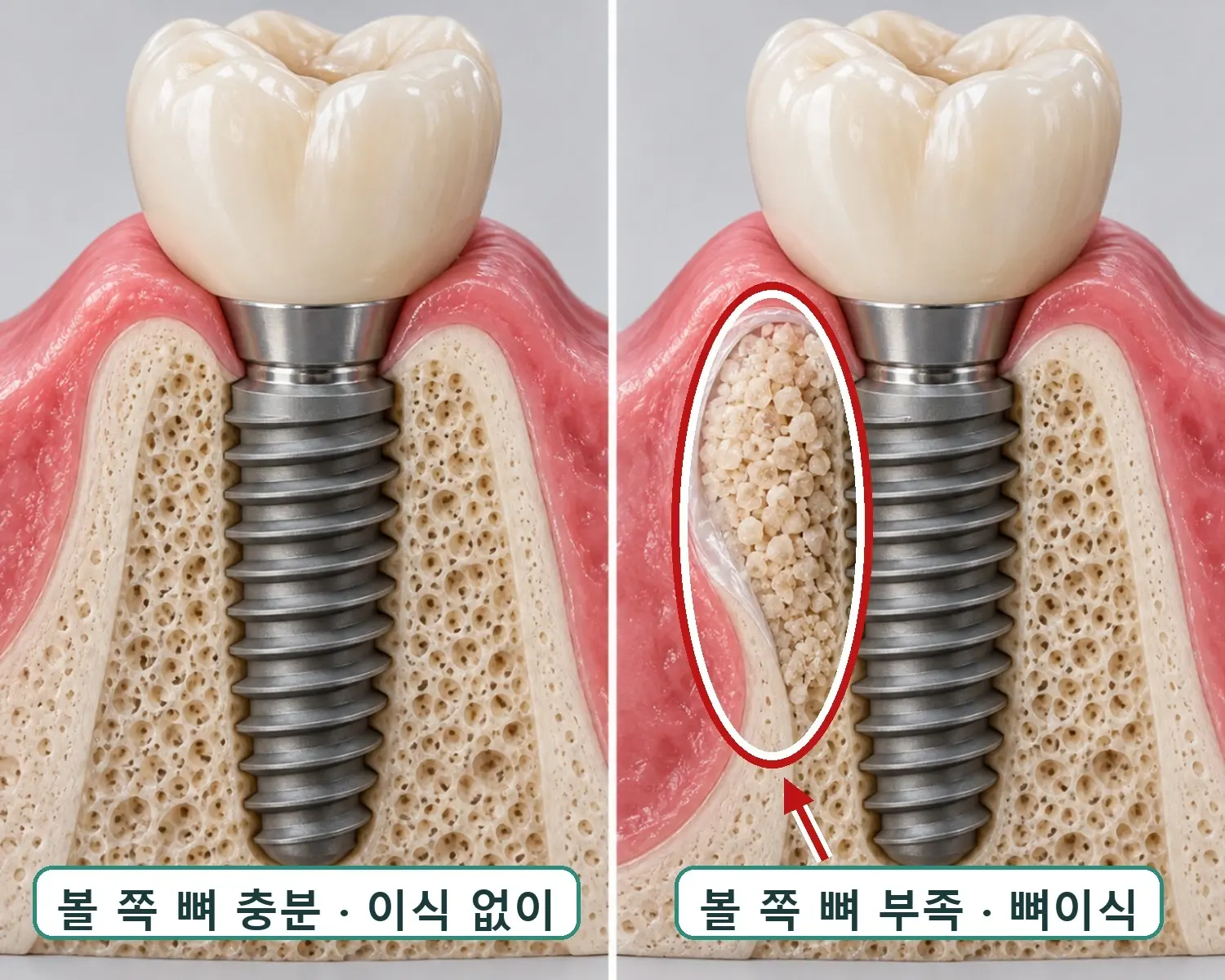
Cross-section diagram comparing an implant placed without a graft because the cheek-side bone was sufficient with an implant supplemented with graft material and a barrier membrane because the bone was thin

When no graft is needed: 2 mm of cheek-side bone is secured

If moving the position within the extent of the prosthesis gives a site that leaves 2 mm on the cheek side and 1.5 mm on the tongue side, no graft is done. At Yeonhap Dental Clinic, we treat 2 mm not as a margin but as a threshold.

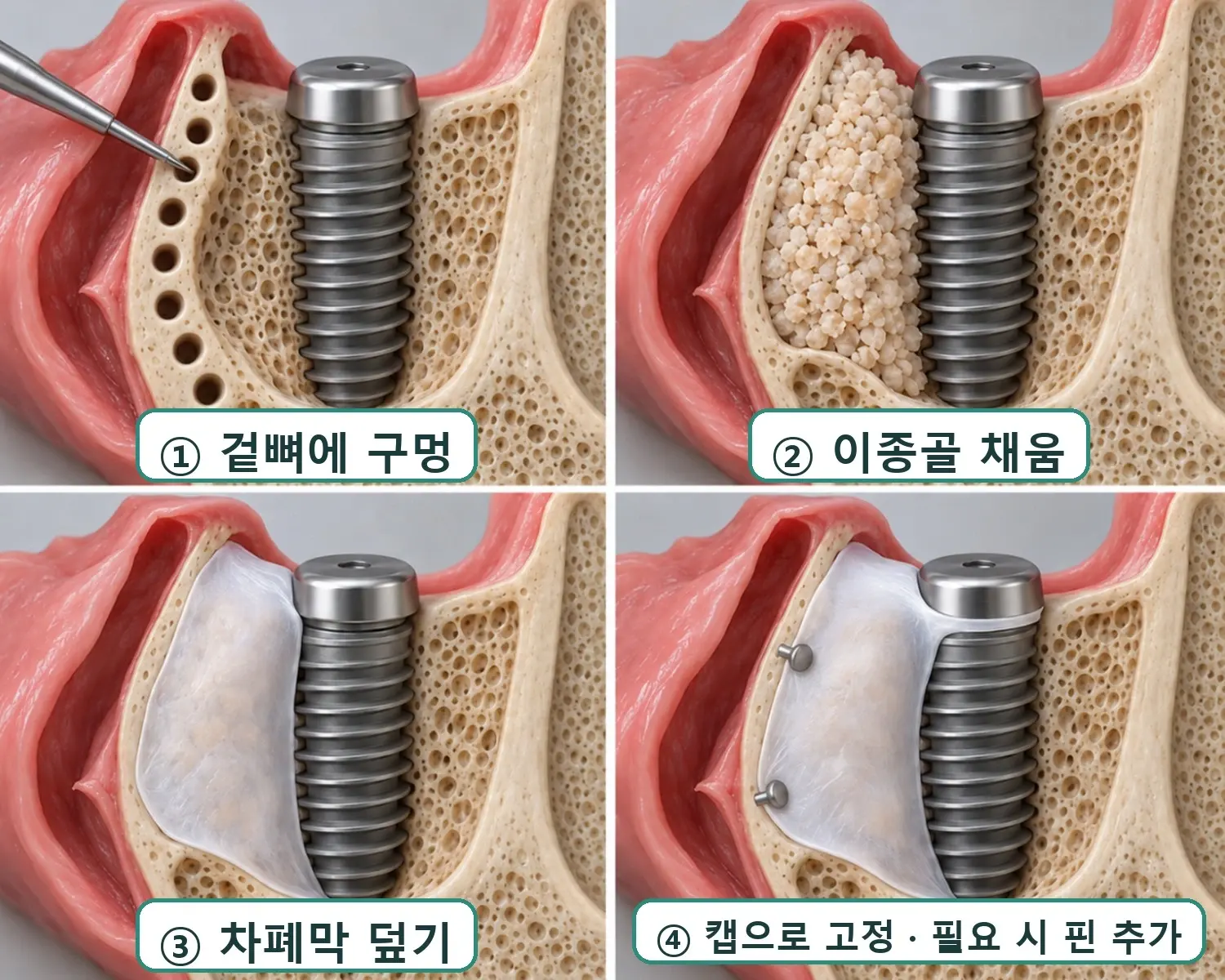
Cross-section diagram of the four steps of a bone graft at the implant site: making holes in the outer bone, filling with xenograft material, fixing a resorbable barrier membrane to the cap, and adding pins if the area is wide

When a graft is needed: four steps

We make holes in the outer bone to secure blood flow, fill with xenograft, cover with a resorbable barrier membrane, and fix it by attaching it to a wide cover cap or healing abutment. For a wide graft, we add bone tacks (pins). Fixing the membrane so the graft material does not move is part of the same set.

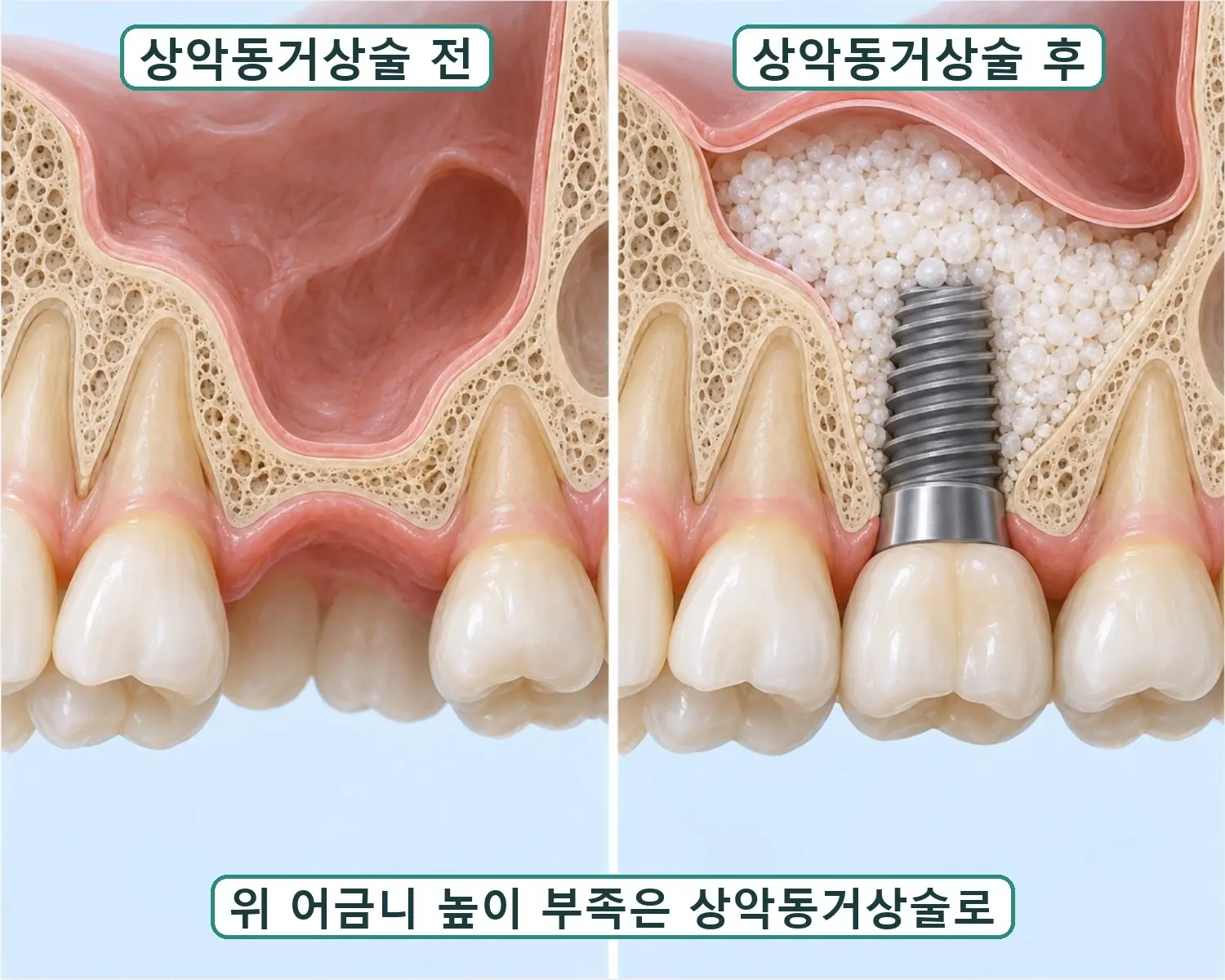
Before-and-after cross-section diagram of a sinus lift: at an upper molar site with insufficient residual bone, the sinus membrane is lifted, filled with graft material, and an implant is placed

For lack of height in an upper molar, use a sinus lift

If what is lacking in an upper molar is height rather than thickness, it is covered in the sinus lift section. We consider it when the remaining bone is under 7 mm, and we first look at a water-pressure lift that requires no incision.

Planning Points

What changes when you have a bone graft?

A bone graft is done together with implant placement on the same day. The membrane is fixed by attaching it to a wide cover cap or healing abutment, and the graft material settles in during the same period in which the implant bonds to the bone. We do not do staged surgery in which only the graft is done first and the implant is placed months later.

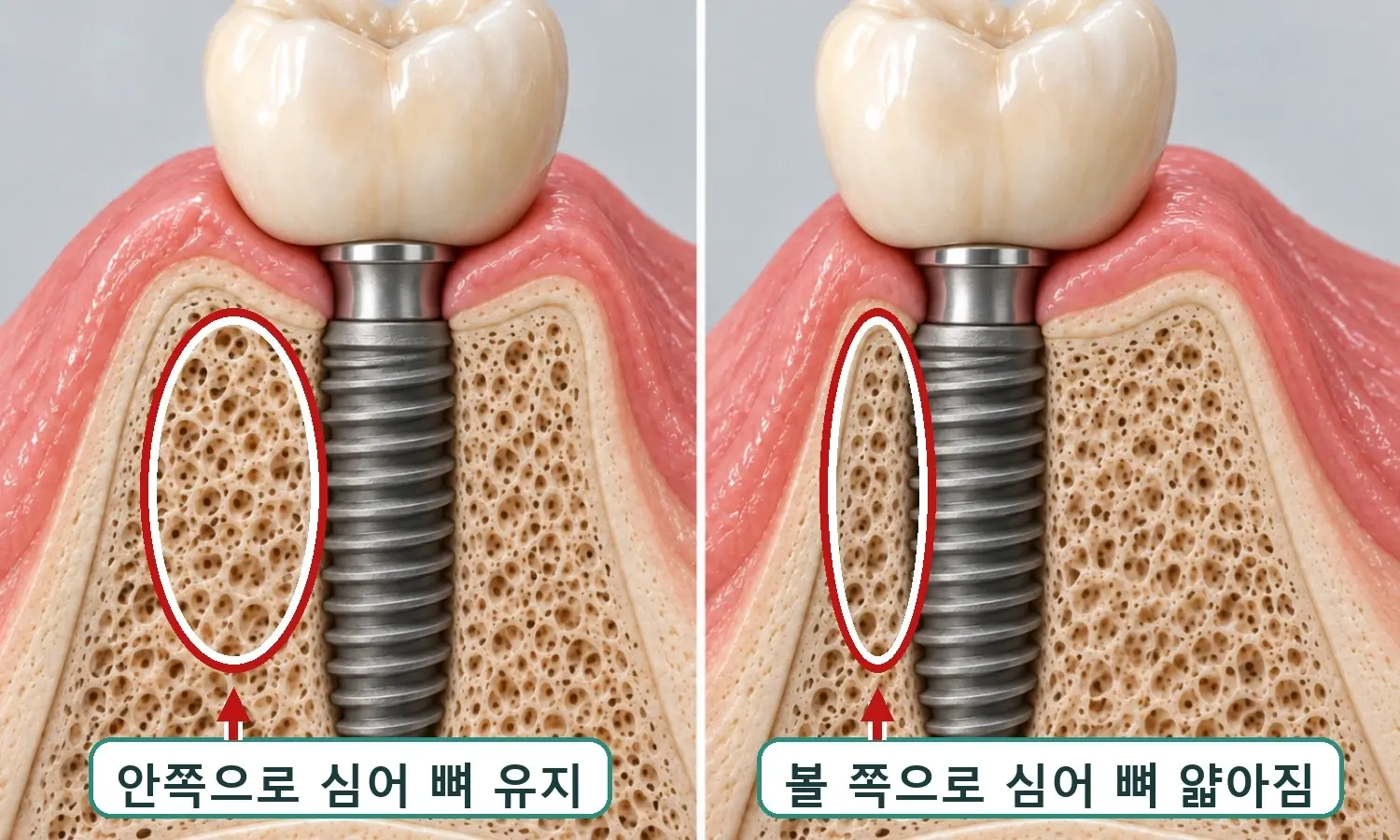
Cross-section diagram comparing an implant placed toward the inside, which maintains the cheek-side bone, with one placed off toward the cheek side, which leaves the bone thin

When It Is Better Not to Do a Bone Graft

If moving the position within the extent of the prosthesis already gives 2 mm, adding a graft only increases the surgical area and swelling. A bone graft is added only under conditions that change the result, and we show you the basis on the CT screen.

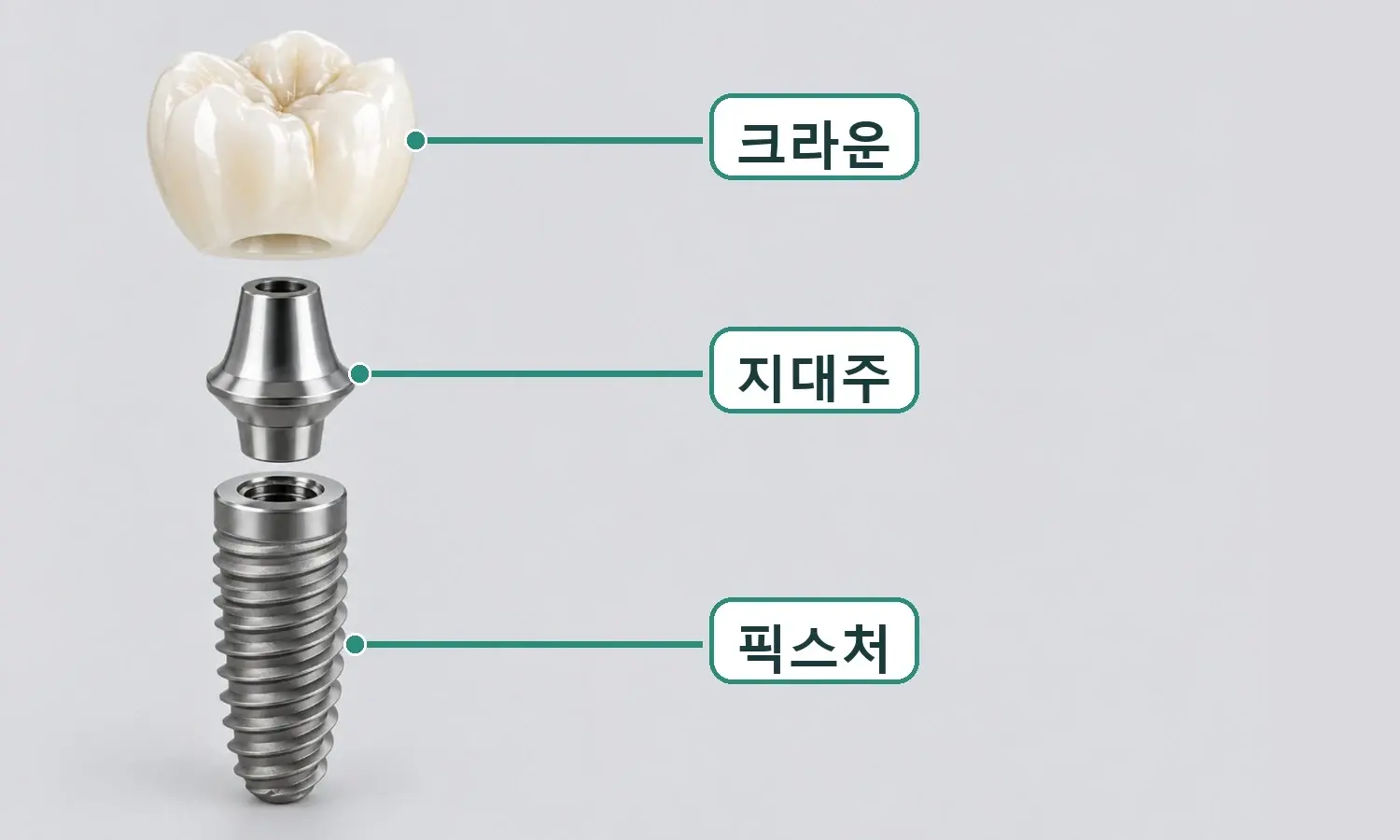
Diagram showing an implant separated into three parts: crown, abutment, and fixture

The cost of a bone graft is a separate item

Bone graft material and a barrier membrane are added separately to the implant price (fixture, abutment, crown). Even with NHI-covered implants for patients aged 65 and over, a bone graft is not covered, so it goes on the estimate only when needed.

Before Visit

Helpful details before your visit

If you know the items below before you come, we can tell you at the first consultation whether a bone graft is needed.

  • When the tooth was extracted and how much time has passed since
  • The area and symptoms that bother you most right now
  • Whether you take osteoporosis medication (injection or oral), aspirin, Plavix, etc.
  • Any earlier CT or X-ray images, if you have them

The reference numbers for bone grafts, Yeonhap Dental Clinic

2 mm of cheek-side bone, 1.5 mm of tongue-side bone: this is the thickness that must remain around the implant, and it is measured on 3D CT at the first consultation. Graft method: four steps of decortication, xenograft, resorbable barrier membrane, and fixation, done on the same day as placement. Lack of height in an upper molar: if the remaining bone is under 7 mm, it is covered in the sinus lift section. Cost: the graft material and membrane are separate from the implant price and are not covered even for NHI-covered implants.
Two things to check when a bone graft is recommended

First, on CT we check whether 2 mm on the cheek side and 1.5 mm on the tongue side still cannot be achieved even after adjusting the implant position within the extent of the prosthesis. If they can, no graft is needed, and adding a graft would only increase swelling and cost. Second, if a graft is needed, ask about the type of graft material and membrane, the fixation method, and whether the graft is done on the same day as placement or in stages. At Yeonhap Dental Clinic, we show you these two things on the CT screen and write them as line items on the estimate. The 2 mm criterion is based on a prospective study showing that marginal bone loss one year after prosthesis connection was greater in implants with under 2 mm of cheek-side bone (Nohra 2018), and a systematic review showing greater bone loss and gum recession with thin cheek-side bone (Monje 2023). References: Nohra 2018, 1-year marginal bone loss after prosthesis connection of 0.36 mm in the group with under 2 mm of cheek-side bone versus 0.03 mm in the group with 2 mm or more; prospective pilot with 39 implants · Monje 2023, systematic review of buccal bone thickness and changes in peri-implant hard and soft tissue Treatment results may vary depending on each person's oral condition.

Last updated:

Schedule a consultation by phone or Naver Booking

Leave a few details on our consultation page and we'll get back to you promptly.

Frequently Asked Questions

Q. Is a bone graft always necessary for an implant?
No. If a position is found that leaves 2 mm of bone on the cheek side and 1.5 mm on the tongue side around the implant, it is placed without a graft. There is a prospective study (39 implants, Nohra 2018) in which, when the cheek-side bone at placement was under 2 mm, marginal bone loss one year after prosthesis connection was 0.36 mm, greater than 0.03 mm for those with 2 mm or more, so we use this number as the criterion and graft only when moving the position within the extent of the prosthesis still does not achieve it.
Q. How much longer does the implant timeline get with a bone graft?
It does not get longer because of the bone graft. At Yeonhap Dental Clinic, the bone graft is done on the same day as implant placement, so the graft material settles in during the same period in which the implant bonds to the bone. We do not do staged surgery in which only the graft is done first and the implant is placed months later. The timeline gets longer when a sinus lift is done first for an upper molar, and the criteria for that are in Sinus Lift Implants in Suwon.
Q. Is the cost of a bone graft included in the implant cost?
It is a separate item. The xenograft material and barrier membrane are added on top of the implant price, and even with NHI-covered implants for patients aged 65 and over, a bone graft is not covered. If your estimate includes a bone graft, also check whether the site is one that does not reach 2 mm on CT.
Q. What material is used for an implant bone graft?
We use a xenograft that breaks down slowly and keeps its volume for a long time, cover it with a resorbable barrier membrane, and fix it by attaching it to a wide cover cap or healing abutment. We do not use the method of harvesting your own bone separately as standard, because it adds pain at the harvest site. We explain the material and fixation method at the consultation.