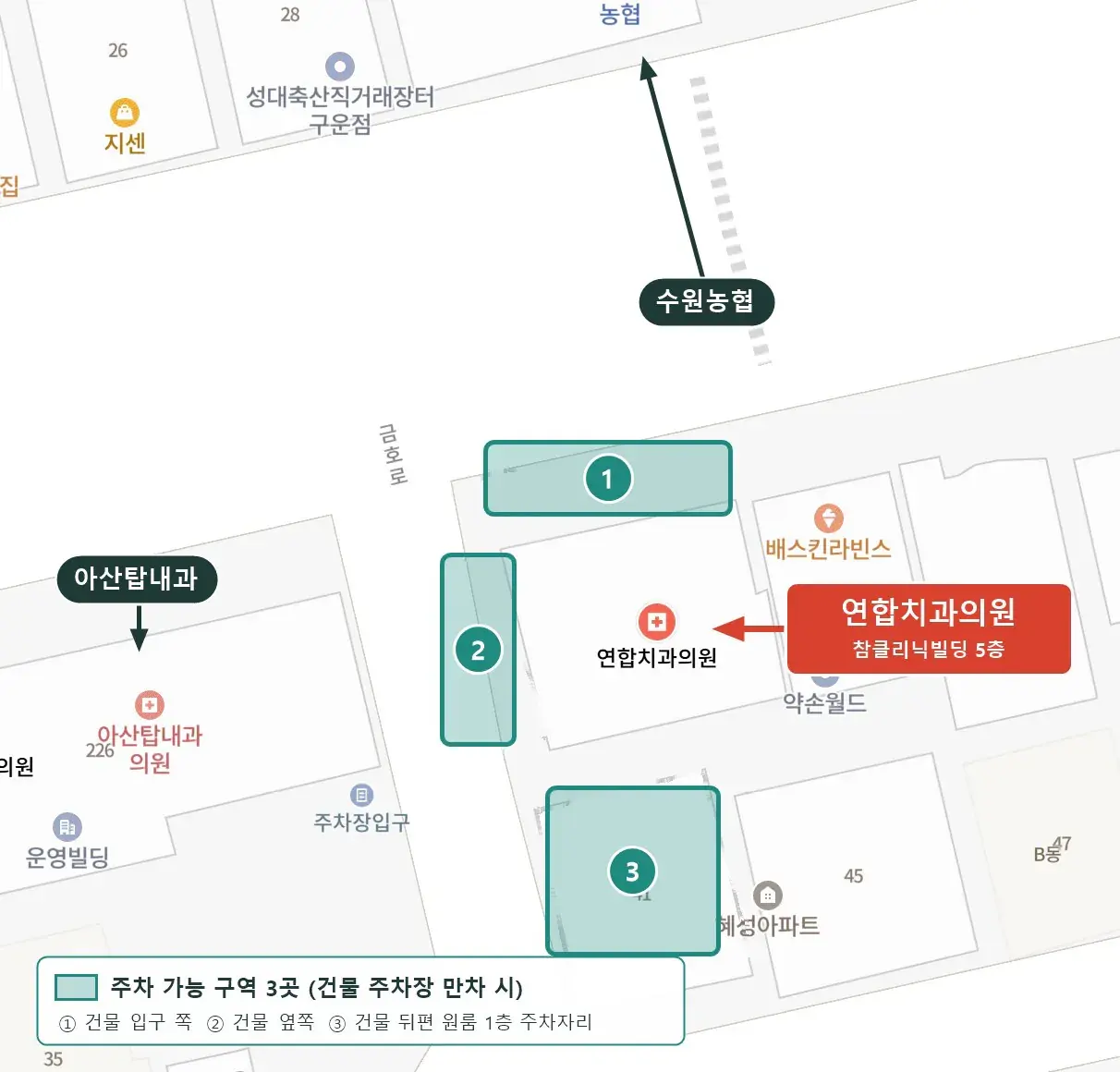
An Integrated Dentistry specialist performing implant surgery under a surgical light in the operating room of Yeonhap Dental Clinic in Gwonseon-gu, Suwon

SUWON GWONSEON DENTAL CLINIC

Dental Consultations in Gwonseon-gu, Suwon We Look for a Way to Save the Tooth Before Extracting It

This is a clinic where the criteria for recommending treatment are set in numbers. We show you those criteria as they are on the CT screen at the consultation.

Our Standard

What standards does Yeonhap Dental Clinic practice by?

Yeonhap Dental Clinic is a clinic in Tap-dong, Gwonseon-gu, Suwon, where two Integrated Dentistry specialists, certified by the Ministry of Health and Welfare, personally handle everything from diagnosis to prosthesis adjustment. The criteria for recommending treatment are set not by words but by measurements and confirmed signals. For cavities and cracks, we count a Q-ray fluorescence red reaction as a lesion only if it remains after plaque is wiped away and the tooth is imaged again; for implants, we do not do a bone graft if 2 mm of cheek-side bone remains; we do not do a sinus lift if the residual bone at an upper molar exceeds 7 mm; and for a tooth where root canal treatment has failed, we first consider retreatment and apicoectomy before extracting it. We do not recommend treatment that is not needed, and for treatment that is needed, we look at the reason with you on the Q-ray and CT screens.

First Visit

What we check at your first consultation

We do not decide from a single test. After the naked eye, Q-ray, bitewing X-rays, and 3D CT fill in what each of the others cannot see, we decide whether to treat and in what order.

  • Before touching the gums, we take the Q-ray fluorescence image first. Where the green fluorescence has disappeared indicates demineralization, and red areas indicate bacterial activity.
  • We wipe away plaque and re-image from a different angle for any red reaction, and treat only what remains as a lesion.
  • Between the teeth and the depth of lesions are checked with bitewing X-rays, and bone thickness and the distance to the nerve canal and maxillary sinus are checked in millimeters with 3D CT.
  • We first look at whether the tooth can be saved. Retreatment of the root canal and apicoectomy come before extraction.
  • After checking your general health conditions and medications, we write the order of treatment, the timeline, and the cost for each item on an estimate.

Three Principles

Yeonhap Dental Clinic's three principles of practice

There are three: evidence, preservation, and maintenance. Judgment is by measurements, extraction comes last, and after treatment we continue with regular check-ups.

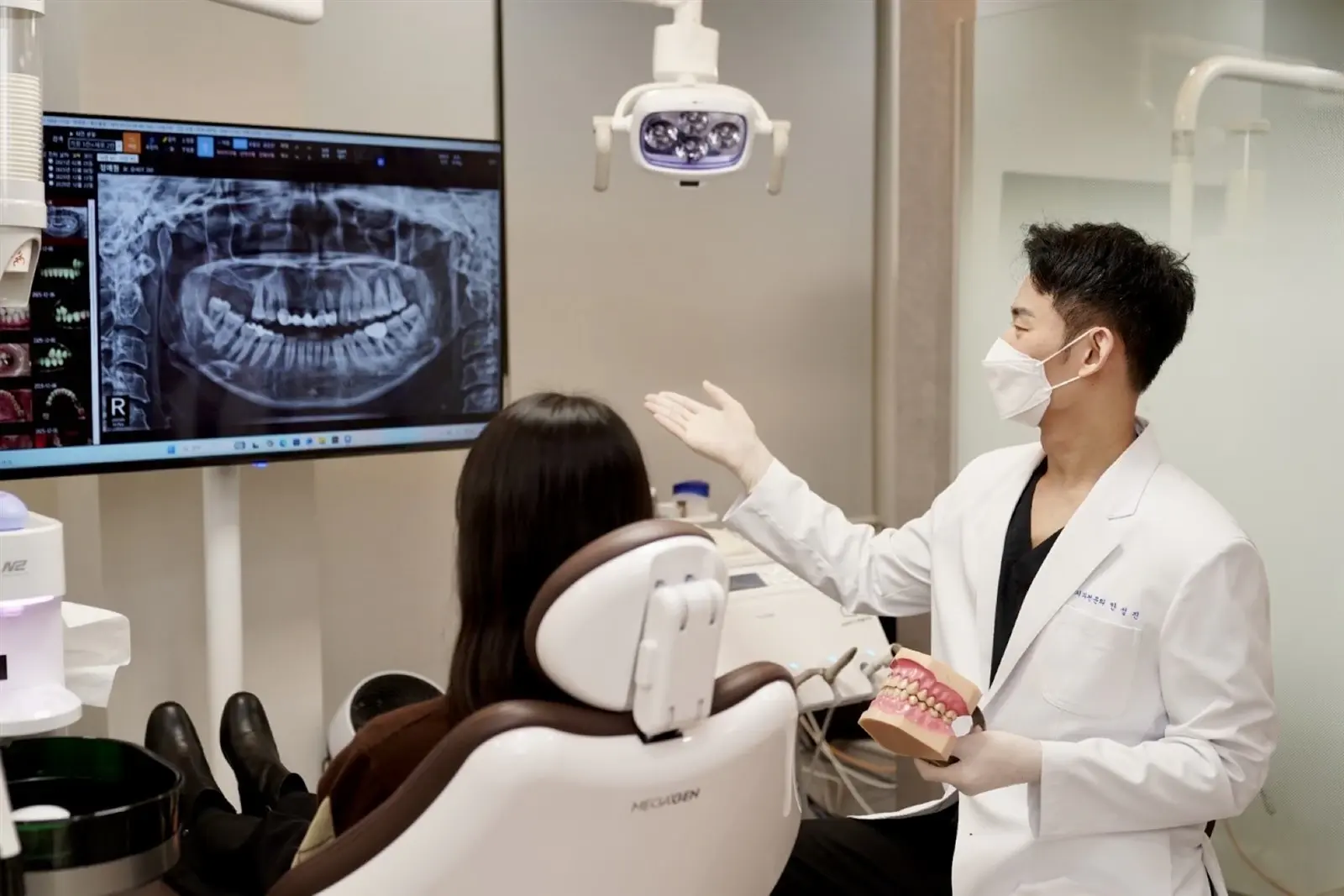
The director explaining diagnostic results to a patient using a panoramic X-ray screen and a tooth model

Evidence: we judge by measurements

For cavities, the criterion is a red Q-ray reaction that remains after re-imaging; for bone grafts, 2 mm on the cheek side and 1.5 mm on the tongue side; for sinus lifts, 7 mm of residual bone; and for short implants, a 2 mm margin to the nerve canal. A procedure is added only when the criterion is not met, and we look at that screen with you.

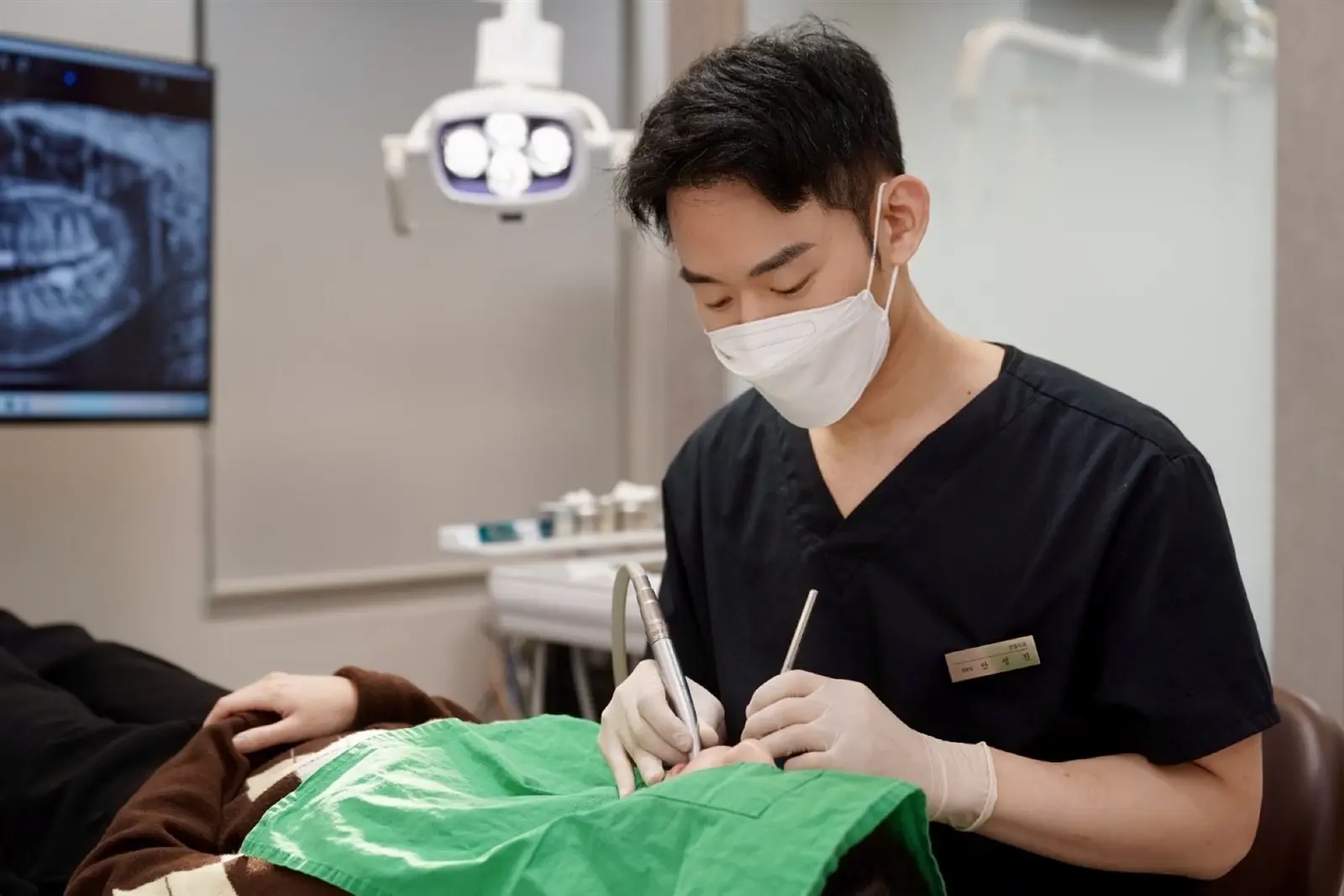
An Integrated Dentistry specialist personally treating a patient's teeth in the treatment room

Preservation: we look for a way to save the tooth before extracting it

Root canal treatment is done under rubber dam isolation, and the irrigation solution is replaced every 5 minutes. Even for a tooth where treatment has failed, we first consider retreatment of the root canal and apicoectomy, and extraction comes after that.

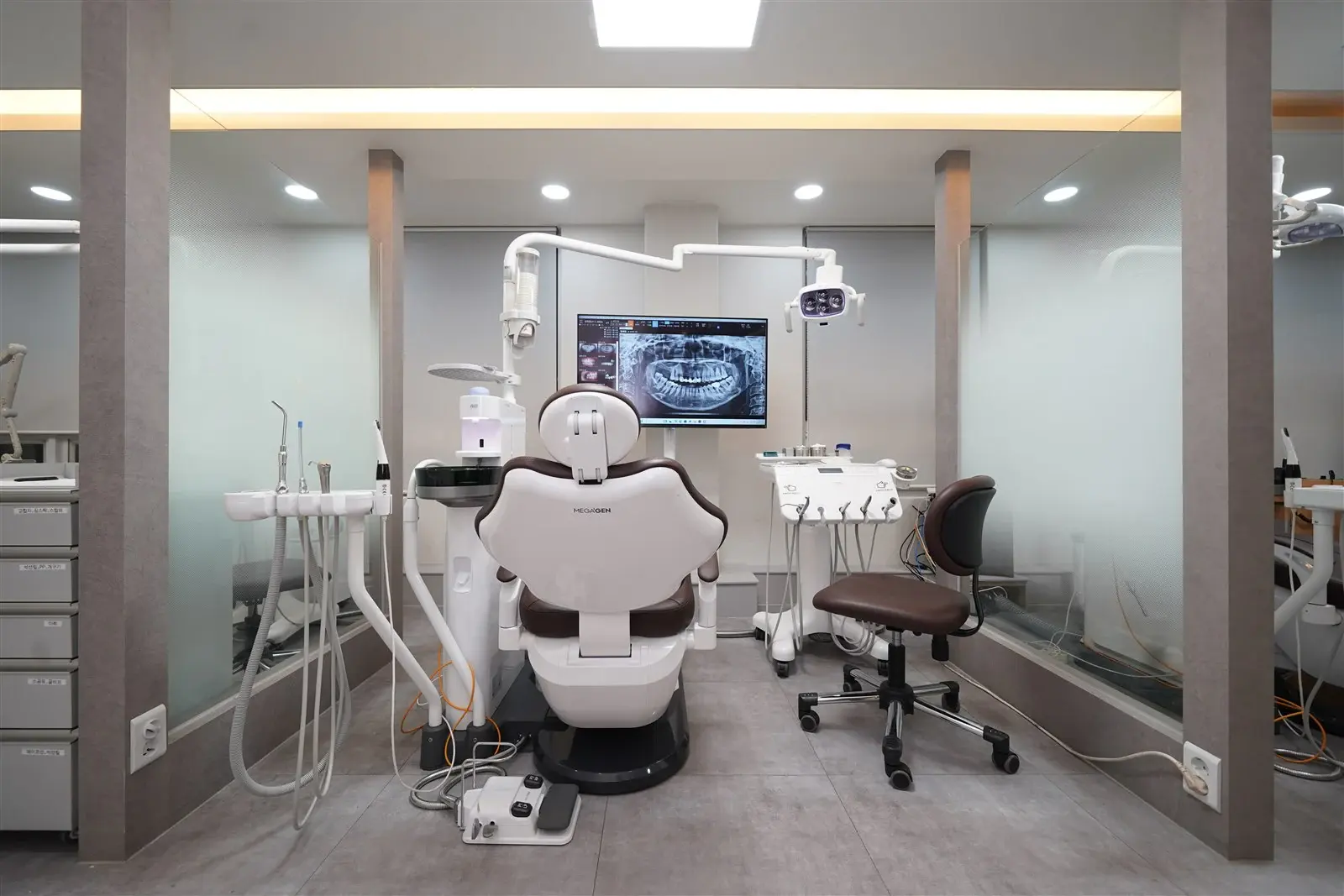
A dental treatment unit chair at Yeonhap Dental Clinic with a panoramic X-ray monitor installed

Maintenance: the director personally adjusts and checks

For implants and crown prostheses, the director personally adjusts the bite and checks it every 6 months. For implants, we set the criterion in advance: if bone loss is 50% or more, the implant is removed and placed again after 3 months.

Doctors & Hours

Who treats you, and when can you come?

Two Integrated Dentistry specialists provide treatment, and we are open until 20:30 on Mondays (evening hours) and until 13:00 on Saturdays. You can park in the building's parking lot and the marked areas around the building.

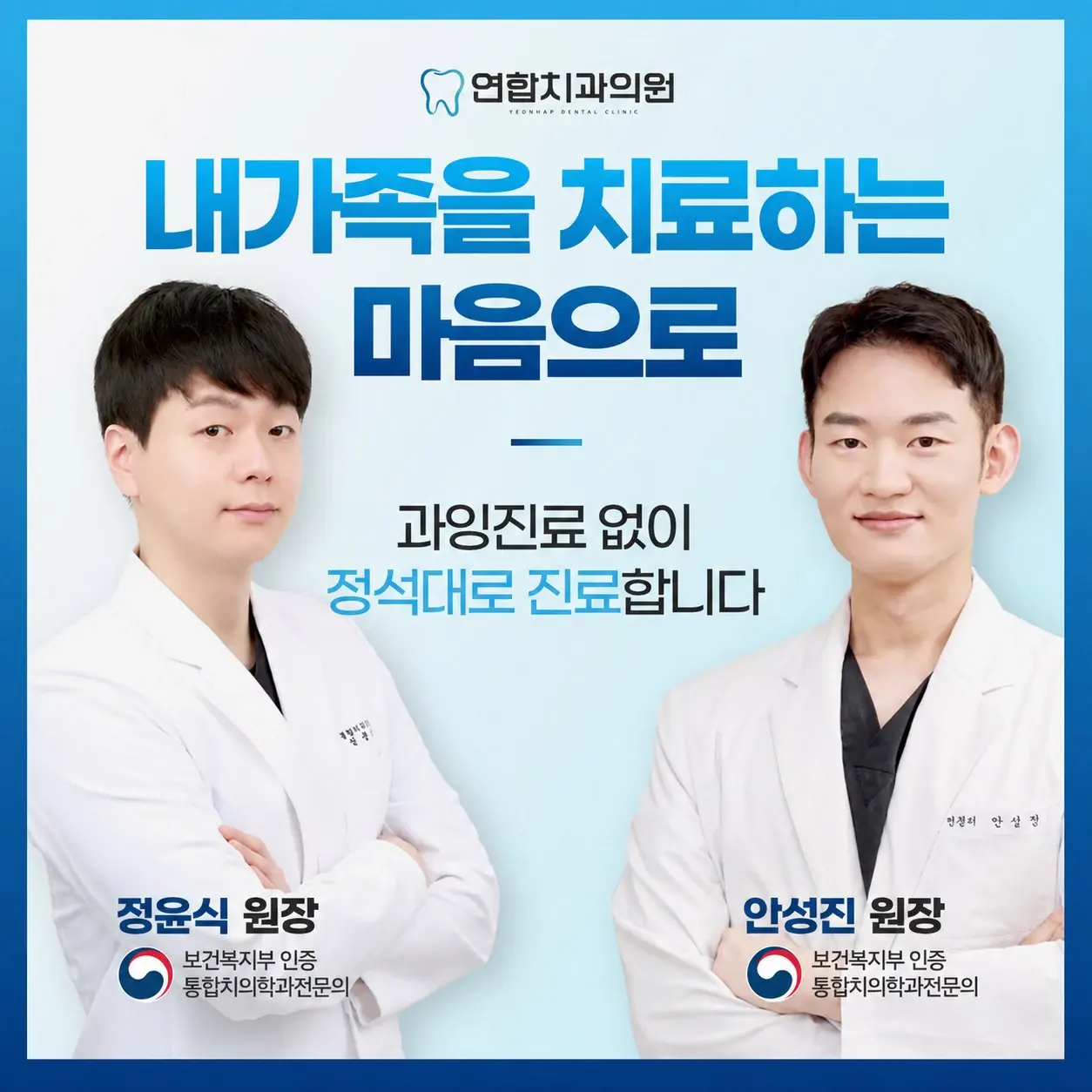
Dr. Jeong Yun-sik and Dr. Ahn Seong-jin, Integrated Dentistry specialists at Yeonhap Dental Clinic

Our dentists: two Integrated Dentistry specialists

Dr. Ahn Seong-jin, Chief Director (Dankook University School of Dentistry, the implant course at Seoul National University Graduate School of Dentistry, and the endodontics course at the University of Pennsylvania) and Dr. Jeong Yun-sik, Clinical Director (Dankook University School of Dentistry) provide treatment. For complex cases, the two specialists review together.

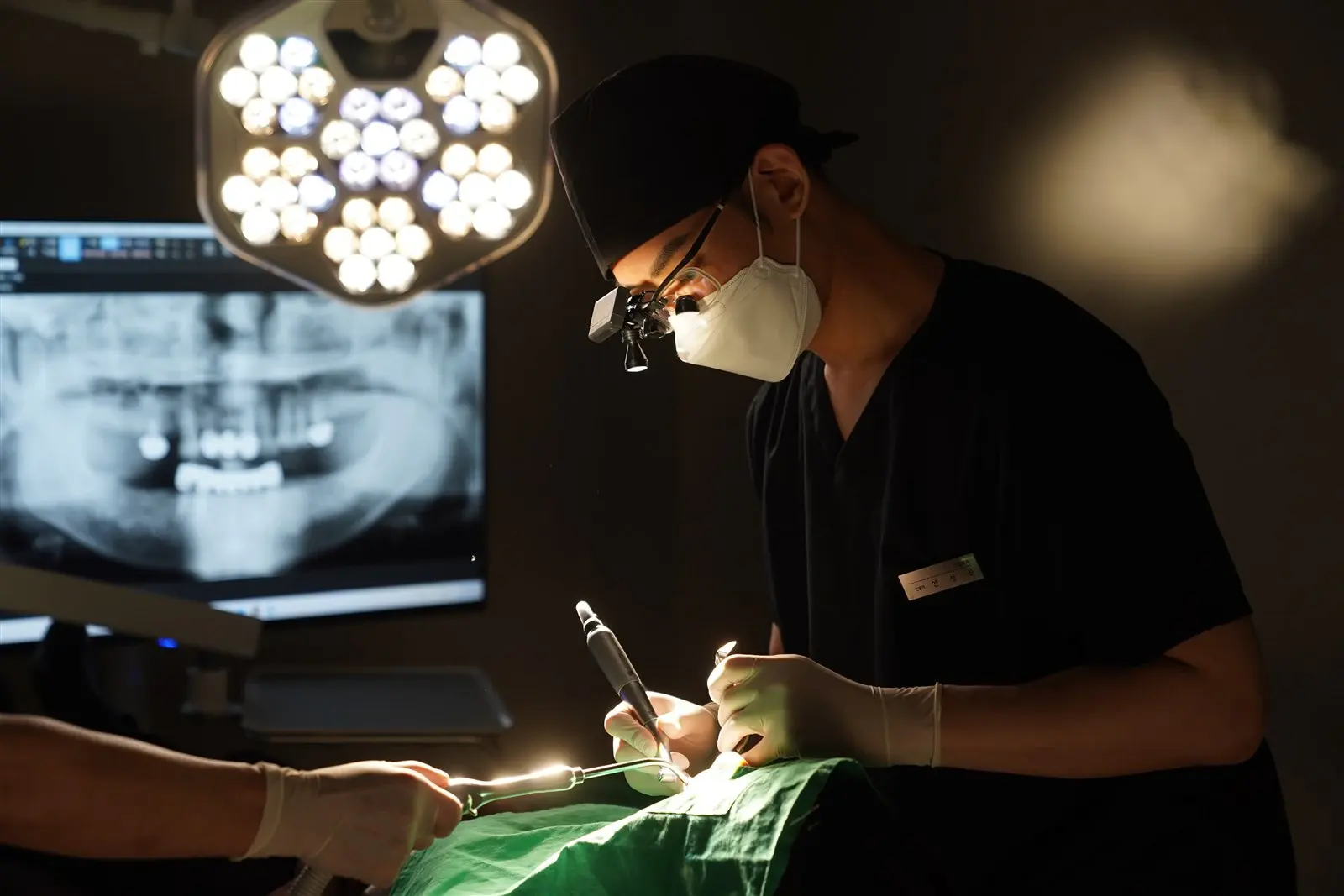
A map showing the location of Yeonhap Dental Clinic's Cham Clinic Building, marked relative to Suwon NongHyup and Asan Tap Internal Medicine Clinic, and three parking areas: near the building entrance, beside the building, and the ground floor of the studio apartment building behind it

Hours and parking

Mon 09:30-20:30 / Tue-Fri 09:30-18:30 (lunch 13:00-14:00) / Sat 09:00-13:00, no lunch break / Closed Sundays and public holidays. We are on the 5th floor of the Cham Clinic Building on Geumho-ro, across from Suwon NongHyup and Asan Tap Internal Medicine Clinic. If the building's parking lot is full, you can use (1) the spaces near the building entrance, (2) the spaces beside the building, or (3) the ground-floor spaces of the studio apartment building behind it, as marked on the map, and we support parking for visiting patients.

Before Visit

Helpful details before your visit

If you prepare the items below, we can decide the first-day diagnosis and the order of treatment.

  • When the tooth was extracted (as best you remember)
  • Names of the medications you take (diabetes medication, osteoporosis medication, antiplatelet drugs, anticoagulants)
  • The area that bothers you most and when the symptoms began
  • For Monday evening appointments, call 031-293-2207

For those worried about overtreatment

The way to avoid overtreatment is not to trust a clinic but to ask for its criteria. For a cavity, ask whether the red Q-ray reaction remained after plaque was wiped away; for a bone graft, how many millimeters of cheek-side bone remain; and for an extraction, how likely it is that the tooth can be saved by retreating the root canal. Yeonhap Dental Clinic answers these questions with numbers and looks at the Q-ray and CT screens with you. Precise diagnosis is not one good piece of equipment but an overlap of examinations that fill in what each cannot see. Treatment results may vary depending on each person's oral condition. The three steps for confirming a Q-ray signal are in Interpreting Q-ray and Its Limits, the criteria for saving a root canal tooth are in Why a Rubber Dam Is Essential, the five things to ask when choosing an implant clinic are in Implant Clinics in Suwon, and our four principles of practice are in the Philosophy of Care page.

Last updated:

Schedule a consultation by phone or Naver Booking

Leave a few details on our consultation page and we'll get back to you promptly.

Frequently Asked Questions

Q. Can a tooth I was told to have extracted be saved?
First we check whether the tooth can be saved by retreatment of the root canal or an apicoectomy. If the root has split lengthwise or no tooth wall remains, extraction is the right choice, and we show you the basis for that judgment on CT and Q-ray screens.
Q. My tooth is sensitive when I chew, but they say there is nothing on the X-ray. Could it be a crack?
Yes, it can be. A crack in a molar is only tens of micrometers wide and runs in a direction that does not line up with the imaging path, so it often does not show up well on radiographs. At Yeonhap Dental Clinic, we check bacterial activity inside the crack with Q-ray fluorescence examination, and by looking at a re-image after plaque removal together with your symptoms, we divide cracks into those to watch and those to treat.
Q. How can I tell whether a dental clinic is overtreating?
Each procedure has a reference number, such as 2 mm for a bone graft and 7 mm for a sinus lift, and a cavity is treated only when the red Q-ray reaction remains after plaque removal and re-imaging.
Q. What are the hours and parking?
Monday 09:30-20:30 (evening hours), Tue-Fri 09:30-18:30, Saturday 09:00-13:00, closed Sundays and public holidays. We are on the 5th floor of the Cham Clinic Building, across from Suwon NongHyup and Asan Tap Internal Medicine Clinic. If the building's parking lot is full, you can park at three spots: near the building entrance, beside the building, and the ground-floor spaces of the studio apartment building behind it, and we support parking for visiting patients.