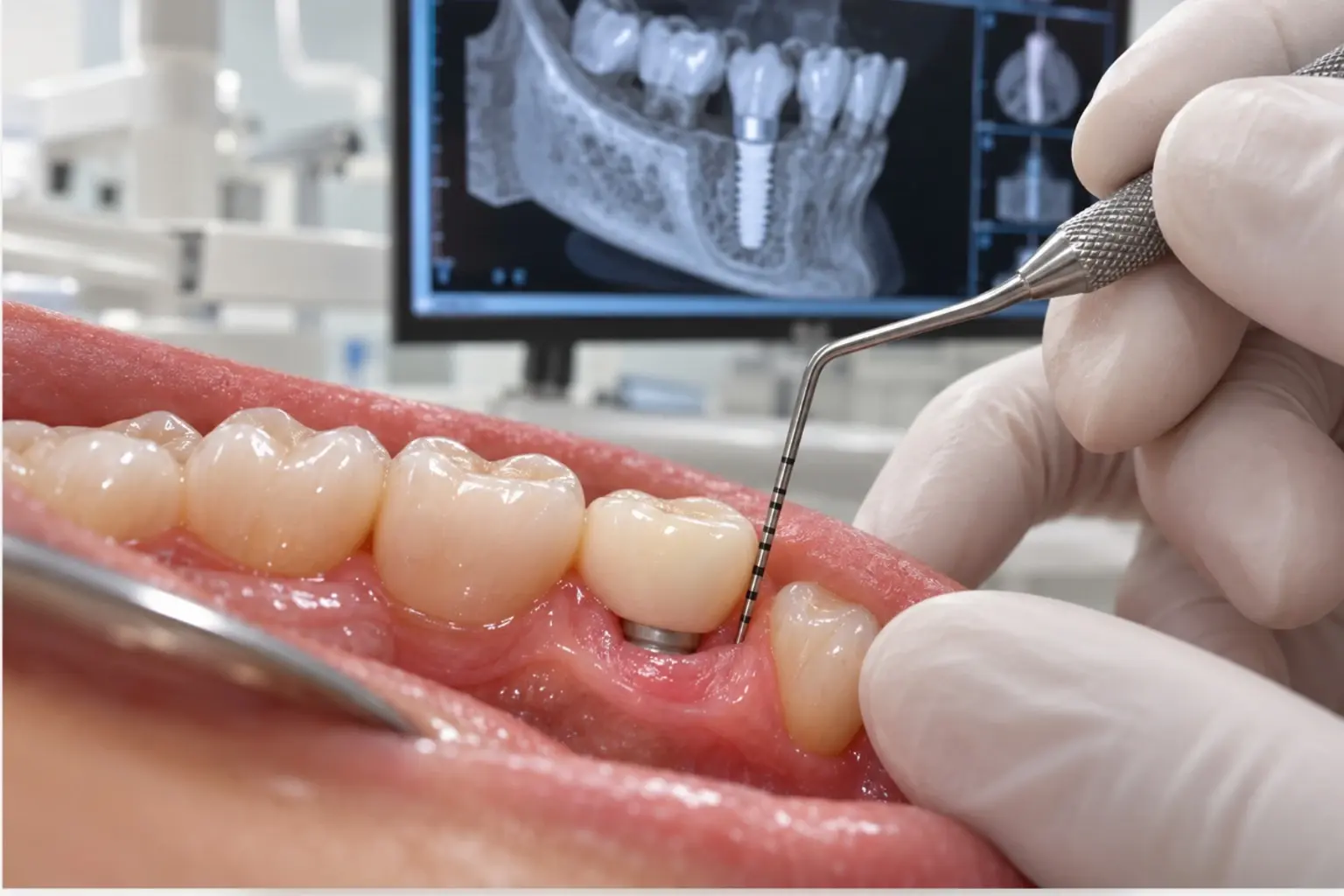
Example of a clinical visit, checking the gum around an implant with a probe

TAPDONG IMPLANT, LONG-TERM

Depth, Angle, and Prosthetic Shape: How Are They Applied to My Gums and Teeth?

Even with the same criteria, the actual application differs by gum thickness, tooth site, and the space the prosthesis will occupy. Yeonhap Dental Clinic tells you about those differences in advance at your consultation.

Long-term Result

One standard, but the application differs by gum, tooth, and prosthetic space

We share the goals for depth and prosthetic shape, but adjust the actual placement position and direction to the gum thickness, tooth site, and prosthetic space. Yeonhap Dental Clinic believes those differences show up in the gum and prosthesis a few years later, and explains at your consultation how we apply them under each condition.

CT Planning

What we check at your first consultation

We check separately what can be decided at the consultation and what is measured during surgery.

  • Whether your gum is on the thin or thick side. The exact thickness is measured during surgery
  • On the 3D CBCT, the position of the bone crest, the remaining bone height, and the cheek-side bone thickness
  • Whether it is a front tooth or a molar. For front teeth, whether an angle within the incisal edge line is achievable
  • Where the final crown will emerge and the bite, and the height and width available for the prosthesis
  • If before extraction, we consider same-day placement based on whether the infection can be removed, any gum recession, and the initial stability conditions

Three Designs

Depth, Direction, and Prosthetic Shape: How They Apply to My Conditions

The actual application varies with gum thickness, the position of front or back teeth, and the prosthetic space.

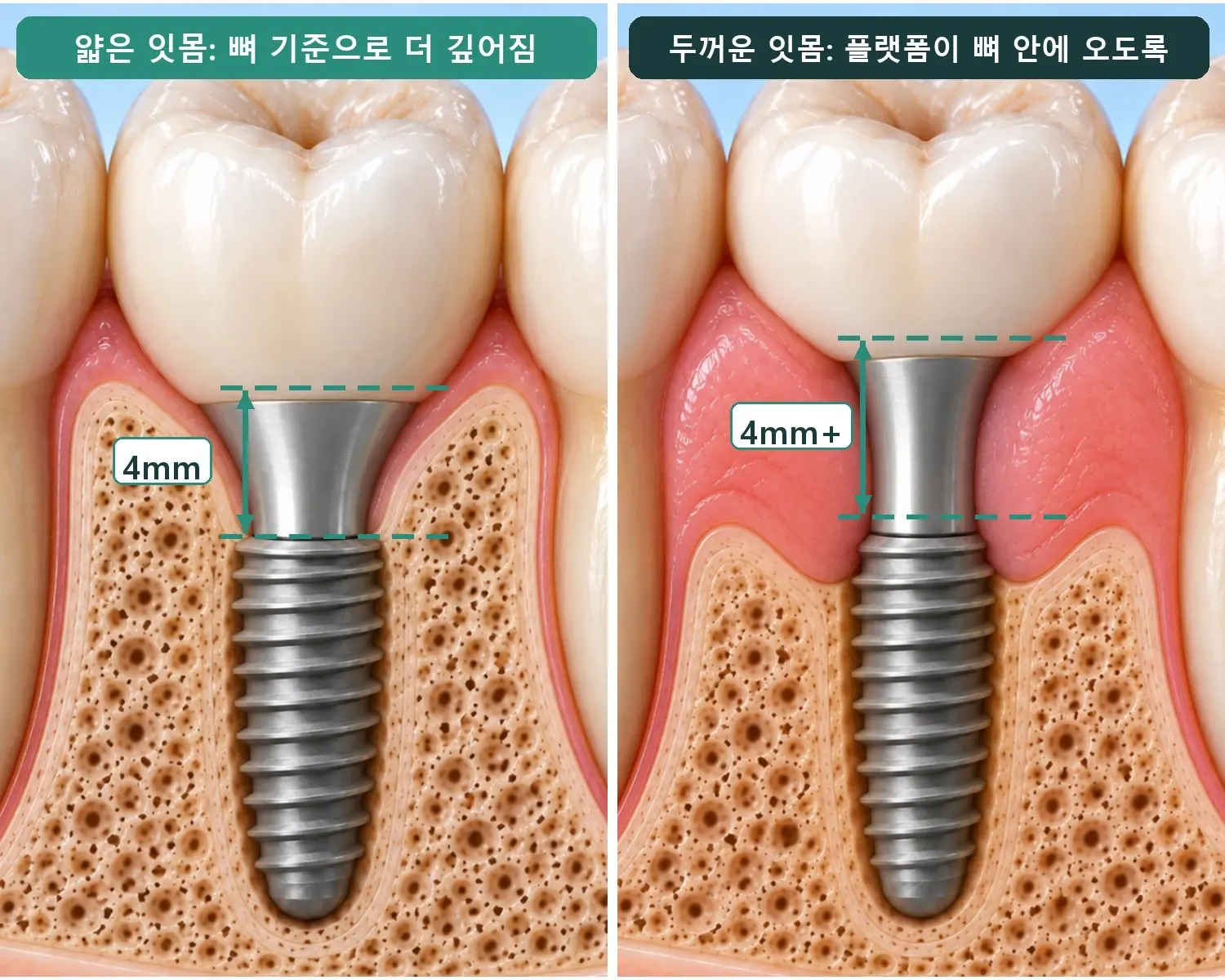
Comparative cross-section diagram of how the platform's position relative to the bone differs when 4 mm from the gum surface is applied to thin gum and thick gum

Applying depth by gum thickness

Even with the same 4 mm from the gum surface, the position relative to the bone is deeper if the gum is thin. If the gum is thick, the 4 mm point may be above the bone, so we go deeper so that the platform sits inside the bone.

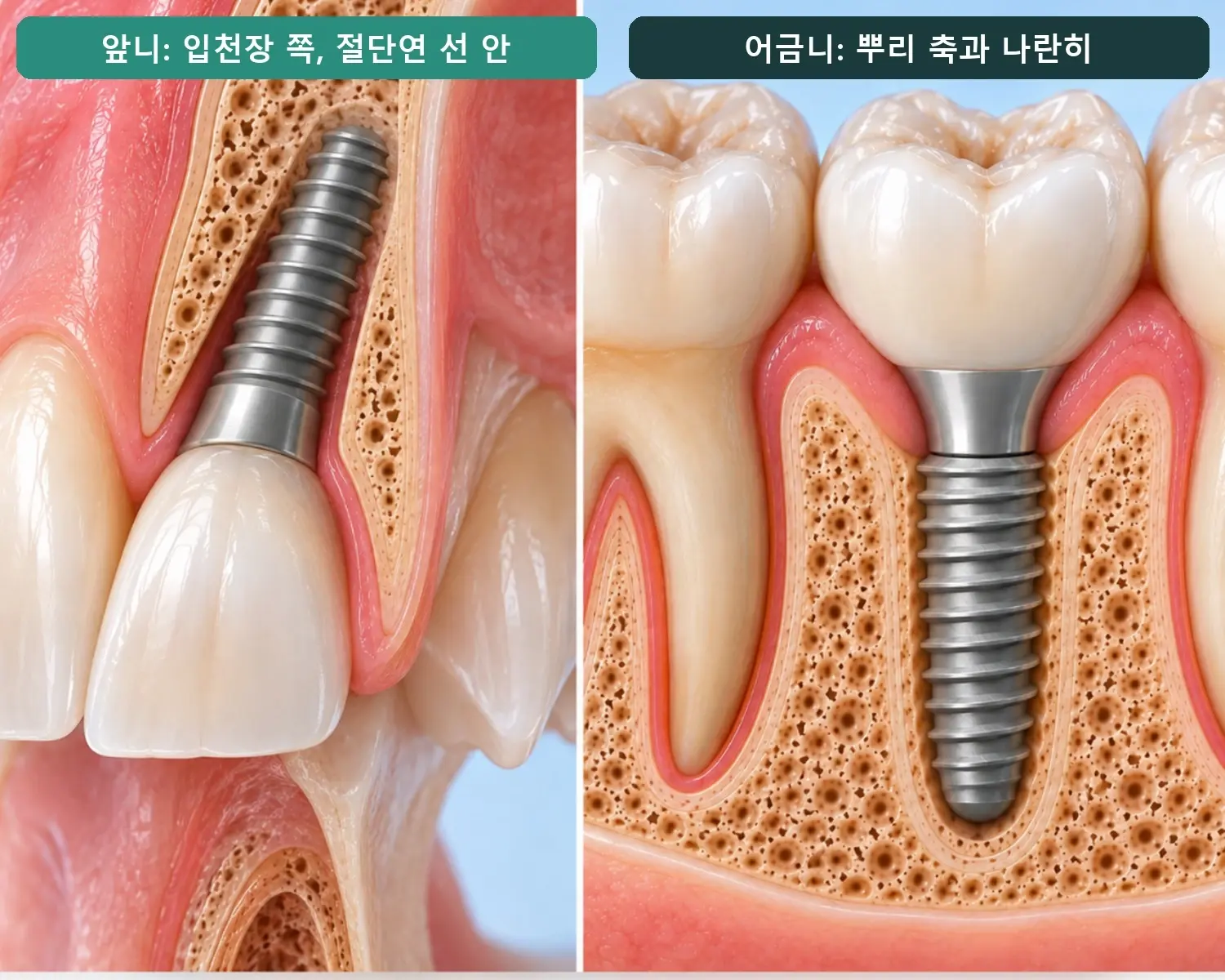
Cross-section diagram comparing a front-tooth implant placed toward the palate and angled within the incisal edge line with a molar implant placed parallel to the neighboring tooth's root axis

Applying direction to front teeth and molars

Molars are placed parallel to the root axis of the neighboring tooth, so the crown emerges in the middle of the chewing surface. Front teeth are placed toward the palate to preserve the cheek-side bone, and the limit of the tilt is up to the line connecting the incisal edges of the adjacent teeth.

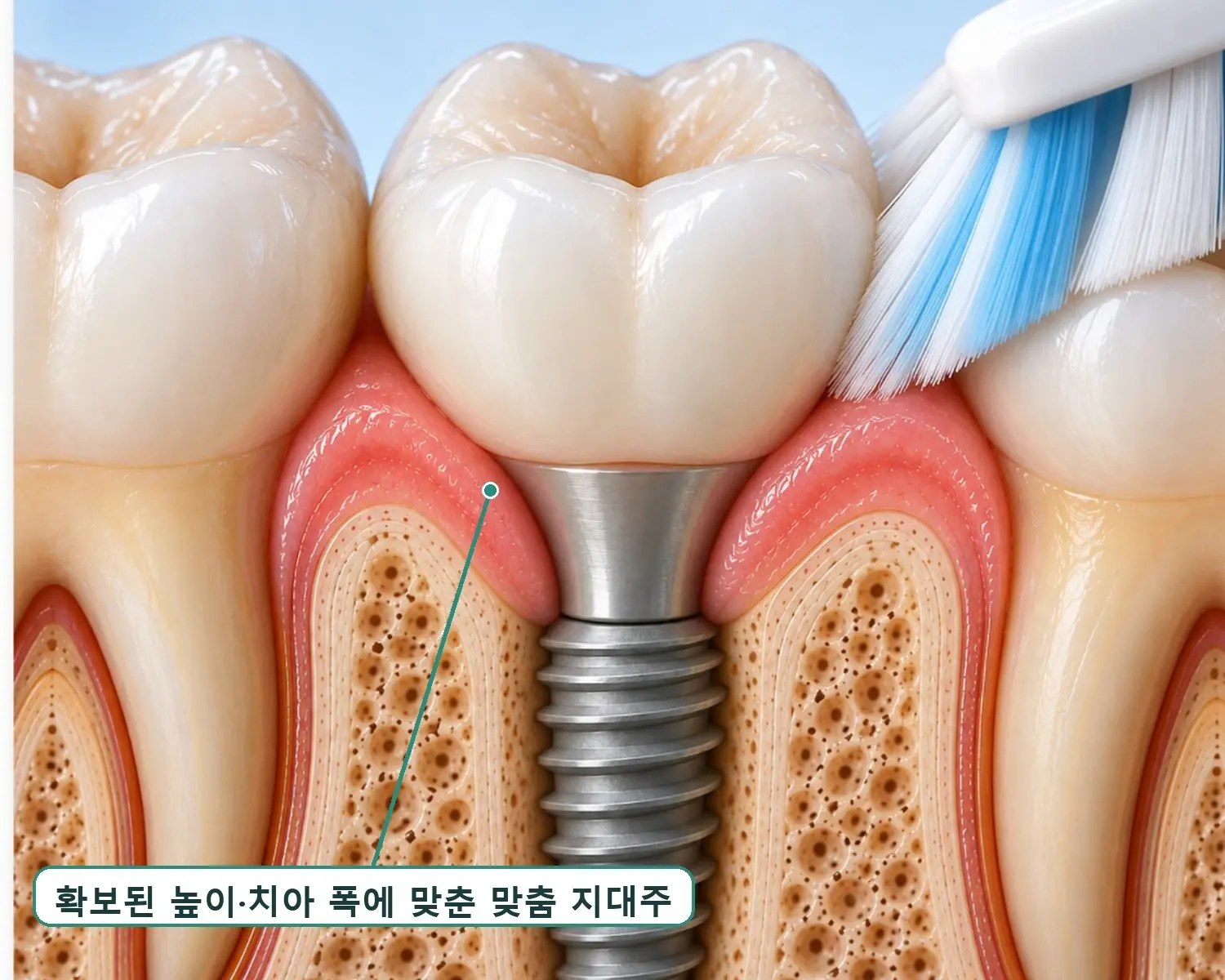
Illustration of an implant crown that flares out gently as it passes through the gum, and a toothbrush touching the gum margin

Prosthetic shape matched to the secured space

An implant is thinner than a natural tooth, so the prosthesis has to widen as it passes through the gum. We adjust the angle and shape of the flare with a custom abutment to fit the secured height below the gum and the tooth width at that site.

Doctors & Hours

Depth Right After Extraction and What Depth Cannot Replace

These are the cases where more conditions apply, and the range depth adjustment cannot reach.

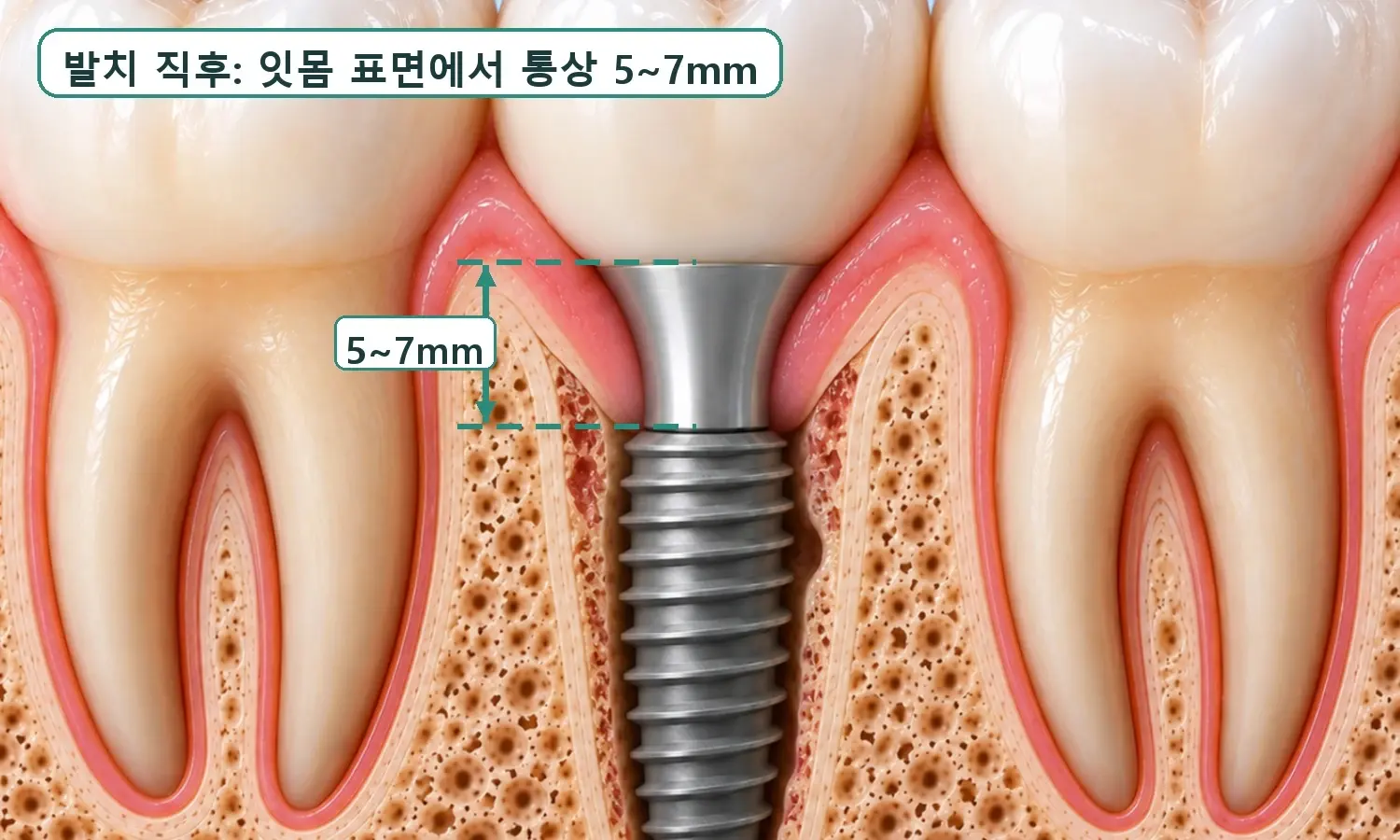
Cross-section diagram of an implant placed deeper, at 5–7 mm from the gum surface, at a site right after extraction

Applying depth right after extraction

The bone height right after extraction is not the final height and may drop during healing. So we place at 5–7 mm from the gum surface as usual, and if cheek-side bone loss is large, we consider up to 9 mm as an exception.

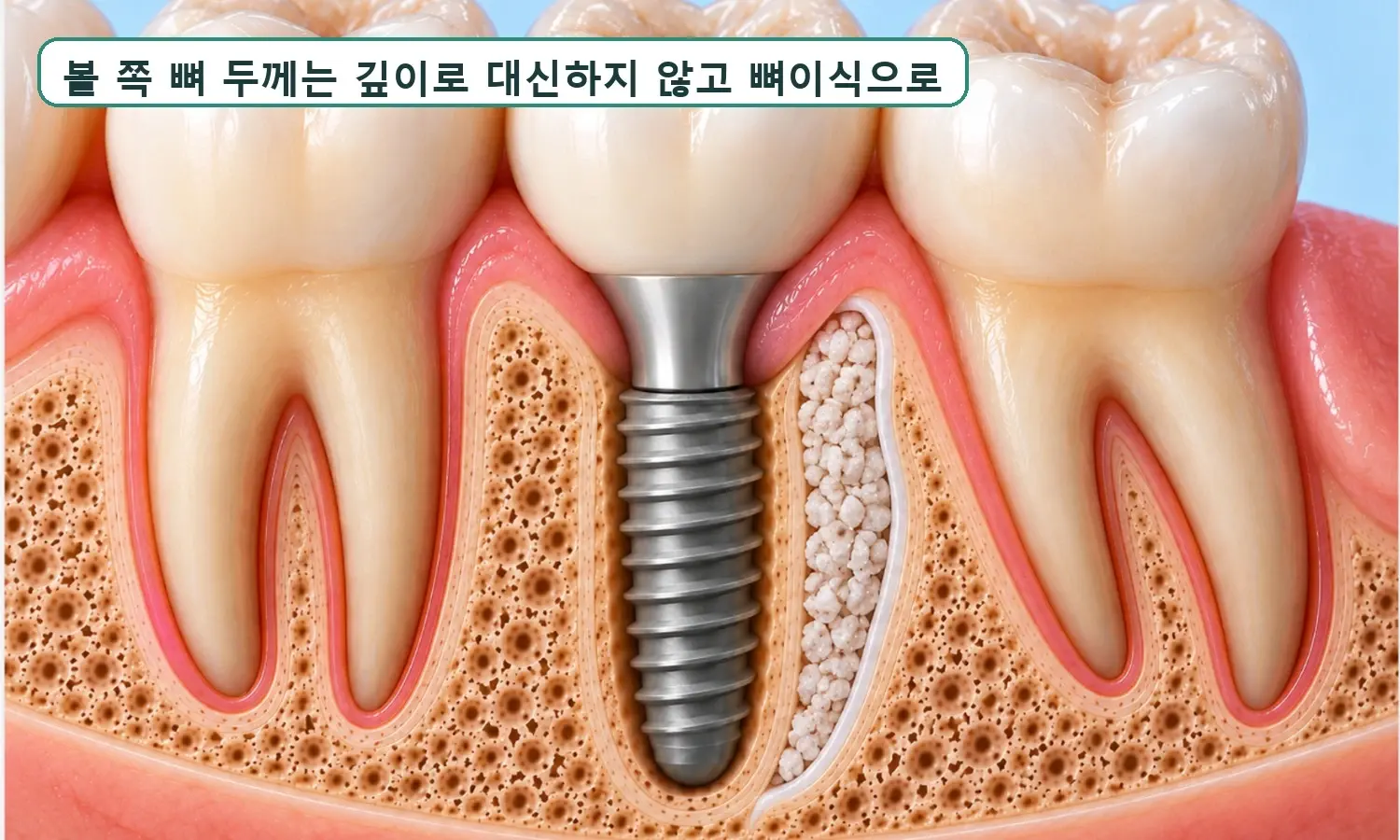
Cross-section diagram of an implant placed in a site with thin cheek-side bone and the outer gap filled with bone graft material

What depth adjustment cannot replace

There are cases where adjusting the depth reduces the range of the graft. But securing the necessary cheek-side bone thickness is not replaced by depth, and bone grafts and sinus lifts are decided by their own criteria.

Before Visit

Helpful details before your visit

Bring them if you have them. The consultation goes ahead even if you do not.

  • The area that bothers you most now and your symptoms
  • If you have an earlier implant, when and where it was done
  • The medications you take, especially osteoporosis drugs and antiplatelet drugs
  • When your teeth were extracted, or whether you have a tooth that needs to be extracted

Applying Depth, Direction, and Prosthetic Shape: Yeonhap Dental Clinic's Criteria

Depth: With 4 mm from the gum surface to the platform as the standard, thick gum means going deeper so the platform sits inside the bone, and right after extraction we usually place at 5–7 mm. Gum thickness is measured directly during surgery. Direction: Molars are placed parallel to the root axis of the neighboring tooth; front teeth are placed toward the palate, angled within the line of the adjacent teeth's incisal edges. Prosthetic shape: We adjust it with a custom abutment to fit the secured height below the gum and the tooth width. The reference angle and shape are on the parent page. Limits: Securing the necessary cheek-side bone thickness is not replaced by depth, and is decided by the bone graft and sinus lift criteria.

The Evidence and Limits of the Criteria We Apply

In a study of patients with thin gums, the group placed 1.5 mm below the crest had less marginal bone loss at 2 years than the group placed at crest level with thickened soft tissue (Linkevicius 2020), but early bone changes with deep placement are reported differently depending on study conditions (Hedayatipanah 2024), so depth research does not support prosthetic shape or direction as well. The three-dimensional position of front teeth takes safe and danger zones into account (Buser 2004), and treating the line connecting the adjacent incisal edges as the limit of tilt is our clinic's standard. Adjusting the prosthetic shape and 5–7 mm right after extraction, with 9 mm as an exception, are also our clinical standards. For this reason, Yeonhap Dental Clinic sets common criteria but applies the actual depth, direction, and prosthetic shape to each patient after checking gum thickness, site, and prosthetic space. References: Linkevicius 2020, 2-year randomized study of subcrestal placement in thin gums · Hedayatipanah 2024, vertical implant position and marginal bone loss · Buser 2004, danger zones in front-tooth implant position Treatment results may vary by individual oral condition.

Last updated:

Schedule a consultation by phone or Naver Booking

Leave a few details on our consultation page and we'll get back to you promptly.

Frequently Asked Questions

Q. If the gum is thin, is the implant placed deeper?
Judged by the bone, yes. Yeonhap Dental Clinic places with 4 mm from the gum surface to the platform as the standard, so the thinner the gum, the lower that point falls below the bone, and with thick gum, we go deeper so that the platform sits inside the bone. We measure the exact thickness during surgery.
Q. Why is a front-tooth implant placed in a different direction from a molar?
Front teeth have thin cheek-side bone, so we place toward the palate to preserve bone, and tilt the axis toward the cheek by the same amount to match the direction of the prosthesis. The limit of the tilt is the line connecting the incisal edges of the adjacent teeth, and beyond that line the crown could become long, so we do not place at that angle. Molars are placed parallel to the root axis of the neighboring tooth.
Q. Is the implant prosthetic shape made differently for each person?
They differ. An implant is thinner than a natural tooth, so the prosthesis has to widen as it passes through the gum, and because the height below the gum that is secured and the tooth width at that site differ from person to person, we adjust the angle and shape of the flare with a custom abutment. The more height there is, the more room there is to flare gently.
Q. If I get an implant right after a tooth is pulled, does the depth change?
It changes. The bone height right after extraction is not the final height, so Yeonhap Dental Clinic places deeper, usually 5–7 mm from the gum surface, and evaluates the current bone on a 3D CBCT to account for possible change during healing. The conditions under which placement on the day of extraction is possible are considered separately under the criteria for immediate implants after extraction.