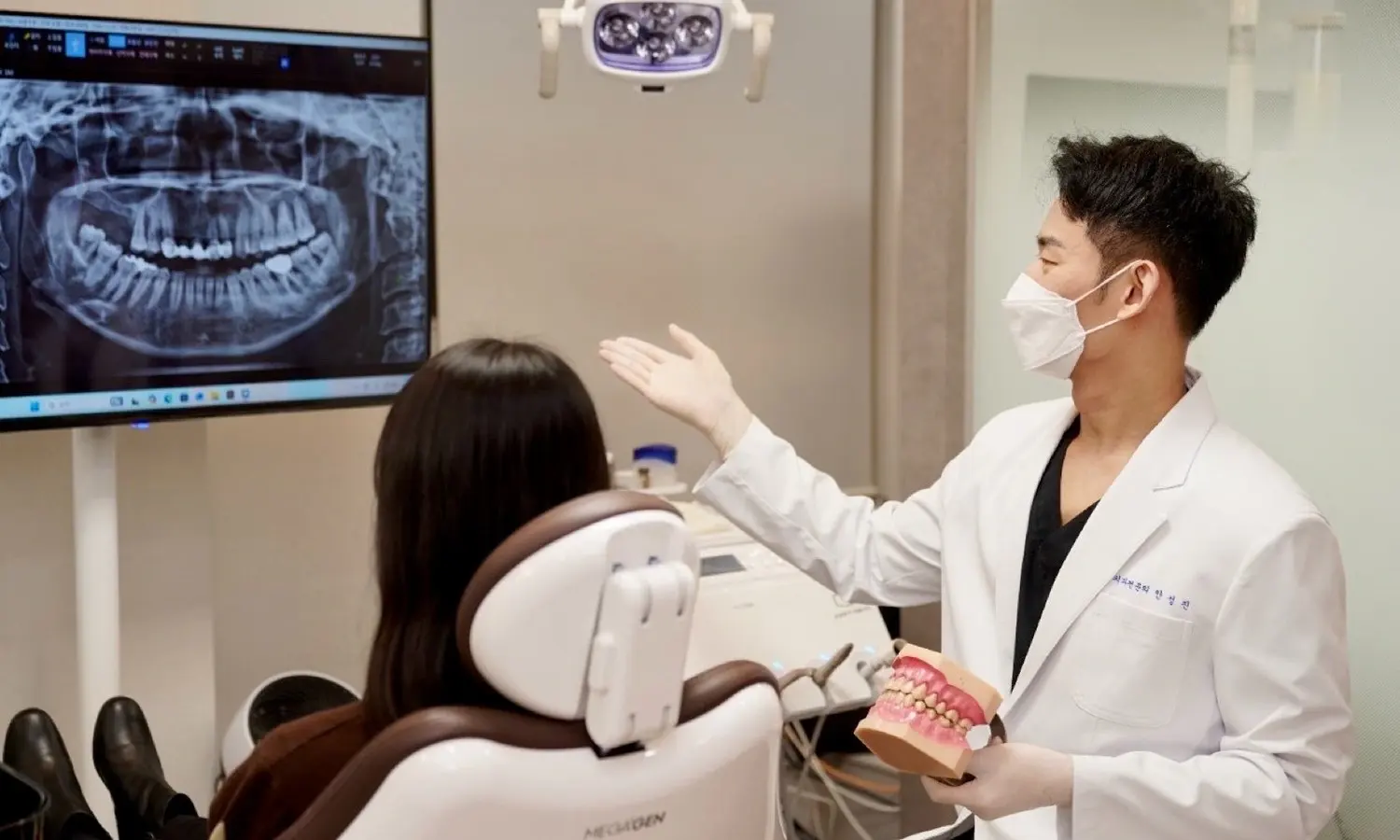
Injecting anesthetic into a patient's gum with an automated anesthesia device

IMPLANT PAIN CHECK

Implant Pain There Are Reasons Behind a Less Painful Surgery

If you are worried that an implant will hurt, see how we reduce the three points where pain occurs.

Why Diagnosis Matters

What determines pain in implant surgery?

Implant pain differs by person and by the extent of surgery, and we look at it in three stretches: the anesthetic injection, while the bone is being cut, and recovery after surgery. Yeonhap Dental Clinic uses a separate method to reduce pain for each stretch, and checks recovery at 1 week and 1 month after surgery.

Consultation Checklist

What we check at your first consultation

How much the pain can be reduced is gauged in advance at the first consultation using the three points below.

  • Whether you are sensitive to anesthetic injections, and any difficult experiences in past dental treatment
  • Whether flapless or minimal-incision placement is possible based on the bone on the 3D CBCT and the gums on the oral exam, and whether a bone graft or sinus lift is needed
  • Conditions affecting bleeding and recovery such as antiplatelet drugs and diabetes, and how wide you can open your mouth and the condition of your TMJ

Treatment Options

How Yeonhap Dental Clinic Reduces Pain

We plan the anesthetic injection, the process of cutting the bone, and the extent of opening the gum separately. This does not mean eliminating pain, but not skipping any one of the measures that can reduce it.

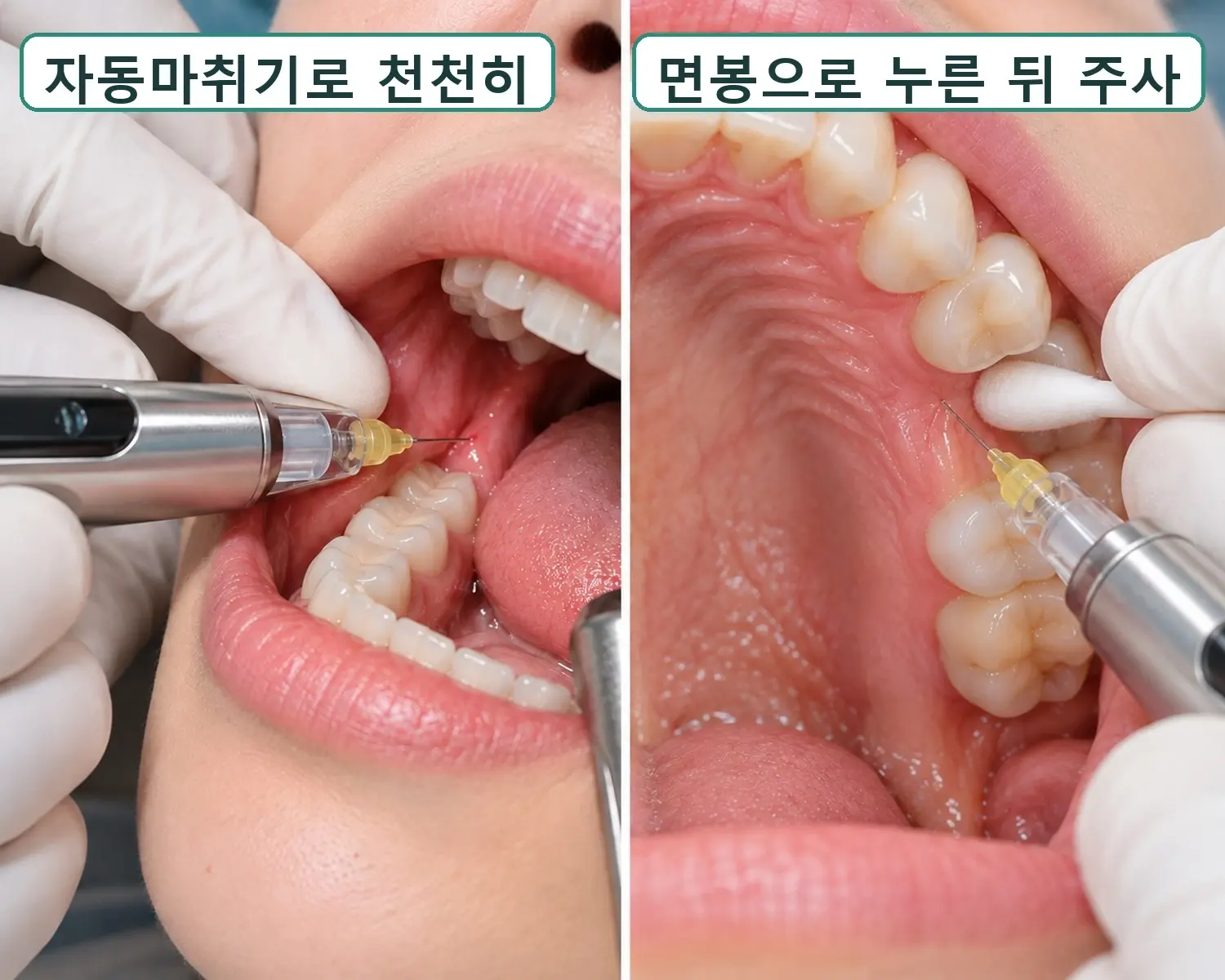
Diagram of staged anesthesia for an implant, comparing slow injection into the gum with an automated anesthesia device and pressing a cotton swab on the palatal injection site

Staged anesthesia: reducing discomfort during the injection

We lower mucosal sensation with a gargle, apply ointment where the injection will go, then inject slowly with an automated anesthesia device. When palatal anesthesia is needed, we press the injection site with a cotton swab before inserting the needle, in four steps. This does not mean there is no pain at all.

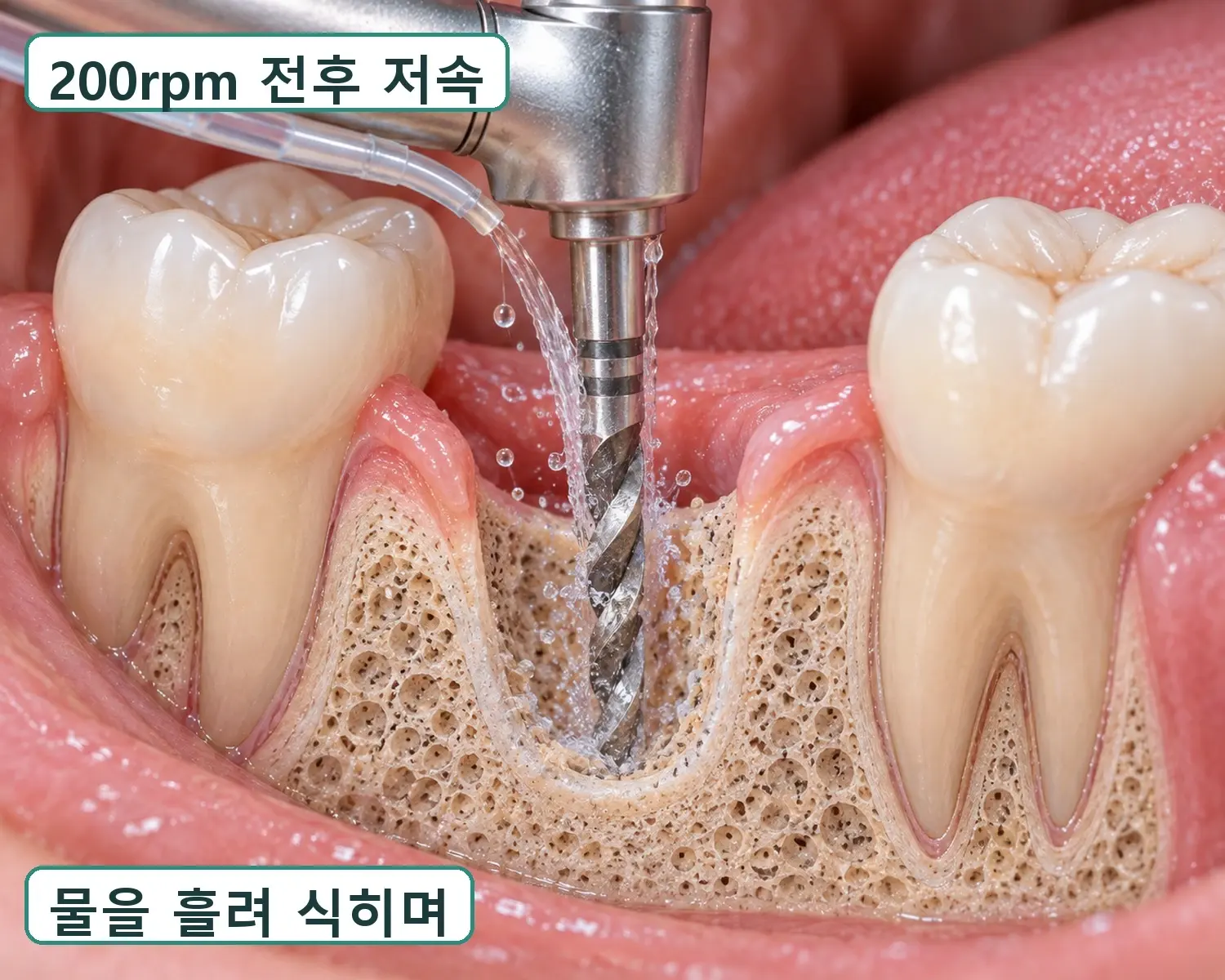
Cross-section diagram of cutting an implant site with a low-speed drill at around 200 rpm, cooled with flowing water

Low-speed drill and irrigation: cutting bone while cooling it

We mostly cut the bone with a low-speed drill at around 200 rpm, cooled with flowing water. What affects temperature is not speed alone but irrigation, so we regard cooling with water as important as speed. The reduction in vibration and noise is our clinic's observation.

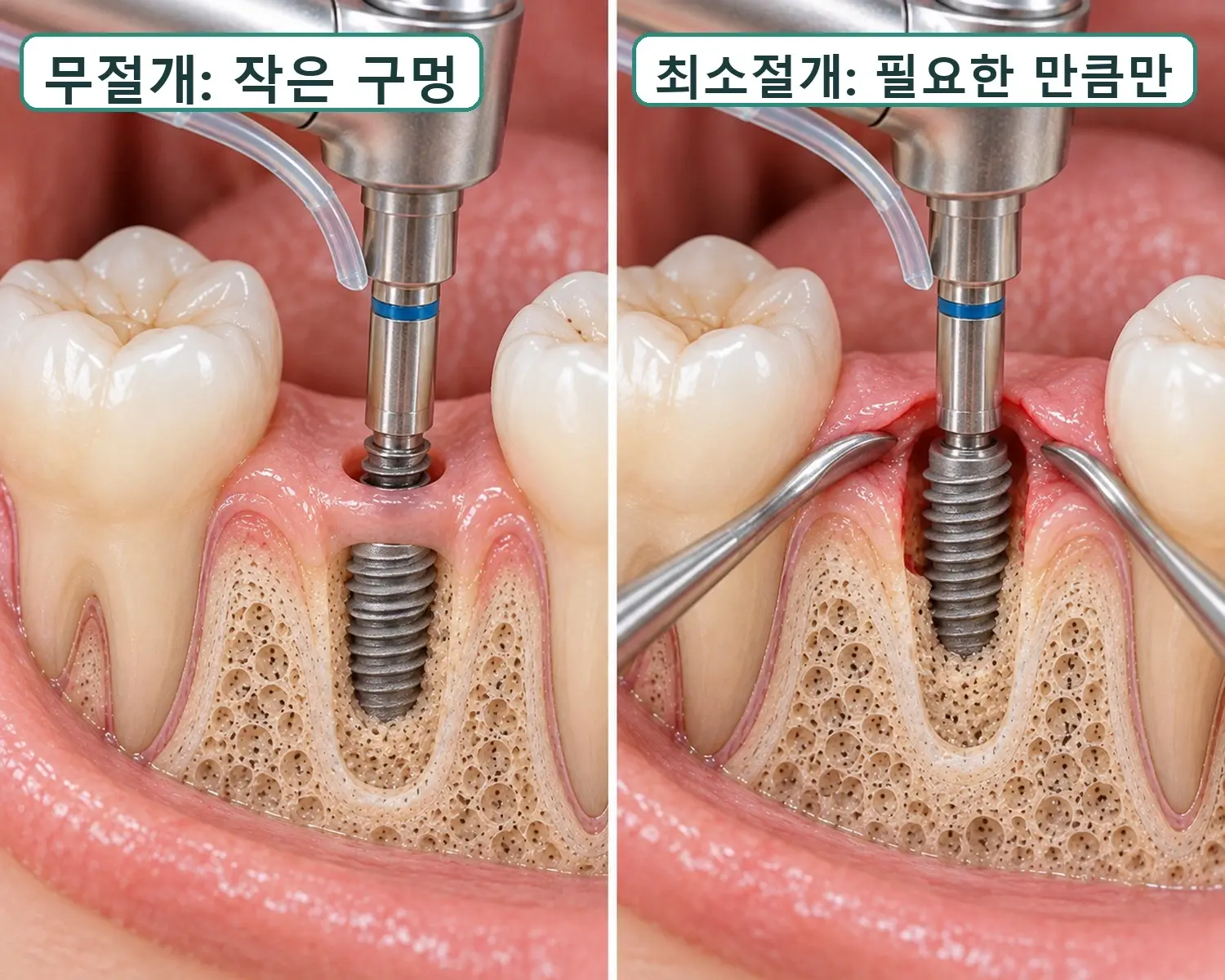
Cross-section diagram comparing flapless placement through a small opening without lifting the gum and minimal-incision placement opened only as much as needed

Flapless and minimal incision: opening only as much as needed

We look at the bone shape on the 3D CBCT together with the gum thickness and firm gum width on the oral exam, and if conditions allow, we place the implant without lifting the gum or opening only as much as needed. If we need to see directly, we make an incision, and for bone grafts we first check whether the implant can be placed without a graft, while doing the necessary treatment together.

Planning Points

How Pain After Surgery Passes

There may be discomfort up to around 2–3 days after surgery, and it often gradually decreases afterward. Recovery speed differs depending on the surgical scope and whether a bone graft is done.

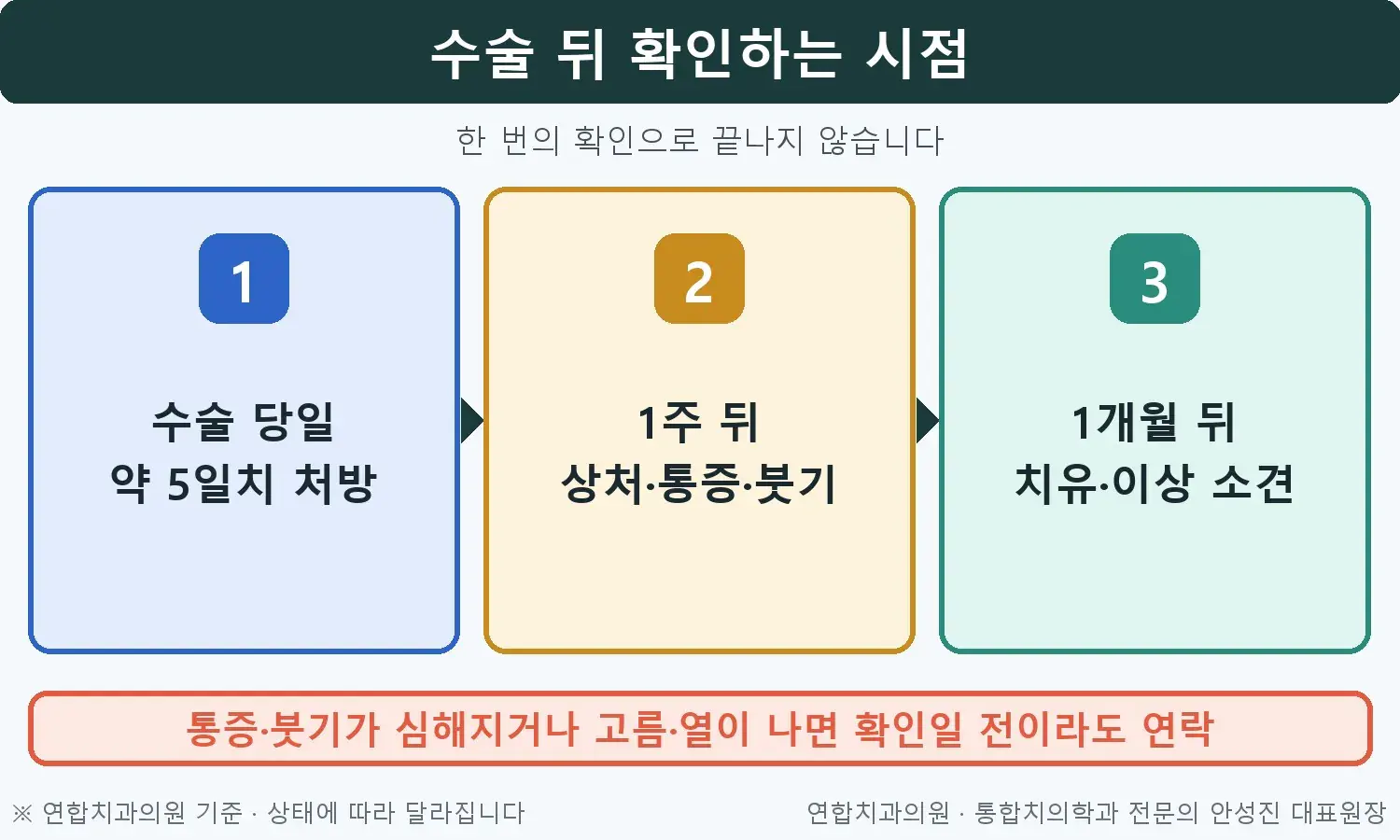
Infographic of post-surgery check timing: about 5 days of medication prescribed on the day of surgery, wound, pain, and swelling checked at 1 week, healing and abnormal findings checked at 1 month, and contact us even before the check-up date if it worsens

When we check after surgery

We prescribe about 5 days of medication on the day of surgery, and at 1 week we check changes in the wound, pain, and swelling, and at 1 month we check healing and any abnormal findings. If pain or swelling keeps getting worse, or pus or fever appears, please contact us without waiting for the check-up date. After confirming the cause by examination, we decide on treatment and medication.

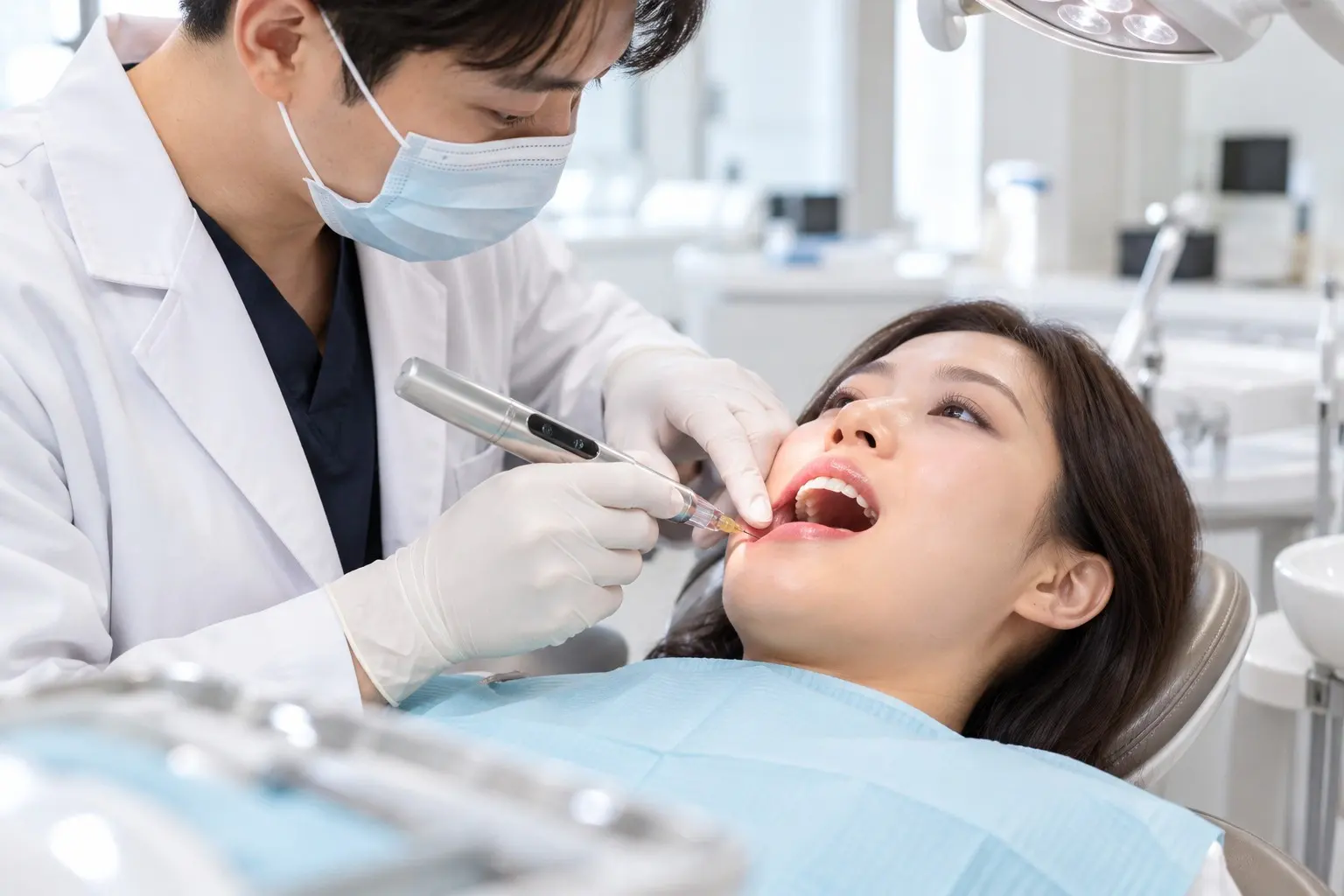
A dentist in the exam room explaining the surgical scope and expected course to a patient while looking at a panoramic X-ray on the monitor

When a bone graft or sinus lift is also needed

If a bone graft or sinus lift is also needed, swelling and discomfort can be greater depending on the extent of surgery. Yeonhap Dental Clinic does not skip necessary treatment, and explains the expected course in advance to fit the surgical method and scope. The approach and conditions are explained in our sinus lift guide.

Before Visit

Helpful details before your visit

If you tell us the points below, at the first consultation we will explain together the anesthesia method and the expected incision and bone graft range.

  • Any especially difficult experiences with dental anesthesia or extraction
  • Whether you take antiplatelet drugs such as aspirin or Plavix, or diabetes or osteoporosis medication
  • Any allergy to painkillers or stomach problems
  • The area that bothers you most now and your symptoms

Designing to Reduce Pain: Our Criteria at Yeonhap Dental Clinic

Anesthesia: We use gargle anesthesia, topical ointment anesthesia, and an automated anesthesia device as the basics, and for sensitive areas such as the palate, we add pressure with a cotton swab. For infiltration anesthesia we use articaine. This does not mean there is no pain at all. Drill: We mostly cut with a low-speed drill at around 200 rpm, cooled with flowing water. We also use a thin special drill, so low speed does not necessarily lengthen the surgery. Incision and bone graft: We look at the bone on the 3D CBCT and the gums on the oral exam together, and if conditions allow we place the implant flapless or with a minimal incision, and make an incision if we need to see directly. For bone grafts, we first look for a site where the implant can be placed without a graft, and if necessary, do it on the same day as placement. Post-surgery checks: We prescribe about 5 days of medication on the day, and check recovery at 1 week and 1 month. If pain or swelling worsens, or there is pus or fever, please contact us even before the check-up date.

Designing to Reduce Pain: The Evidence and Its Limits

In a meta-analysis of 36 studies, articaine had a faster onset and longer duration of infiltration anesthesia than lidocaine but no difference in success rate (Gong 2026), and the odds of successful pulpal anesthesia were higher (Brandt 2011). In a bovine bone experiment, irrigation rather than speed determined temperature, and irrigated 200 rpm did not reach the critical temperature (Paeßens 2025). The anesthesia studies did not target implant surgery alone, and the drill study was a laboratory study, so neither directly verifies pain reduction across our whole procedure. For this reason, Yeonhap Dental Clinic explains the anesthesia method and the expected incision and bone graft range before surgery, adjusts treatment according to the condition confirmed during surgery, and checks recovery at 1 week and 1 month after surgery. Rather than promising that it will not hurt, what Yeonhap Dental Clinic does is not skip any one of the things that can reduce discomfort. References: Gong 2026, meta-analysis of articaine versus lidocaine in dental anesthesia · Brandt 2011, meta-analysis of the effect of articaine on pulpal anesthesia · Paeßens 2025, heat experiment in implant osteotomy Treatment results may vary by individual oral condition.

Last updated:

Schedule a consultation by phone or Naver Booking

Leave a few details on our consultation page and we'll get back to you promptly.

Frequently Asked Questions

Q. Is implant surgery very painful?
When the anesthesia is sufficient, pain during surgery is mostly controlled, but you may still feel pressure or vibration. After surgery, there may be discomfort up to around 2–3 days, and it often gradually decreases afterward. Pain and recovery speed vary by individual and by the extent of surgery.
Q. I am afraid of the anesthetic injection for an implant. Can it be made less painful?
We use gargle anesthesia, topical ointment anesthesia, and an automated anesthesia device as the basics, and for sensitive areas such as the palate, we add pressure with a cotton swab to reduce discomfort during the injection. If anesthesia did not work well or was very painful in past treatment, please tell us in advance.
Q. What does the implant drill speed have to do with pain?
Yeonhap Dental Clinic mostly cuts the bone with a low-speed drill at around 200 rpm, cooled with flowing water. The reduction in vibration and noise is something we have observed at our clinic. We do not conclude from experimental results on drill heat alone that patients' pain is reduced, and the length of surgery varies with bone condition, the number of implants, and whether a bone graft is done.
Q. Is it more painful if I have a bone graft with my implant?
A larger surgical scope can mean more swelling and discomfort, but the degree and recovery period differ from person to person. We first review whether the implant can be placed without a graft, and when a bone graft is necessary, it is done on the same day as placement, and we explain the expected course.