- Q. How many years do implants last?
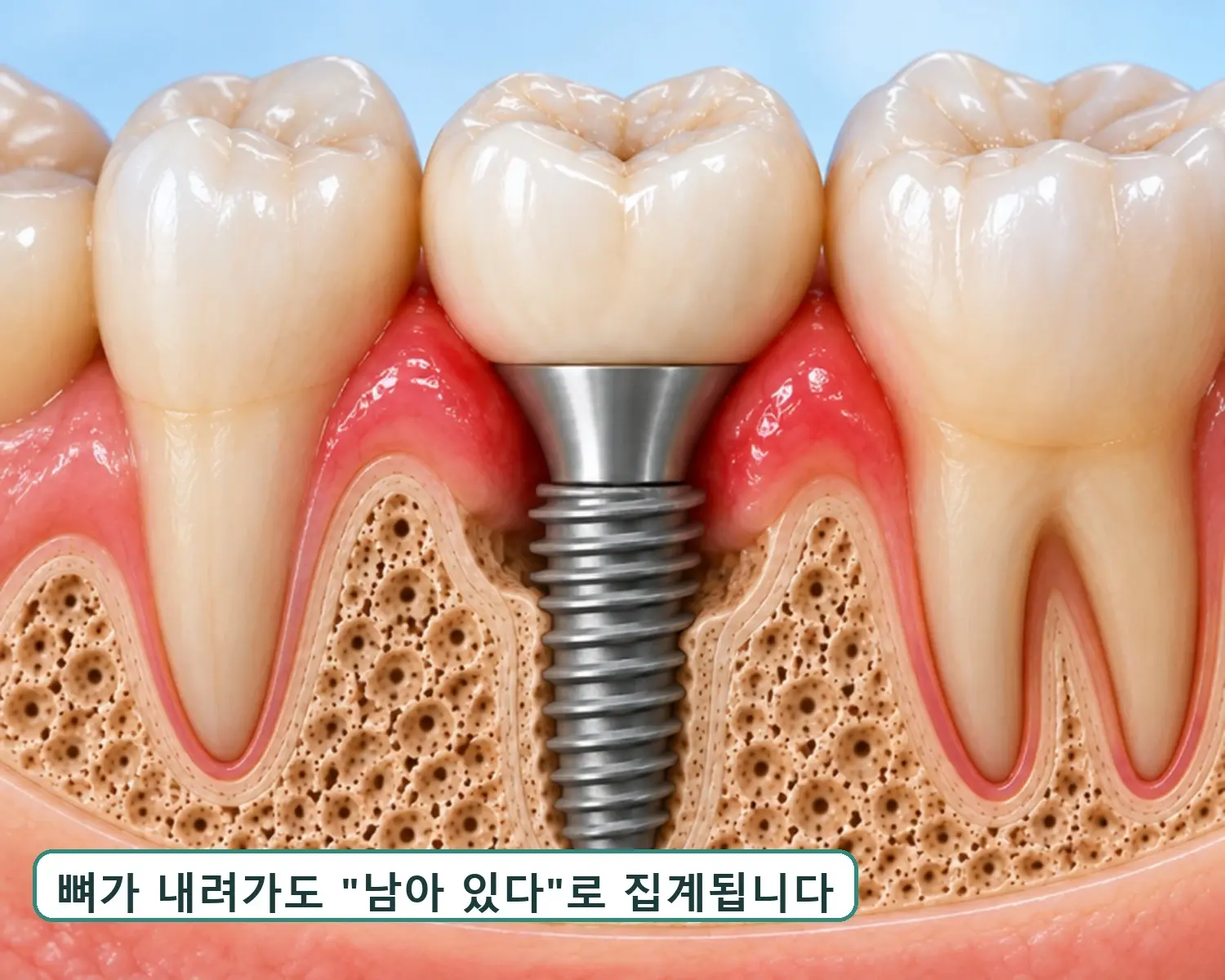
- In the literature, the 10-year survival rate of implants is reported at about 96%. This means the implant remains in place without being removed; it does not mean there was no inflammation or prosthetic repair in the meantime. The actual period of use differs from person to person depending on bone and gum condition, systemic disease, and care habits, so we cannot state a number of years. At the 6-month check-up, Yeonhap Dental Clinic reviews your current condition and care plan.
- Q. Can an implant be used for a lifetime?
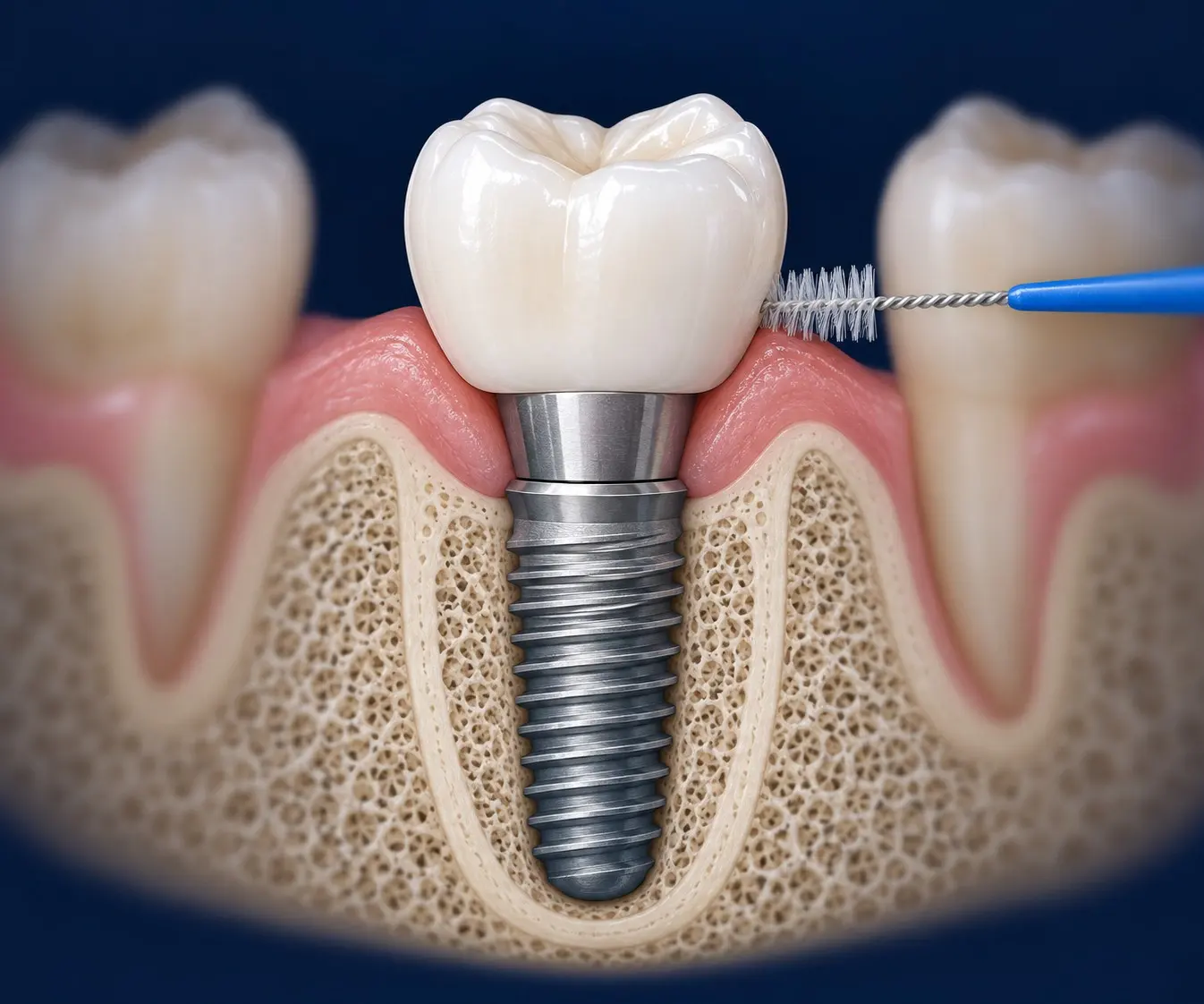
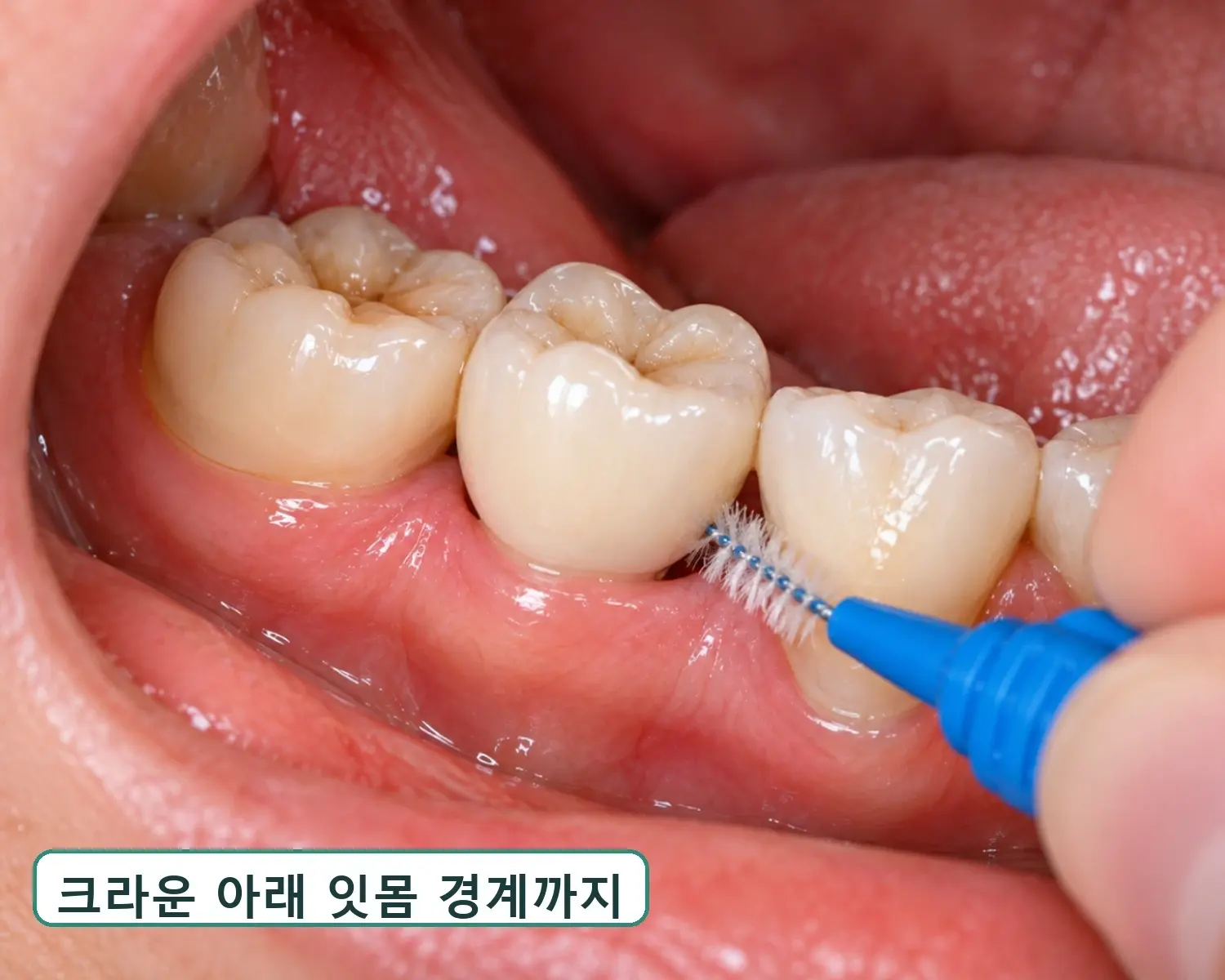
- The implant itself does not decay, but inflammation of the surrounding gum and bone, and prosthetic problems such as a loosened screw or a damaged crown, can occur, so we cannot guarantee a lifetime, and the period of use depends on your oral condition and care. The core of care is, in addition to daily brushing, cleaning the gum margin with an interdental brush and floss suited to the shape of the prosthesis, and comparing against earlier records at the 6-month check-up to catch changes early. If a problem is found, we evaluate the cause and judge separately whether to maintain, repair, or remove.
- Q. What should I do to make my implant last longer?
- At home, in addition to daily brushing, you clean the gum margin under the crown with an interdental brush and floss suited to the shape of the prosthesis; at the dental clinic, the basics are checking the gums, bone, and prosthesis every 6 months and receiving gum treatment. Even with the same care, results may vary depending on your bone and gum condition. There are reports that peri-implantitis was less frequent among those who received regular maintenance, and smoking is reported to raise the risk of failure, so we recommend quitting. The criteria for placing implants in a shape whose prosthesis margin can be cleaned are explained in our placement design guide.
- Q. How often should I get regular implant check-ups?
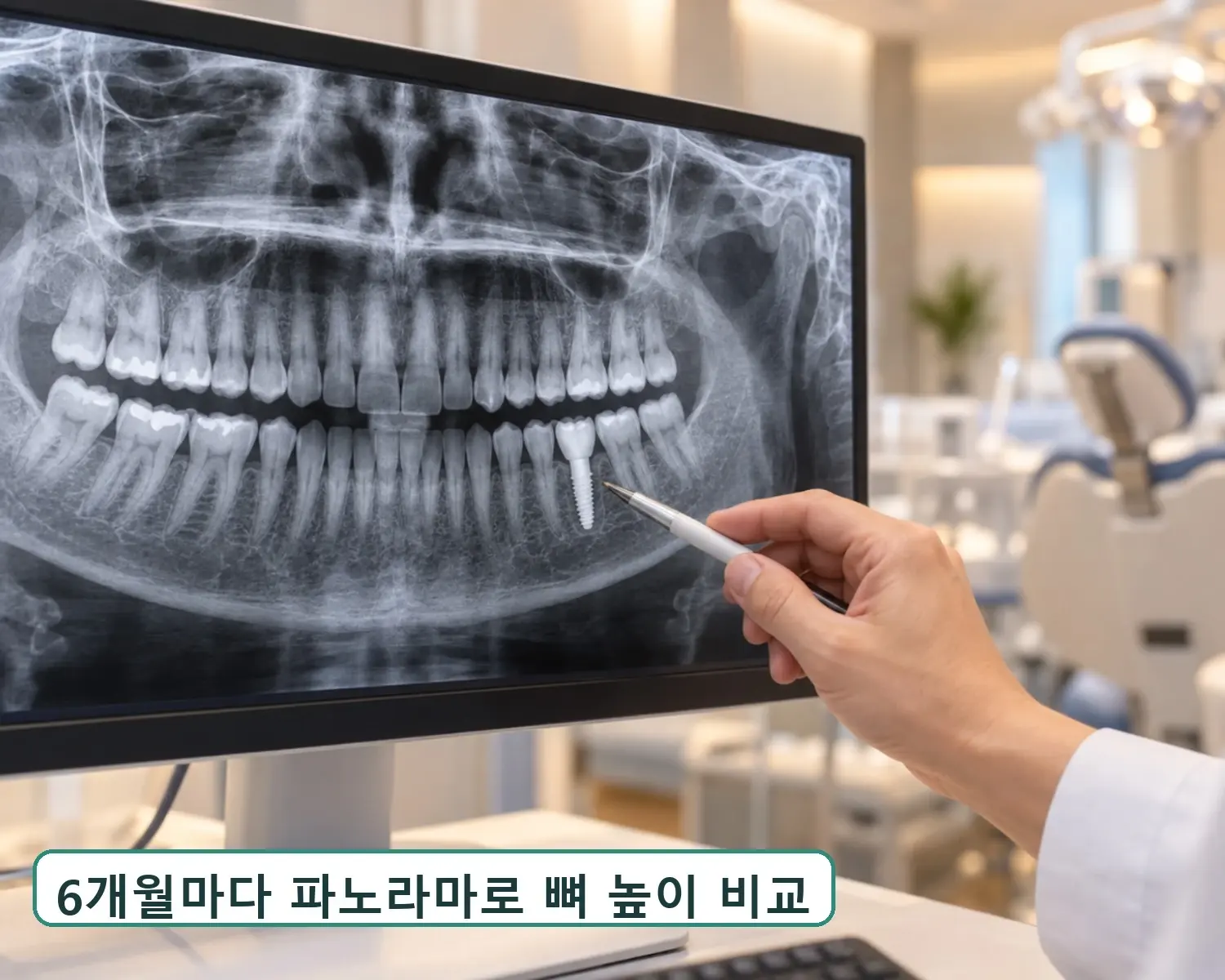
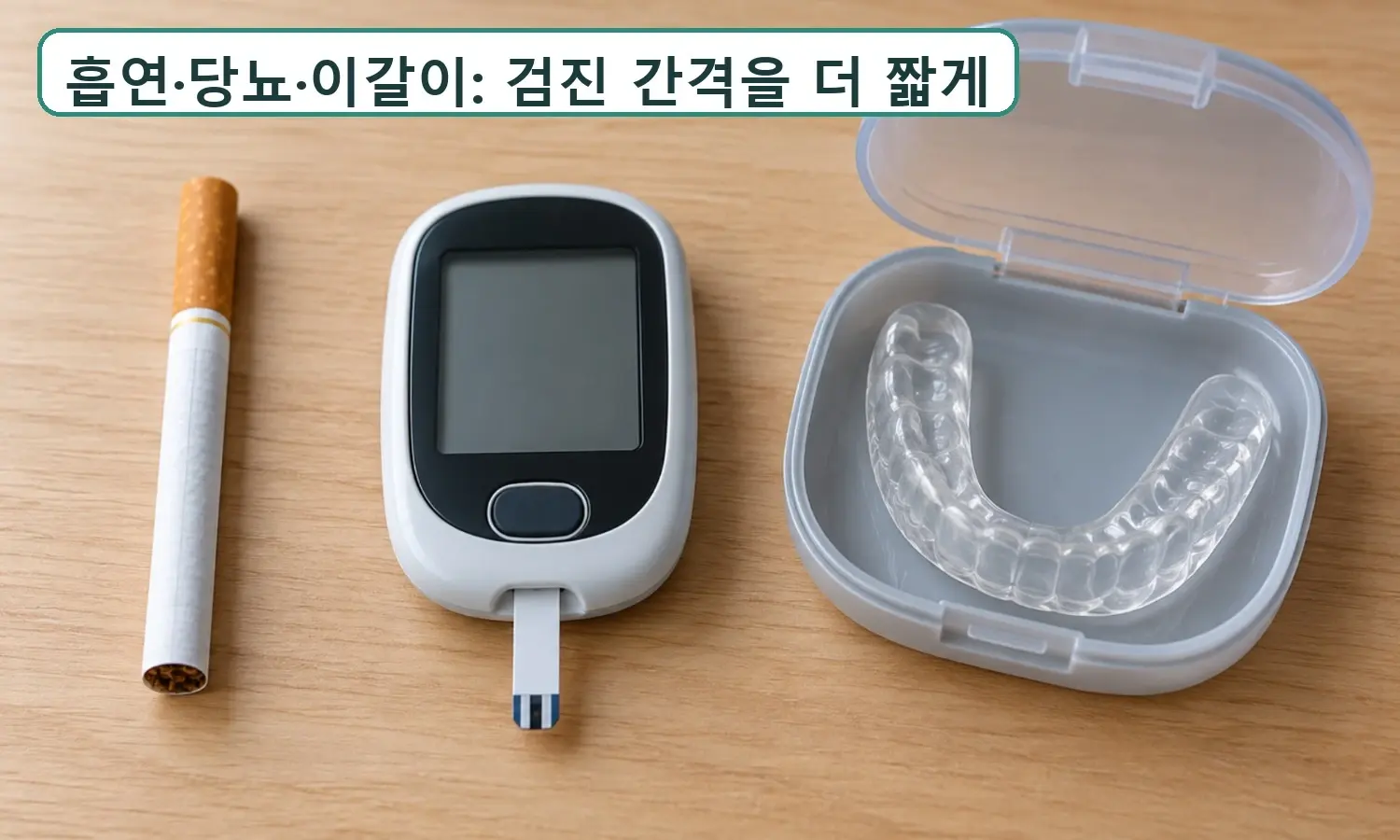
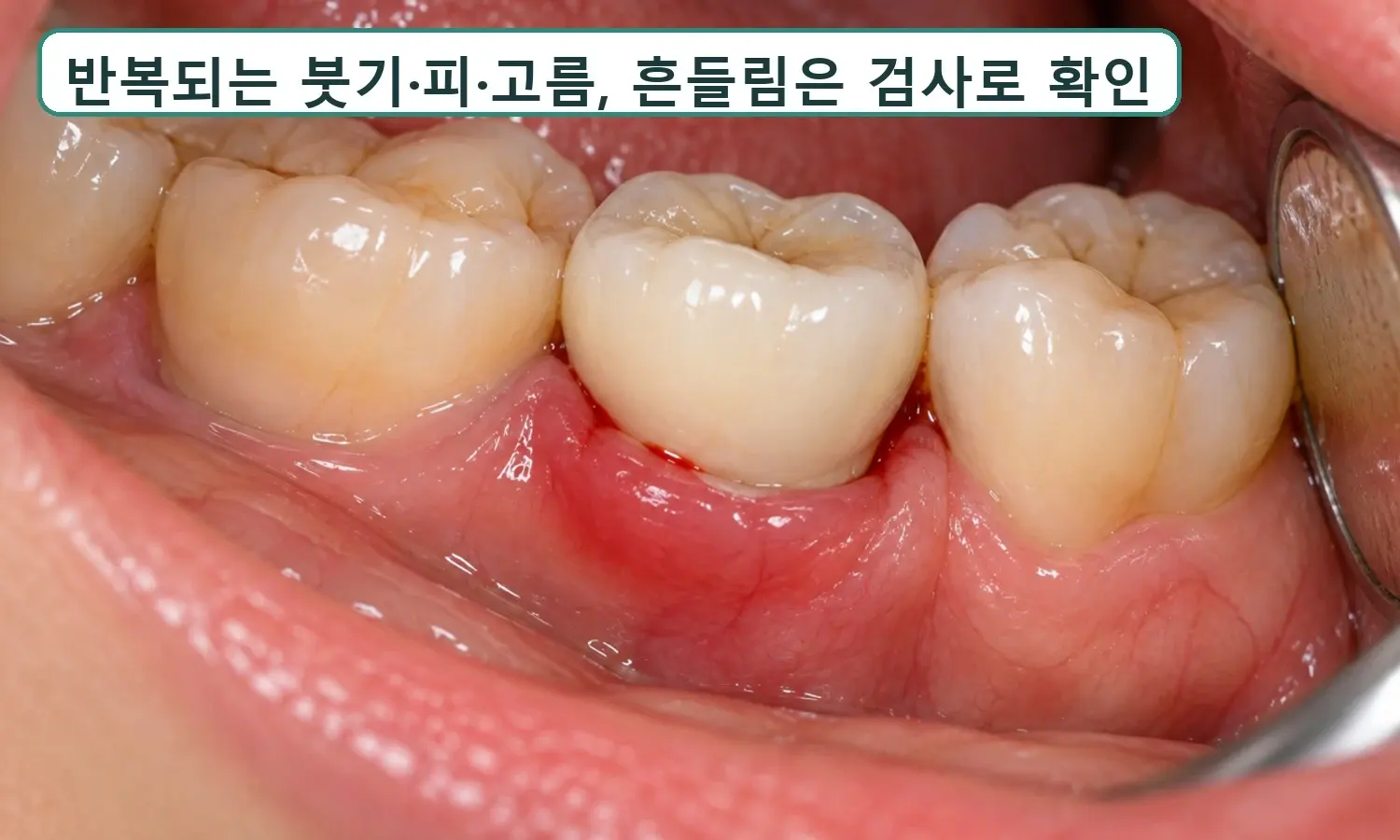
- Every 6 months is the standard, and the interval is set shorter if you smoke, have diabetes, or grind your teeth. If your gums repeatedly swell, bleed, discharge pus, or feel loose, let us know without waiting for the next check-up; we confirm with examination rather than judging from symptoms alone. At the check-up, Yeonhap Dental Clinic compares with earlier records the gum bleeding, pus, and depth, the bone height on the panoramic X-ray taken every 6 months, and any loose screw, crown, or bite interference, and provides gum treatment.