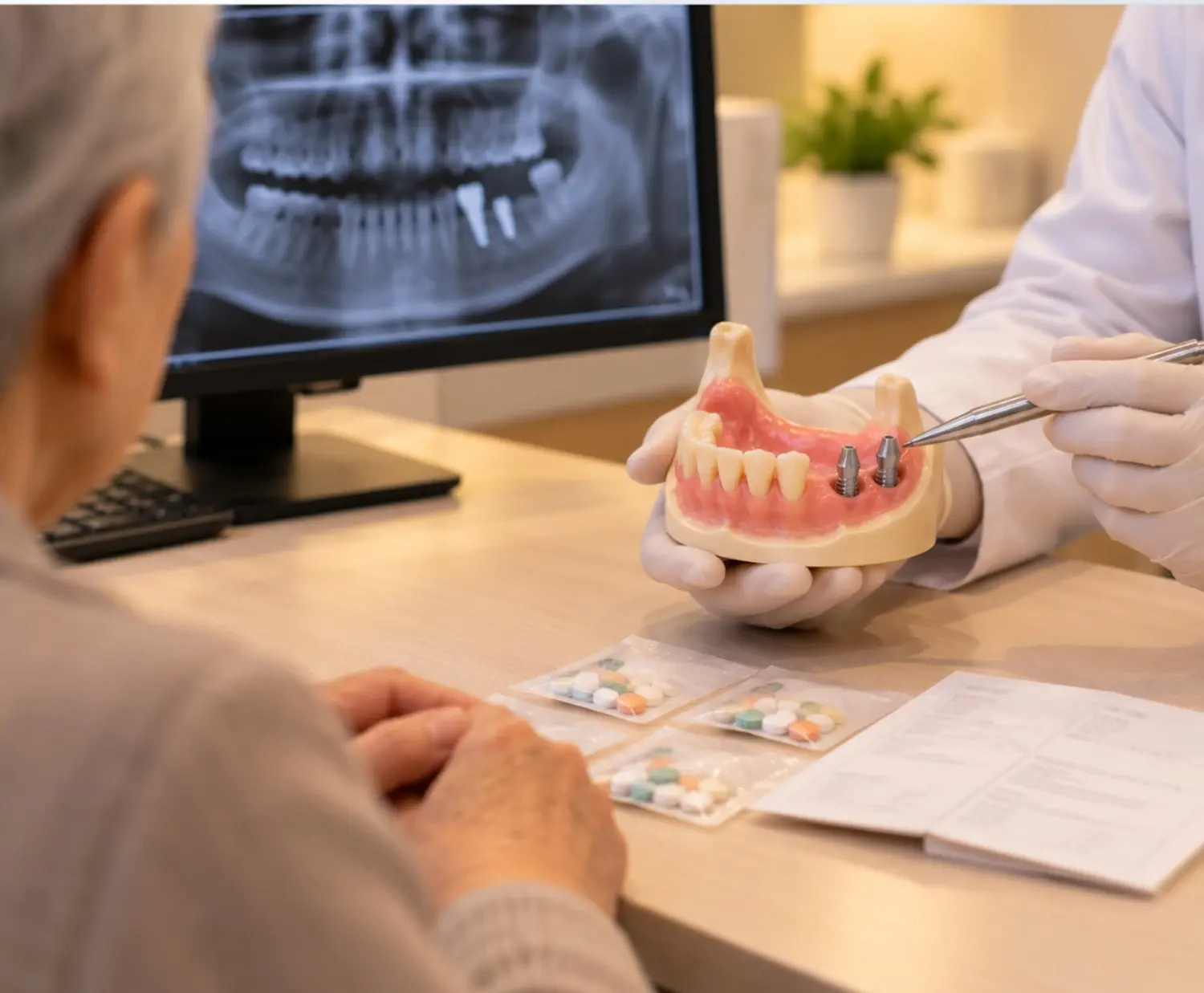
A consultation scene in front of a panoramic screen, with a medication bag on the desk, explaining two implants on a lower-jaw model to an older patient

SENIOR IMPLANT

Implants at Age 65: What We Look at Before Age Is Your Medications and Remaining Teeth

There is no upper age limit for implants. We first look at your medications and remaining teeth, and then decide where to place the two NHI-covered implants within your current chewing function and future partial denture plan.

Why Diagnosis Matters

For implants at age 65, we plan the remaining teeth and the two NHI-covered implants together

There is no upper age limit for placing an implant. After age 65, the medications you take and your remaining teeth shape the plan, and the two NHI-covered implants are not simply placed first in the empty spaces; the sites are decided by looking at where you chew now and whether you will need a partial denture in the future. Eligibility, patient copayment, and the registration process are in the NHI Implant Guide, and this article covers only how the remaining teeth and the two NHI-covered implants are planned together.

Consultation Checklist

What we check at your first consultation

At the first consultation, we look at your medications and your mouth and check the five items below.

  • The names of the medications you take and whether any are osteoporosis drugs or antithrombotics (we do not stop them on our own)
  • Where and how many teeth remain and whether they can be saved
  • On which side the opposing teeth remain and where you are chewing now
  • Whether you currently use a denture and whether you may need a partial denture in the future
  • Whether you have used an NHI-covered implant or an NHI-covered denture (eligibility check with the National Health Insurance Service)

Treatment Options

Implants at Age 65: Medications, Remaining Teeth, and the Sites of the Two NHI-Covered Implants

We check your medications, evaluate the remaining teeth, and then decide the sites of the two NHI-covered implants within the overall plan.

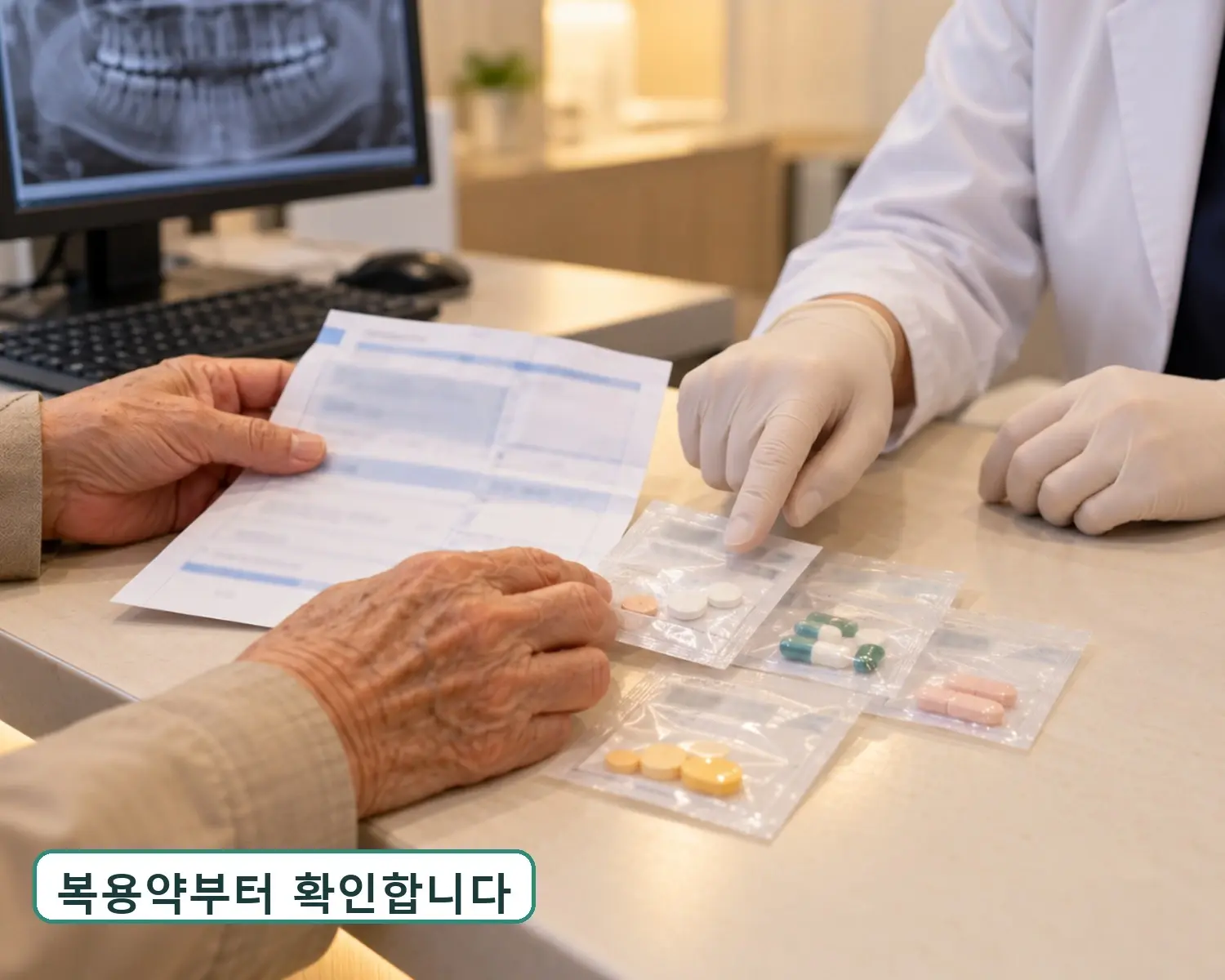
Medication bags and a prescription placed on the consultation room desk and being checked

We start by checking your medications

Antithrombotics, osteoporosis medication, and diabetes medication are not reasons to be unable to get an implant; they are items that determine the order. Medications are not stopped on your own, and if an adjustment is needed, it is decided together with the prescribing doctor. The criteria by medication are in the Systemic Conditions and Medications Guide.

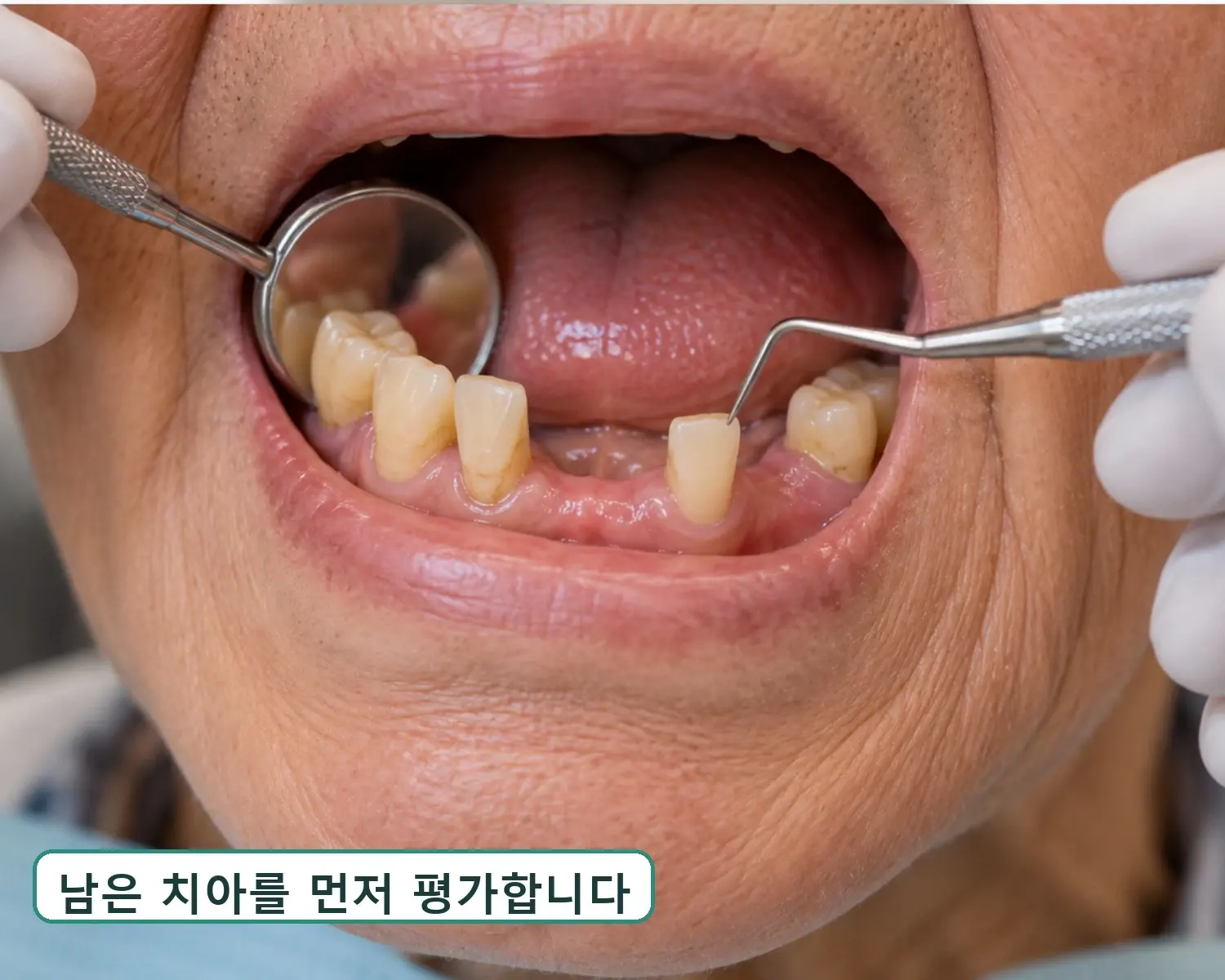
A dentist examining a patient's remaining lower teeth with a mirror and probe

We evaluate the remaining teeth first

We do not simply count teeth; we look at their position and condition, whether they can be saved, and whether there are opposing teeth. Teeth that can be saved are kept so that we can plan current treatment and future prosthetics, and teeth that cannot be used are not kept for the sake of insurance.

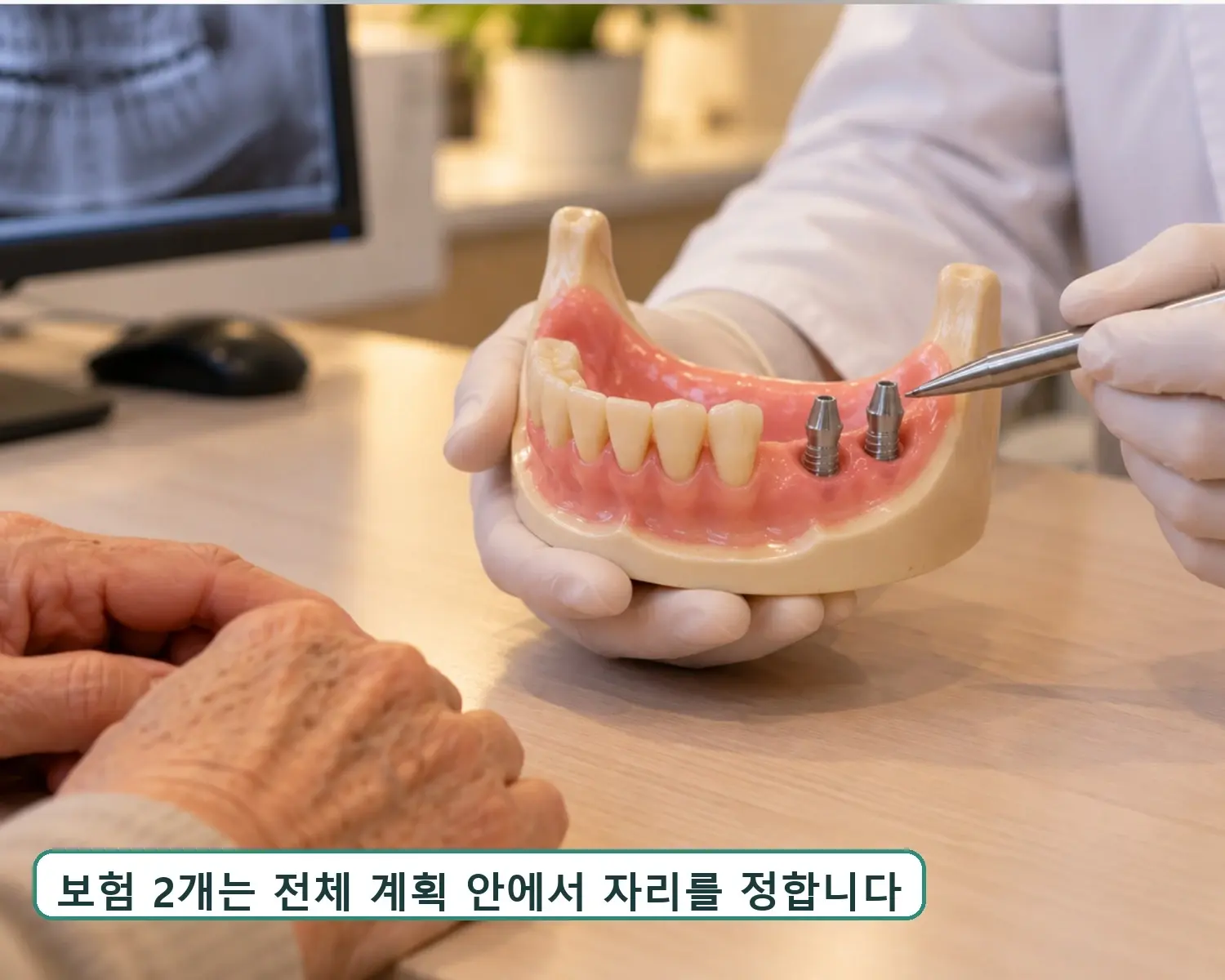
A lower-jaw model showing two implants at the sites of the remaining front teeth and molars

The two NHI-covered implants are placed within the overall plan

It is not a matter of placing them first in the empty spaces just because insurance covers them. We decide the sites for the two by looking at where you chew now and whether a partial denture will be needed in the future. For those whose front teeth remain and whose molars are missing, it is often placed at a molar site on the side with more opposing molars.

Planning Points

Partial denture or fixed?

Depending on the remaining teeth, the available sites, and your preference, it leads to one of two paths.

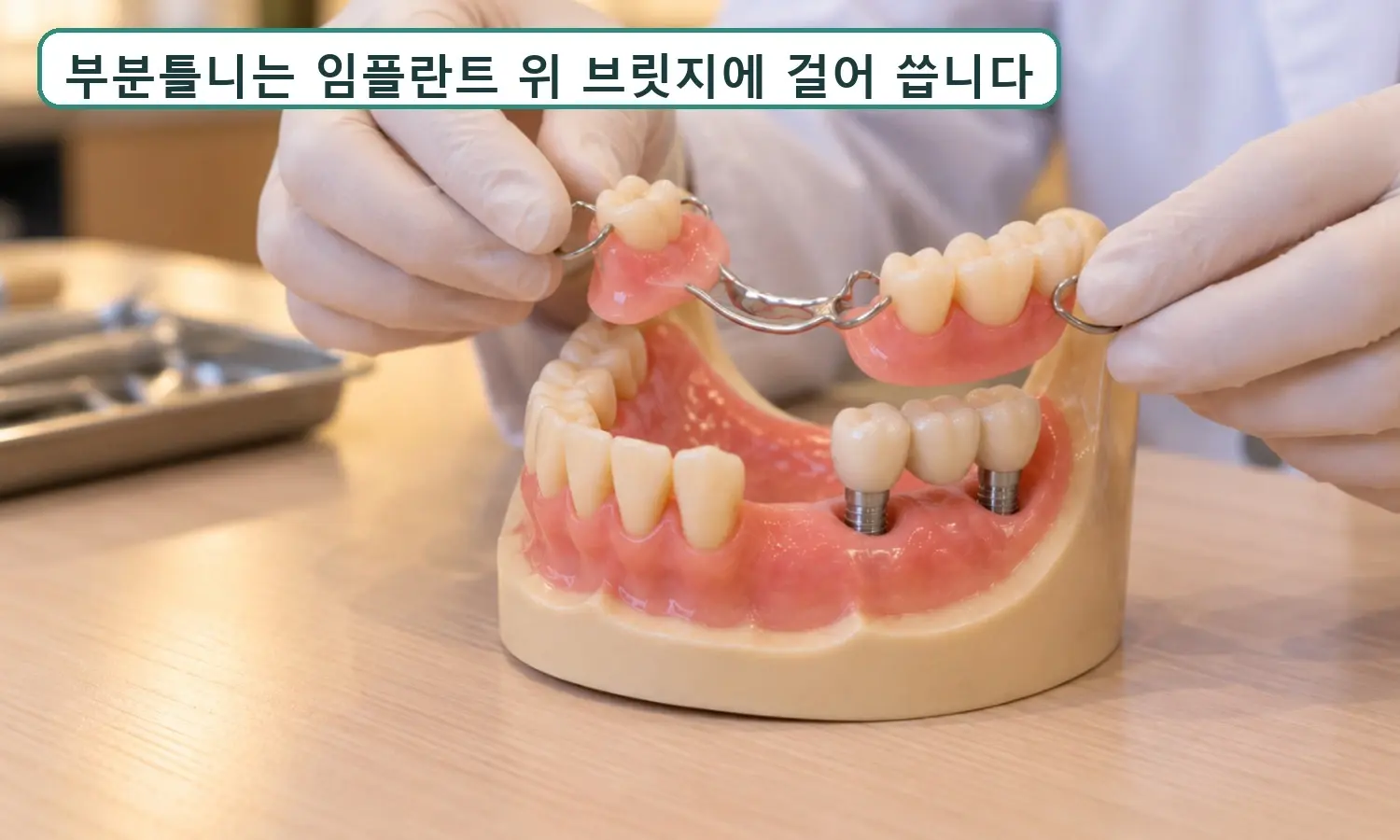
A model showing a partial denture attached to a bridge over implants

A partial denture is attached to a bridge over the implants

Yeonhap Dental Clinic's implant-supported denture attaches a bridge over the implants and then attaches a partial denture to that bridge. When deciding the sites of the two NHI-covered implants, we also consider the possibility of using them as supports for a future partial denture. This continues in the Implant-Supported Denture Guide.

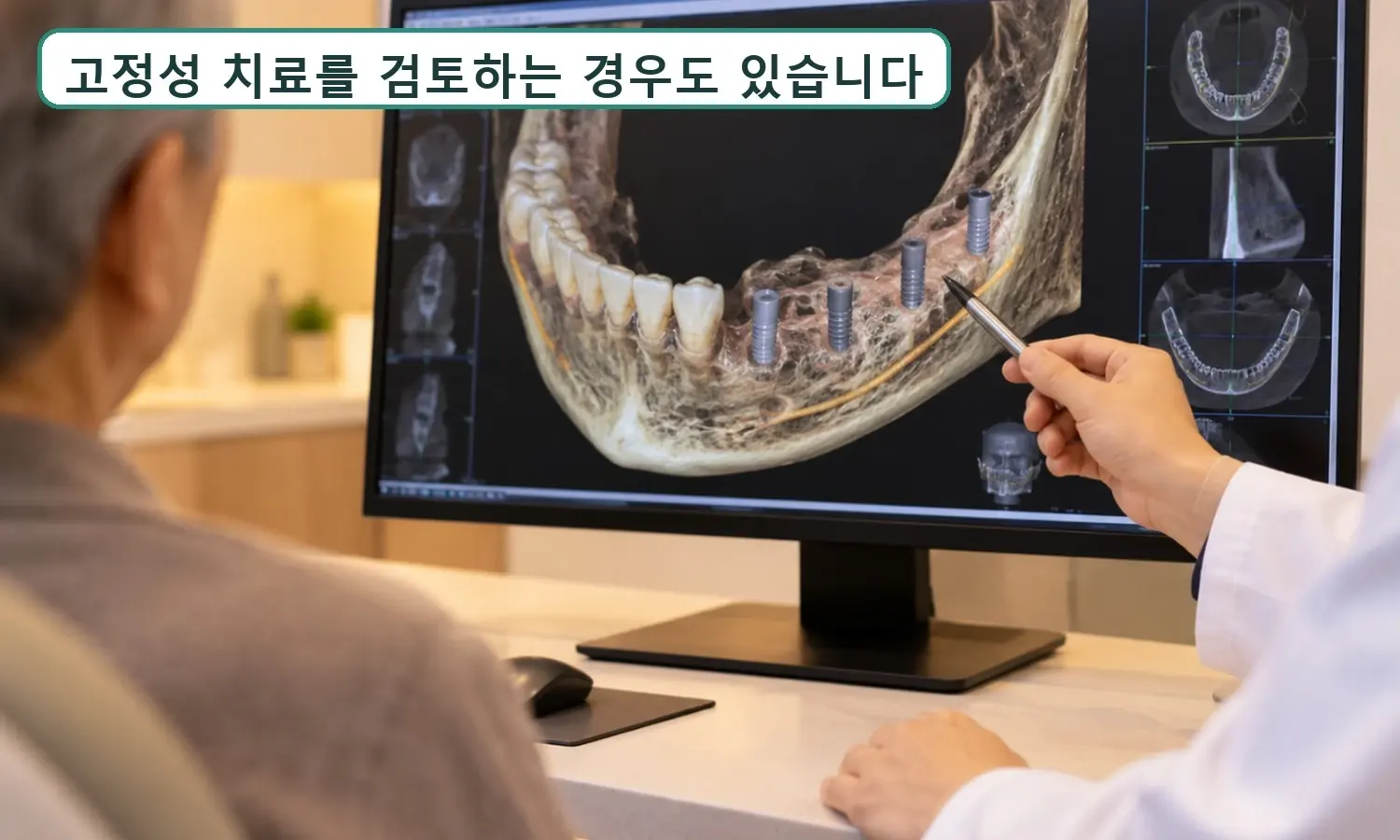
A consultation scene explaining fixed full-mouth treatment while looking at a CT screen

In some cases we consider fixed treatment

If few or no teeth remain, several implant sites are available, or you do not want a denture that you remove and reinsert, we consider fixed treatment for the whole jaw. Being able to treat with two implants and having the two NHI-covered implants apply are different matters. This continues in the Full-Mouth Implant Guide.

Before Visit

Helpful details before your visit

If you bring the items below at your first visit, the same-day assessment goes faster.

  • The full list of medications you are taking (including osteoporosis medication, anticoagulants, and diabetes medication)
  • If you have diabetes, your recent blood sugar levels
  • If you use a denture, please wear it when you come
  • Whether you fall under National Health Insurance, Medical Aid, or the near-poverty category

Implants at age 65: the criteria Yeonhap Dental Clinic plans by

Medications: Antithrombotics, osteoporosis medication, and diabetes medication are not stopped on your own; only those that need adjustment are decided together with the prescribing doctor. The criteria by medication are in the Systemic Conditions and Medications Guide. Remaining teeth: We look at position and condition rather than number, whether they can be saved, and the opposing teeth. Teeth that can be saved are kept, and teeth that cannot be used are not kept for the sake of insurance. Sites for the two NHI-covered implants: Decided by looking at where you chew now and the likelihood that you will need a partial denture in the future. If the front teeth remain and the molars are missing, it is often placed at a molar site on the side with more opposing molars, and the detailed criteria for the sites are in the Implant-Supported Denture Design Guide. Partial denture and fixed: The basic plan is a partial denture attached to a bridge over the implants, and depending on the remaining teeth, the available sites, and your preference, we consider fixed treatment for the whole jaw.

The basis for the criteria for implants at age 65

Combined use of NHI-covered implants and an NHI-covered partial denture follows National Health Insurance Service guidance. Placement position and prosthesis design are our clinic's own practice standards, decided after checking the remaining teeth, the opposing teeth, and CT. For this reason, Yeonhap Dental Clinic first checks your medications and remaining teeth, decides where to place the two NHI-covered implants within your current chewing function and future partial denture plan, and tells you honestly if a fixed option is better for you. Reference: National Health Insurance Service, NHI coverage guide for dental implants Treatment results may vary depending on each person's oral condition. Whether NHI coverage applies is confirmed after an eligibility check with the National Health Insurance Service.

Last updated:

Schedule a consultation by phone or Naver Booking

Leave a few details on our consultation page and we'll get back to you promptly.

Frequently Asked Questions

Q. Can I get a 65-and-over implant even if I take osteoporosis medication or blood thinners?
In most cases it is possible. Do not stop your medication on your own; at Yeonhap Dental Clinic, we check the names and duration of your medications and decide, together with the prescribing doctor, only on those that need adjustment. The criteria by medication are in the Systemic Conditions and Medications Guide.
Q. Should I have a loose tooth extracted and get an implant?
It is generally better to keep teeth that can be saved. Remaining teeth support your chewing now and a partial denture in the future. At Yeonhap Dental Clinic, we look at the condition and extract only the teeth that cannot be used, and we do not keep a tooth that cannot be used just for the sake of insurance.
Q. Where are the two NHI-covered implants placed?
It is decided not by the order of the gaps but by where you chew now and whether you will need a partial denture in the future. If the front teeth remain and the molars are missing, it is often placed at a molar site on the side with more opposing molars. The detailed criteria for choosing the sites are in the Implant-Supported Denture Design Guide.
Q. I had an NHI-covered denture made. Can I still get NHI-covered implants?
NHI-covered dentures and NHI-covered implants are separate programs, so they can be used together on the same jaw. At Yeonhap Dental Clinic, we choose the sites so that the two NHI-covered implants become the supports of the bridge that carries the partial denture. Eligibility and patient copayment are in the NHI Implant Guide.